Akagera National Park
The last rhino was seen in 1997. Poachers had taken them all. Lions had been hunted out years earlier to protect livestock, and the elephant herds were shadows of what they had been. Akagera National Park, once a sprawling sanctuary in northeast Rwanda, had been carved in half and left to collapse under the weight of a nation's trauma. The 1994 genocide sent waves of returning refugees into the park's grasslands, and conservation, understandably, was nobody's priority. By the early 2000s, the park that should have been Central Africa's greatest savannah reserve was barely functioning.
A Country's Wound, a Park's Near Death
Akagera's decline mirrored Rwanda's. When hundreds of thousands of refugees returned after the genocide, the government handed over more than half the park's original land for farming and resettlement. What remained -- roughly 1,200 square kilometers along the Tanzanian border -- was overrun. Bushmeat poaching emptied the plains of game. Elephants were killed for ivory. The park's infrastructure crumbled, and the few remaining rangers could do little against the scale of the loss. For over a decade, Akagera existed in name only, a protected area that protected almost nothing.
The Comeback
Everything changed in 2010, when the nonprofit African Parks assumed joint management of Akagera alongside the Rwanda Development Board. The turnaround was methodical and relentless. A new anti-poaching canine unit deployed in 2015 helped drive illegal hunting to an all-time low. A solar-powered electric fence -- running the length of the park's western boundary -- reduced conflicts between wildlife and the farming communities next door. Then came the animals. Lions were reintroduced in 2015, the first to roam Akagera in nearly two decades. Black rhinos followed in 2017, flown in from South Africa under armed escort. By 2018, the park was drawing 44,000 visitors a year and financing 80 percent of its own operations. From zero Big Five to all five in less than a decade -- few conservation stories anywhere match that trajectory.
Where Savannah Meets Swamp
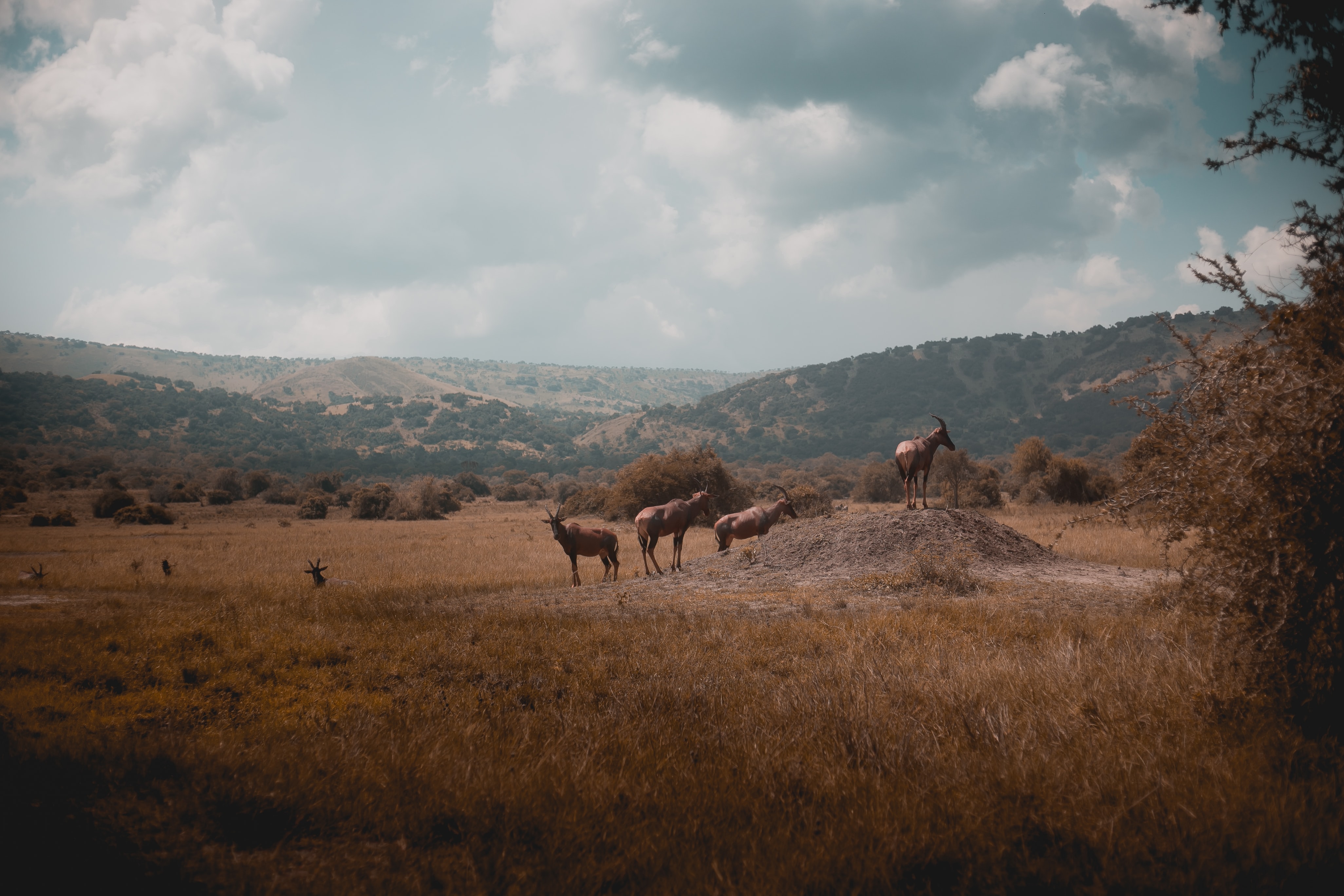
Akagera is not what most people picture when they think of Rwanda. There are no gorillas here, no misty volcanic slopes. Instead, the landscape rolls out in a patchwork of open savannah, wooded hillsides, papyrus swamps, and a chain of lakes fed by the Akagera River, which forms much of the border with Tanzania. Lake Ihema, the largest, draws hippos and Nile crocodiles in numbers dense enough to spot from a boat. The park's rolling mountains offer long views over water and grassland, a terrain more reminiscent of Kenya's Masai Mara than of the steep green hills an hour's drive west. Over 480 bird species have been recorded here, including the elusive shoebill -- a bird so improbable-looking it seems designed by committee. Akagera is now Central Africa's largest protected wetland and the last remaining refuge for savannah-adapted species in Rwanda.
Communities as Partners
What makes Akagera's revival durable, rather than merely dramatic, is its relationship with the people who live around it. The solar fence was not just a wildlife tool; it was an answer to the farmer whose crops were being trampled by elephants, the herder whose cattle were vulnerable to predators. Revenue-sharing programs channel tourism income back to surrounding communities. The Community Freelance Guide programme trains local residents to lead cultural experiences for park visitors -- milking demonstrations, banana-beer brewing, visits to honey cooperatives. These are not staged performances but genuine windows into daily life in rural Rwanda, and they give communities a financial stake in the park's survival. When the people next door benefit from the animals being alive, the animals tend to stay alive.
On the Water and After Dark
The classic Akagera experience is a game drive through the savannah, scanning for the Big Five across open grassland. But the park's most distinctive offerings happen elsewhere. Boat trips on Lake Ihema bring visitors within safe distance of hippo pods and basking crocodiles, while waterbirds work the papyrus margins in extravagant variety. Night drives, operated by the park or its lodges, shift the odds toward predators -- leopards, hyenas, and the reintroduced lions that have now established breeding prides. For those willing to go deeper, a five-day backpacking trail through the park's backcountry offers something rarer still: solitude in a landscape that, not long ago, nearly ceased to exist.
From the Air
Located at 1.63S, 30.78E in northeast Rwanda along the Tanzanian border. The park's chain of lakes -- especially Lake Ihema -- is visible from cruising altitude as a series of silver patches amid green savannah. Best viewed from 5,000-8,000 feet AGL, where the contrast between the park's wildlife corridor and surrounding farmland is striking. The solar fence line along the western boundary is occasionally visible as a thin cleared strip. Nearest major airport: Kigali International Airport (HRYR), approximately 130 km west. The park is roughly a 2-hour drive east of Kigali.