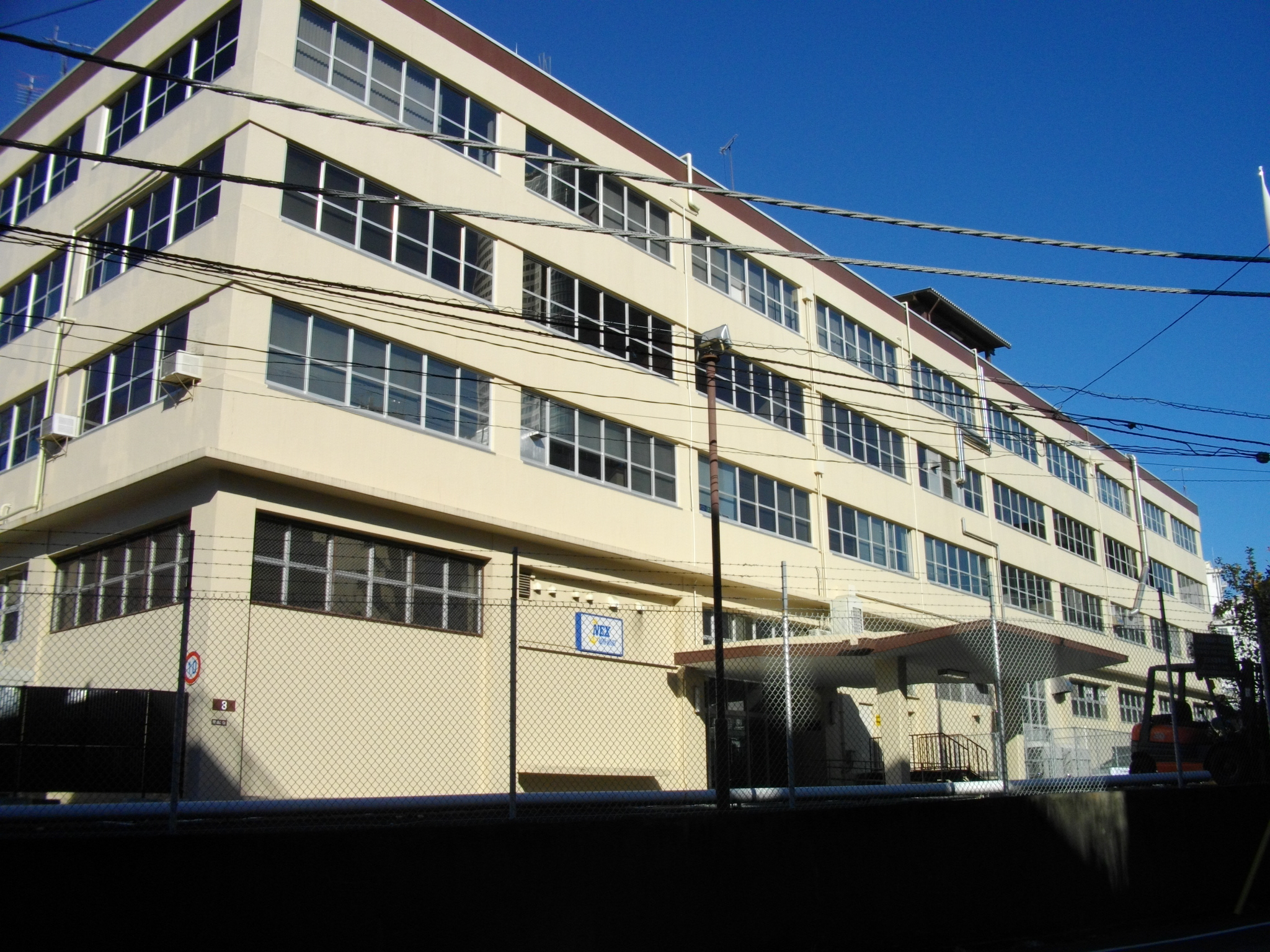
Akasaka Press Center
Michael Jackson climbed into a Black Hawk helicopter in the middle of Tokyo's Roppongi district in March 2007. Not from a commercial heliport, not from an airport, but from a 3.1-hectare United States Army facility wedged between nightclubs and office towers in one of the world's most expensive neighborhoods. The Akasaka Press Center -- also known as Hardy Barracks and officially designated as the Azabu Heliport -- is the kind of place that seems impossible until you find it on a map. A functioning American military installation, complete with helipad and gasoline pump, sitting on land where Imperial Japanese Army soldiers once launched one of modern Japan's most dramatic coup attempts.
The Coup That Started Everything
Before the Americans, before the press center, before the helipad, this ground belonged to the 3rd Infantry Regiment of the Imperial Japanese Army's 1st Division. On February 26, 1936, soldiers from this and other units attempted a coup d'etat that became one of the defining crises of prewar Japan. The February 26 Incident saw young officers assassinate several government officials and seize key buildings in central Tokyo, trying to purge the government of moderates they believed were betraying the emperor. The coup failed after three days, and the unit was sent to Manchuria later that year -- a punishment disguised as a transfer. The Imperial Guard took over the site and held it through the end of World War II. When American forces occupied Tokyo in 1945, they claimed the entire compound. The military history of this patch of Roppongi simply changed flags.
America's Quiet Footprint
Today the facility houses the Tokyo offices of Stars and Stripes, the American military newspaper, and the Tokyo division of the Office of Naval Research. Hardy Barracks provides accommodation for military personnel. The helipad, officially designated for emergency use, periodically handles civilian helicopters under a 2008 agreement between the U.S. military and Tokyo's metropolitan government -- primarily for medical evacuations from the remote Ogasawara Islands, over 1,000 kilometers to the south. The U.S. Army's public stance is that the helipad exists for emergencies in Tokyo. The mayor of Minato City has offered a different perspective, telling inquirers that the details of how the base is actually used cannot be released publicly. That ambiguity fuels the tension that has surrounded the facility for decades.
Sixty Years of 'Please Leave'
Organized opposition to the facility dates to 1967 -- more than half a century of sustained local resistance. Both the Tokyo metropolitan assembly and the Minato municipal assembly have passed unanimous resolutions requesting the facility's removal. The grievances are practical as much as political: 3.1 hectares of prime central Tokyo real estate, in a district where a single square meter can cost more than a car, sits behind fences and off the tax rolls. A large portion of the original American-occupied site was actually returned to Japan in 1962. The University of Tokyo's Institute of Industrial Science used that land until 2001, after which it became home to The National Art Center, Tokyo and the National Graduate Institute for Policy Studies -- two institutions that now stand as examples of what the remaining military land could become. The Press Center sits near other American installations including the U.S. Embassy, 2.5 kilometers northeast, and the New Sanno Hotel, 2.2 kilometers south.
A Cold War Relic in a Hot Real Estate Market
The Akasaka Press Center belongs to a category of places that exist in plain sight yet remain almost invisible to the city around them. Roppongi is famous for nightlife, art museums, and gleaming corporate towers. A functioning military base with a helipad and fuel depot does not fit that narrative, which is precisely why it endures as one of Tokyo's strangest landmarks. The facility is a physical remnant of the postwar security arrangement between the United States and Japan, the kind of thing that diplomats negotiate over and ordinary residents live beside. It occupies the same neighborhood as some of Tokyo's most visited cultural institutions, yet draws almost no tourist attention. For the residents of Minato ward, it is simply a fact of geography -- American soil in the middle of their city, unchanged since 1945.
From the Air
Located at 35.663N, 139.726E in Tokyo's Roppongi district, Minato ward. The helipad is identifiable from the air as a small cleared area amid dense urban development. The facility sits between the distinctive Roppongi Hills tower complex to the northeast and the National Art Center's curved glass facade to the northwest. Nearest airports: Tokyo Haneda (RJTT) approximately 13km south, Narita International (RJAA) approximately 60km east. This is heavily restricted airspace within Tokyo's controlled zone -- do not approach without authorization.