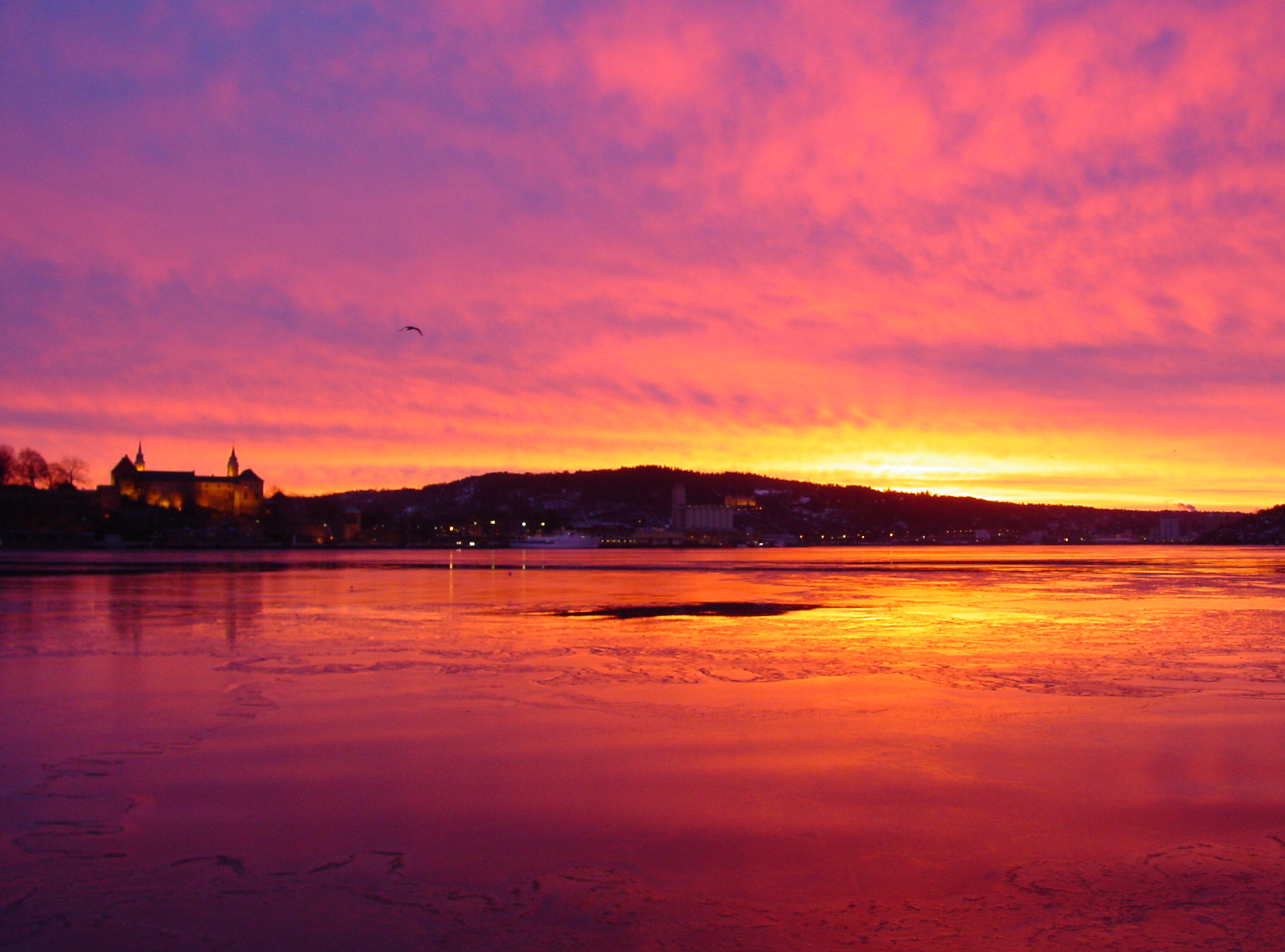
Akershus Fortress
Whoever controlled Akershus Fortress ruled Norway. That was the calculation for seven centuries, and the fortress's builders understood it from the start. Raised on a rocky promontory above the Oslofjord in the late 1290s by King Haakon V, the castle replaced older defenses that had failed catastrophically when the nobleman Alv Erlingsson attacked Oslo in 1287. A stronger center was needed, and the limestone walls that rose above the harbor would prove more than adequate. No foreign army has ever taken Akershus by force. Swedes tried repeatedly. So did Danes, Scots, and Germans. All failed or were turned away, though the fortress's single surrender, without a shot fired to Nazi Germany in 1940, would become its most complicated chapter.
Seven Centuries Under Siege
The fortress first faced battle in 1308, when Swedish duke Erik Magnusson laid siege to it. A local Norwegian army broke the siege, a moment dramatic enough that Nobel laureate Sigrid Undset wove it into her historical novel In the Wilderness. Over the following centuries, the pattern repeated with remarkable consistency: Swedish king Karl Knutsson Bonde besieged it in 1449 and withdrew. Scottish soldiers attacked in 1502. Swedes came again in 1523, and Oslo's citizens, commanded by Hans Mule, burned down their own houses to deny the attackers shelter. King Christian II besieged the castle from 1531 to 1532 before forces from Denmark and Lubeck lifted the siege. Even Charles XII of Sweden failed to take it in 1716. Each time the fortress held. Each time the attackers left.
Where Kings Lived and Died
Haakon V gradually made the fortress his residence after construction finished around 1300, favoring the stone keep over the Oslo Kongsgard estate despite its unsuitability as a home. That choice helped shift Norway's capital from Bergen to Oslo. Queens Euphemia and Margaret lived within these walls, and the last Norwegian king before the Kalmar Union, Olaf II, was born here in 1370. In 1589, Anne of Denmark sheltered at Akershus after storms prevented her voyage to Scotland, where she was betrothed to James VI. After the great fire of 1624, King Christian IV rebuilt Oslo closer to the fortress, renaming the city Christiania and transforming the medieval castle into a Renaissance palace with Italian-inspired bastions. The Royal Mausoleum now holds the remains of kings spanning nearly a millennium, from the medieval Sigurd I to the modern Haakon VII and Olav V.
Walls That Also Confined
Akershus served as a prison for centuries, and a section earned the name The Slavery because inmates could be rented out for labor in the city. The fortress held Norway's celebrated outlaws: Gjest Baardsen, an author and folk hero imprisoned between 1791 and 1849, and Ole Hoiland, a thief romanticized in Norwegian culture. Early socialists who supported Marcus Thrane spent time in its cells. Among the most poignant prisoners were the Sami men from the 1852 Kautokeino rebellion. Jailed after a Laestadian religious uprising in the far north, many died in captivity. But one survivor, Lars Haetta, imprisoned at eighteen, used his years inside to produce the first translation of the Bible into the North Sami language, turning confinement into an act of cultural preservation.
Surrender and Reckoning
On April 9, 1940, the fortress that had resisted every foreign siege surrendered without combat to Nazi Germany. The Norwegian government had evacuated the capital as German forces invaded, and Akershus, for the first time in its history, fell to a foreign power. During the occupation, Germans executed prisoners within its walls, including members of the Pelle resistance group. Liberation came on May 11, 1945, when Terje Rollem received the fortress on behalf of the Norwegian resistance movement. After the war, the reckoning took place on the same grounds: eight convicted traitors were executed here, including Vidkun Quisling, whose name had become synonymous with collaboration, and Gestapo officer Siegfried Fehmer.
Fortress as Living Monument
Today Akershus remains a military area, guarded by His Majesty the King's Guard, yet open to the public from six in the morning until nine at night. The Norwegian Armed Forces Museum and Norway's Resistance Museum both operate within its walls, placing the full arc of Norwegian military history in the place where much of it happened. The Norwegian Ministry of Defence shares modern headquarters in the fortress's eastern section. After the 2011 terrorist attacks in Oslo, the Office of the Prime Minister relocated to a building near the fortress. Even Walt Disney World paid tribute, replicating a portion of Akershus at Epcot's Norway Pavilion, where a princess restaurant called Akershus Royal Banquet Hall serves Norwegian food in a fantasy version of the real thing.
From the Air
Akershus Fortress (59.91N, 10.74E) occupies a prominent promontory on the eastern side of Oslo's harbor, directly visible from the Oslofjord. The stone walls and green copper roofs are identifiable from 2,000-4,000 feet. Oslo Gardermoen Airport (ENGM) lies 47km north. The fortress sits adjacent to the Aker Brygge waterfront development and the Oslo Opera House is visible to the east across the harbor. Best approached from over the fjord for the classic view of the fortress rising above the water.