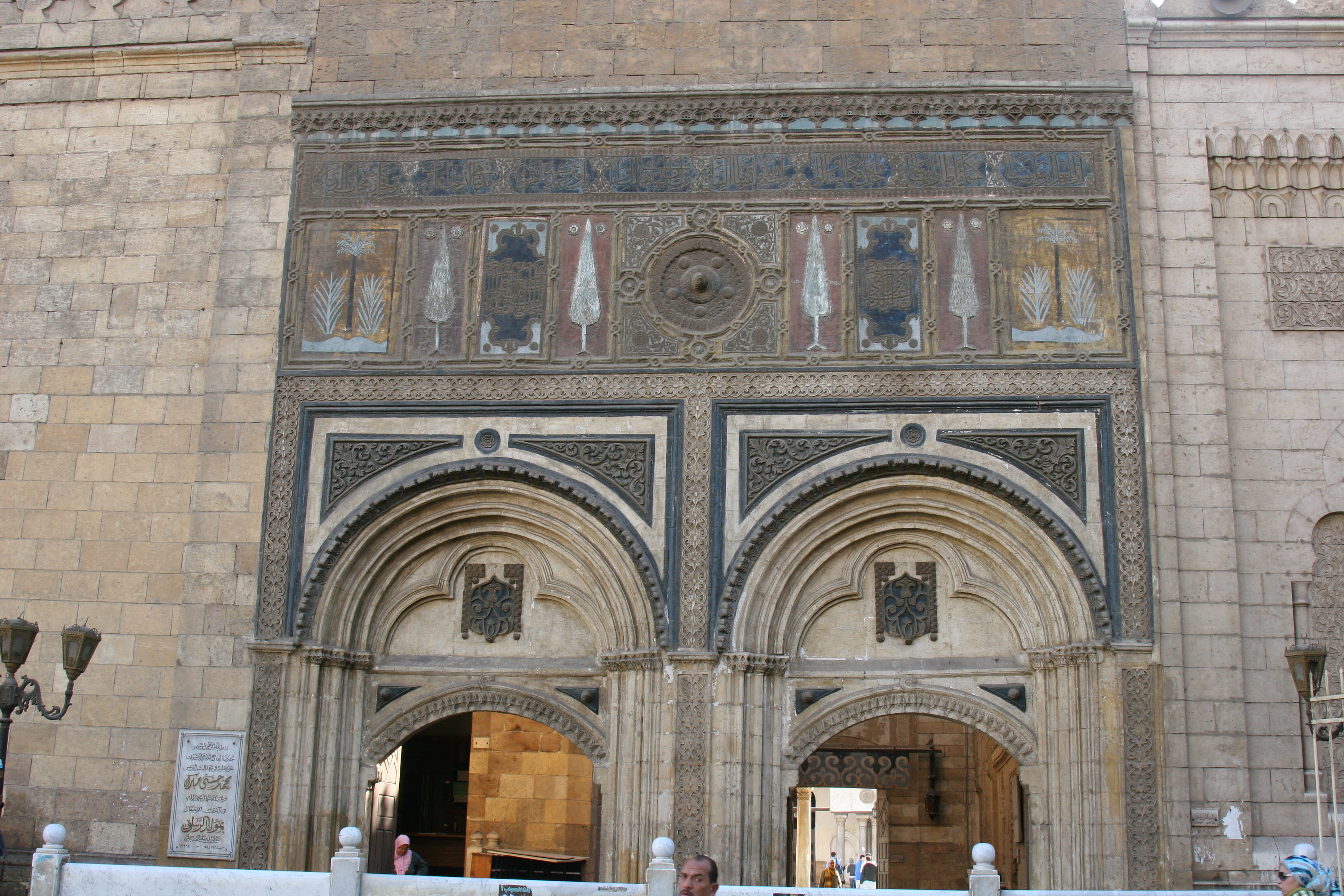
Al-Azhar Mosque
The name means "the most resplendent," and for over a thousand years al-Azhar has tried to live up to it. Commissioned in 970 CE by the Fatimid general Jawhar al-Siqilli as the congregational mosque for his newly founded capital, it held its first Friday prayers during Ramadan of 972 -- built from limestone quarried from the Mokattam hills that still overlook Cairo's eastern skyline. What began as a Shi'a instrument of statecraft became, through a millennium of conquest, neglect, and reinvention, the foremost center of Sunni learning on earth.
A Mosque Born with a City
Cairo itself was created for the Fatimid court, and al-Azhar was its spiritual anchor. The mosque's name likely derives from az-Zahra, an epithet of Fatima, the Prophet Muhammad's daughter and claimed ancestress of the Fatimid dynasty, though some scholars trace it instead to the "Brilliant Palaces" that Caliph al-Aziz Billah built nearby. Either way, the association with radiance stuck. By 989, mosque authorities had hired 35 scholars to give lessons, and under the polymath vizier Yaqub ibn Killis, al-Azhar became a center for instruction in Islamic law. Separate sessions were available to women. The formerly secretive teachings of the Ismaili school were, for the first time, made available to the general public.
Centuries of Reinvention
When Saladin toppled the Fatimids in 1171, he stripped al-Azhar of its congregational status, destroyed its Ismaili manuscripts, and diverted funding to new Sunni madrasas. For nearly a century the mosque languished -- no official classes, no Friday sermons, its library gutted. Yet private lessons persisted in its arcades, and scholars still came. The turnaround arrived with Sultan Baibars in 1266, who restored congregational prayers and student stipends under Mamluk rule. An earthquake in 1302 prompted major repairs, and two complementary madrasas were built along the mosque's walls in the decades that followed. By the fifteenth century, Mamluk sultans competed to leave their mark: Qaytbay added a minaret in the 1480s and al-Ghuri another in 1510, creating the skyline of stacked minarets visible today.
The University That Outlasted Empires
Al-Azhar University is the second oldest continuously operating university in the world, after al-Qarawiyyin in Fez, Morocco. What distinguishes it is scale of influence. For centuries it served as the supreme arbiter of Sunni theology and sharia. Napoleon's troops occupied its courtyard in 1798; the Egyptian revolution of 1952 nationalized it. In 1961, the university was formally separated from the mosque as an independent institution, Al-Azhar Al-Sharif, though the two remain inseparable in the Egyptian imagination. The Grand Imam of al-Azhar continues to hold moral authority across the Sunni world, and the mosque's rulings on matters of Islamic law carry weight from Jakarta to Lagos.
Stone Upon Stone
Walking through al-Azhar is an archaeology lesson in living architecture. The keel-shaped arches and carved stucco in the courtyard date to Caliph al-Hafiz's 1138 refurbishment. The three minarets rising above belong to three different Mamluk patrons across three centuries -- Aqbugha, Qaytbay, and Qansuh al-Ghuri -- each competing in height and ornamentation. The facades are stone, the interior structure brick, a pattern shared with the older Ibn Tulun Mosque. The original Fatimid prayer hall, though much modified, still anchors the plan. Over a millennium of additions have given the complex an organic, layered quality that no single architect could have designed.
A Living Symbol
Cairo earned the nickname "the City of a Thousand Minarets," and al-Azhar is the reason the count begins here. During the 2011 Egyptian revolution, many of al-Azhar's imams joined protesters in the streets, and senior cleric Emad Effat was killed near the cabinet building. The mosque remains deeply embedded in Egyptian public life -- a place where theology, politics, and daily devotion overlap in ways that would be recognizable to the Fatimid scholars who first taught within its walls. It endures not as a museum piece but as a functioning mosque, a working university, and a symbol of Islamic Egypt that has outlasted every dynasty that tried to claim or suppress it.
From the Air
Al-Azhar Mosque sits at 30.046N, 31.263E in the historic Islamic core of Cairo, identifiable by its cluster of three Mamluk-era minarets. The mosque lies south of al-Muizz Street, one of the oldest thoroughfares in Islamic Cairo. Cairo International Airport (HECA) is approximately 20 km to the northeast. Best viewed at 2,000-4,000 feet to appreciate the density of the medieval quarter. The Nile and Cairo Citadel provide reference landmarks.