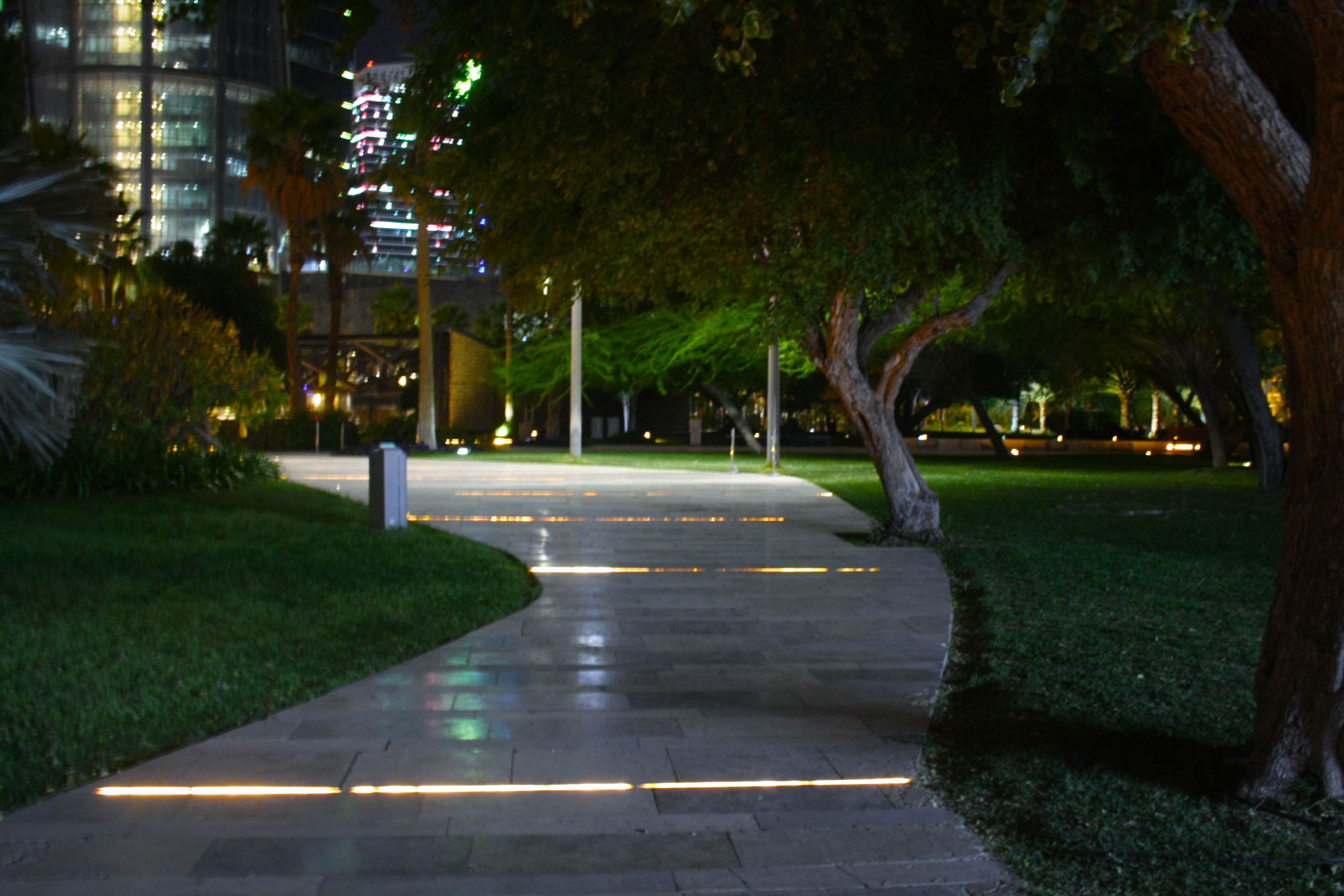
Al Shaheed Park
Sixty years is a long time for a park to wait. In 1952, when Kuwait's first urban master plan was drawn up, a broad swathe of green space was sketched into the heart of the capital, a buffer between the old city and the suburbs spreading south. Then oil wealth arrived, priorities shifted, and the park became a line on a map that nobody built. Phase 1 eventually materialized, but the rest of the project stalled for decades. It was not until 2013 that Al Shaheed Park finally began to take the shape its planners had imagined, rising from the flat desert landscape as 78.5 acres of gardens, walkways, and cultural spaces that transformed Kuwait City's relationship with the outdoors.
A Garden Over the Highway
What makes Al Shaheed Park structurally remarkable is what lies beneath it. The park is built over existing infrastructure, giving it one of the largest over-structure green roofs in the world. Roads and utilities run below while gardens, fountains, and shaded walkways spread across the surface above. The engineering required to support living soil, mature trees, and water features on top of a highway corridor was immense, but the result transformed a utilitarian stretch of urban infrastructure into the most significant green space in a country where temperatures routinely exceed 50 degrees Celsius. The park is part of the Kuwait National Cultural District, a broader effort to anchor the capital's identity in culture rather than commerce alone.
Where Memory Lives
Two museums anchor Al Shaheed Park's cultural mission. The Remembrance Museum walks visitors through pivotal moments in Kuwaiti history, its central hall organized around four icons symbolizing the four most consequential battles the nation has faced. The exhibits do not shy away from the 1990 Iraqi invasion and its aftermath, making the park's name, which translates to "the martyr," more than ceremonial. Across the grounds, the Habitat Museum takes a different approach entirely. Interactive exhibits and scenographic recreations bring Kuwait's natural environments indoors, showcasing the desert flora and fauna that most visitors drive past without noticing. Large-format audiovisual productions and audio guides make the experience immersive, a reminder that this stretch of the Arabian Gulf coast has ecological stories to tell alongside its human ones.
Built in Phases, Growing Still
Al Shaheed Park has expanded in stages, each phase adding new dimensions. Phase II, which opened in April 2017, introduced a skate park, a youth complex, and an open-air performance center, broadening the park's appeal beyond contemplative garden strolls. Multiple historical zones thread through the landscape, including a Memorial zone and a Museum zone, giving the grounds a layered quality where recreation and remembrance coexist. The park's gardens vary in character, from manicured formal plantings to more naturalistic areas. Walking paths connect the cultural venues, and outdoor theaters host events that draw crowds on cooler evenings. In a city where public space has historically taken a back seat to private development, Al Shaheed Park represents a deliberate civic investment in shared ground.
Kuwait's Green Ambition
Al Shaheed Park is not an isolated gesture. It sits within the Kuwait National Cultural District alongside the Sheikh Jaber Al Ahmad Cultural Centre and the Sheikh Abdullah Al-Salem Cultural Centre, all part of Kuwait Vision 2035, the country's long-term development strategy to diversify beyond petroleum. The park's contemporary architecture and artistic installations signal a nation working to define itself through culture and public space. For a country where summer heat confines most outdoor activity to early morning or late evening, the shaded walkways and climate-adapted plantings demonstrate that thoughtful design can make public space viable even in one of the hottest climates on Earth. What started as a forgotten line on a 1952 blueprint has become a proving ground for Kuwait's post-oil identity.
From the Air
Al Shaheed Park sits at 29.370N, 47.994E in central Kuwait City, visible from altitude as a large green rectangle amid the capital's dense urban fabric. The park occupies the corridor south of the old city center. Kuwait International Airport (OKBK) lies approximately 15 km to the south. At lower altitudes, look for the distinctive green belt stretching through the beige and white cityscape, bordered by major road corridors. The nearby Kuwait Towers and National Assembly Building along the waterfront help orient the view.