Alabama Jazz Hall of Fame
Every Saturday morning since 1999, children from across Alabama have filed into the Carver Theatre on 4th Avenue North in Birmingham to learn jazz for free. They sit where Black audiences once watched first-run movies during segregation, in a building that anchors the city's Civil Rights District alongside the 16th Street Baptist Church and Kelly Ingram Park. The Alabama Jazz Hall of Fame, founded in 1978 and opened as a museum in this space on September 18, 1993, exists because Birmingham produced an improbable concentration of jazz talent. Sun Ra was born Herman Blount here in 1914. Erskine Hawkins, whose "Tuxedo Junction" became one of the biggest swing hits of 1939, grew up on these streets. The state that gave the world W.C. Handy -- the "Father of the Blues" -- also fed the pipelines that carried jazz musicians to Chicago, New York, and the world.
Where Black Birmingham Went to the Movies
The Carver Theatre opened in 1935 on the corner of 4th Avenue North and 17th Street, in the heart of Birmingham's historic Black business district. During the Jim Crow era, it was the only theatre in the city where African Americans could see first-run films; every other cinema was segregated for white patrons. The 4th Avenue corridor was the commercial and entertainment hub for Black Birmingham -- a stretch of Black-owned businesses, banks, and gathering places forced into concentration by segregation laws, then thriving on the community's own terms. A 1945 renovation brought 1,300 new theater chairs, air conditioning, and upgraded sound and projection. The Carver closed in the early 1980s, and the City of Birmingham purchased it in 1990, remodeling it as a live performance venue seating 527. When the Jazz Hall of Fame needed a permanent home, the Carver was the only choice that made sense.
The Instruments and the Stories
The museum holds memorabilia that makes jazz history tangible: paintings, quilts, instruments, and personal effects of artists including Ella Fitzgerald and W.C. Handy. Donated instruments from musicians like Lou Marini, Erskine Hawkins, Sammy Lowe, and Haywood Henry fill display cases and, through the Hall's recycling program, end up in the hands of students. The Hall of Fame's inductee roster reads like a catalog of American music itself. The inaugural 1978 class honored six musicians including Frank Adams, Erskine Hawkins, and Haywood Henry. Sun Ra was inducted in 1979. Ella Fitzgerald joined in 1984, Duke Ellington and Lionel Hampton in 1992, Nat King Cole in 1993. The most recent inductee, legendary bassist Ron Carter, was honored in 2024 when the museum reopened after renovations. Tours are guided by Dr. Frank Adams, who also founded the Saturday jazz classes.
Saturday Mornings and Scholarship Dreams
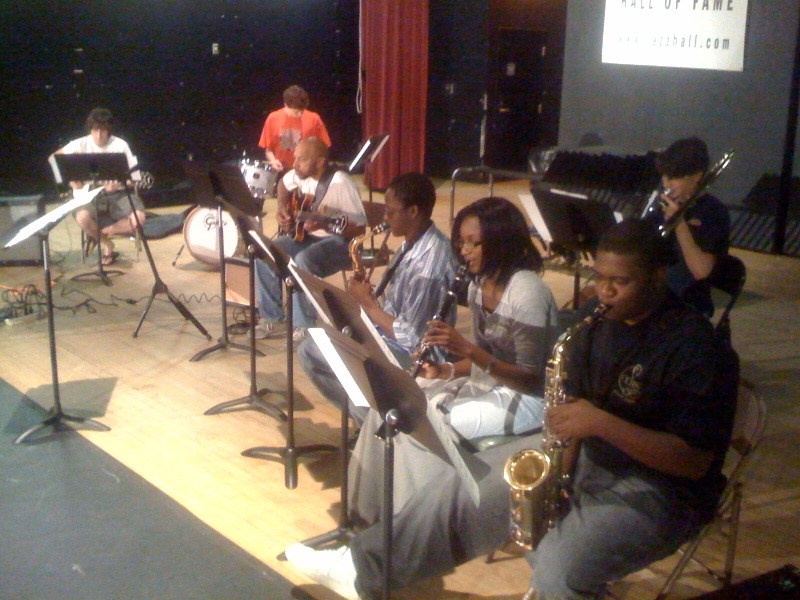
Dr. Frank Adams started the free Saturday jazz classes in 1999 with a simple premise: any resident of Alabama, any age, could walk in and learn to read and improvise jazz. Local jazz band directors from area schools teach the classes. The results have been remarkable. Graduates of the program have earned scholarships to the University of New Orleans, the Manhattan School of Music, and the New School in New York City. The annual Student Jazz Band Festival, a three-day competition, draws middle school, high school, and college jazz ensembles from across the region. Judges award distinctions for "Band of Distinction" and "Outstanding Soloist" at each level. The educational programs have spawned spin-off groups, including the Neo Jazz Collective, a student ensemble that started its own school in Fairfield, Alabama, and has become a rising force on Birmingham's nu-jazz scene.
4th Avenue Still Swings
Each fall, the Taste of 4th Avenue Jazz Festival fills the historic district with live music, jointly sponsored by the Jazz Hall of Fame and Urban Impact of Birmingham. The festival is both a celebration and a reclamation -- 4th Avenue's Black business district was fractured when Interstate 65 was built through it in the 1960s, and many businesses closed after desegregation allowed Black customers to shop elsewhere. The district is now one of the few intact historic Black business corridors remaining in the southeastern United States. The Jazz Hall of Fame supplements its Saturday classes with free workshops, clinics, and masterclasses led by nationally known musicians: saxophonists Lou Marini and Eric Marienthal, drummers Bill Goodwin and T.S. Monk, keyboardist Gregg Karukas, pianist Joey Alexander, and bassist Esperanza Spalding have all taught here. Birmingham's jazz tradition is not a museum piece. It is being handed down, instrument by instrument, Saturday by Saturday.
From the Air
Located at 33.517N, 86.813W on 4th Avenue North in downtown Birmingham, Alabama. The Carver Theatre sits within the Birmingham Civil Rights District -- from the air, the cluster of historic sites is visible between 15th and 18th Streets: the 16th Street Baptist Church, Kelly Ingram Park, and the Birmingham Civil Rights Institute are all within one block. The 4th Avenue Historic District runs along three blocks of 4th Avenue North. Birmingham-Shuttlesworth International Airport (KBHM) is approximately 5 miles northeast. Red Mountain and the Vulcan statue are visible to the south. The downtown grid, defined by railroad corridors and the original industrial layout, frames the district.