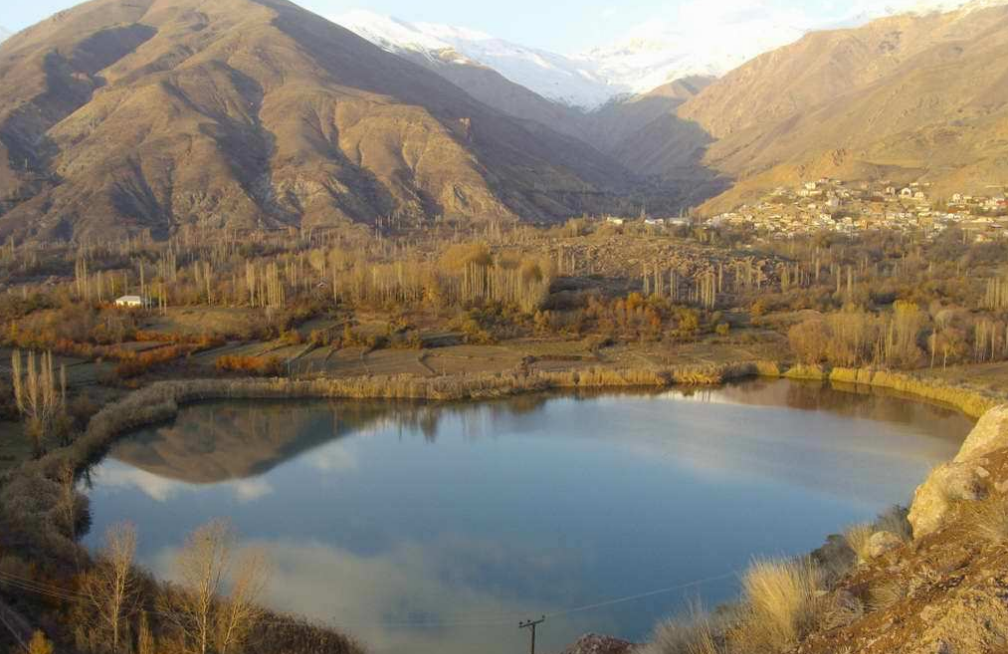
Alamut
Nothing about the name "Alamut" is subtle. Some scholars translate it as "Eagle's Nest," and the fortress earns that title. Perched atop a 200-meter rock face at 2,163 meters above sea level in Iran's Alborz range, Alamut Castle commanded a valley so remote and so defensible that it became the headquarters of one of medieval history's most feared organizations. Hassan-i Sabbah arrived here in 1090 CE with a plan: build a state from mountaintops. For nearly two centuries, the Nizari Ismaili order he founded operated from this valley, projecting influence across the Islamic world from a place most armies could not reach.
A Valley Between Worlds
Alamut sits on the western edge of the Alborz range, wedged between two entirely different landscapes. To the south stretches the dry, barren plain of Qazvin. To the north, the land drops into the densely forested slopes of Mazandaran province. The contrast is stark and immediate. Travelers approaching from Qazvin climb through a first range of hills where the terrain begins to fold and twist, the geology forming natural walls and corridors that make the valley both beautiful and strategically brilliant. The region splits into western and eastern halves, each with its own character. Historically the area was known as Rudbar, named after the Shahrud river that carved through these mountains long before any fortress crowned them.
The Fortress on the Rock
In 1090 CE, Hassan-i Sabbah chose this valley as the base for his Nizari Ismaili state. The castle he established sits on a rock that covers roughly 20 hectares, with sheer slopes and a deep ravine forming natural defenses that made conventional siege nearly impossible. The rock itself became part of the fortification, its steep faces doing the work that walls and towers did elsewhere. From this seat, Hassan-i Sabbah launched a campaign of preaching and political action that would define the region for over two centuries. At least 20 castles from this era have been identified throughout the valley, a network of strongholds that turned the landscape itself into a defensive system. Today, only ruins and scattered towers remain visible on the surface. The deeper structures of the fort lie buried, awaiting archaeological excavation to reveal what the centuries have hidden.
The Order That Shook Empires
The Assassins, as the Nizari Ismailis came to be known in Western chronicles, operated from Alamut with a discipline and strategic reach that far exceeded the size of their territory. Hassan-i Sabbah's followers carried out targeted killings of political and military leaders across the Seljuk Empire, using precision rather than armies to reshape the balance of power. The order's reputation grew until it entered the realm of legend. Marco Polo described the valley's rulers in his travels, and European Crusaders carried stories home that transformed the word "Assassin" into a permanent fixture of the English language. The succession of rulers from Hassan-i Sabbah through Ruknu-d-Din Khurshah, the last lord of Alamut, spans a dynasty that outlasted many conventional kingdoms. The fortress finally fell to the Mongol invasion in 1256 CE, ending an era but not the legacy.
People of the Mountains
The identity of the people who have inhabited the Alamut region is itself a layered story. Some scholars classify the local population as Tats, speakers of a dialect of the Tati language. Others identify them as Mazanderani or Gilaks, whose languages belong to the same northwestern Iranian family but carry different cultural associations. Linguists have noted that the label "Tat" was historically used by Turkic speakers to refer to non-Turkic populations, which may explain the conflicting classifications. Whatever the label, the people of Alamut have lived for centuries at the intersection of multiple Iranian linguistic and cultural traditions, shaped by their position between the Caspian lowlands and the central plateau. Today, the leader of the contemporary Ismaili community worldwide is the Aga Khan, a direct descendant of the Nizari Ismaili imams who once ruled from this valley.
From the Air
Alamut Castle sits at approximately 36.44°N, 50.59°E in the Alborz mountain range at an elevation of 2,163 meters. The valley runs roughly east-west between the Qazvin plain to the south and the forested slopes of Mazandaran to the north. The castle rock is identifiable from altitude as a prominent isolated formation. The nearest major city is Qazvin, approximately 100 km to the southeast. The nearest airport is Qazvin Airport (OIIG). In clear weather, the contrast between the barren southern plains and the green northern slopes is visible, helping orient the approach.