Alexandria in the Caucasus
Before it was Bagram Air Base, before it was a Cold War flashpoint or a staging ground for the war on terror, this stretch of Afghan plain at the foot of the Hindu Kush was something else entirely: a Greek city. In March 329 BC, Alexander the Great paused here at a junction of ancient trade routes and founded Alexandria in the Caucasus, planting Macedonian settlers in soil that Cyrus the Great had claimed two centuries earlier. The Greeks called the Hindu Kush the "Indian Caucasus," mapping their own geography onto a landscape that defied their categories. The city Alexander left behind would outlast his empire by centuries.
A Conqueror's Crossroads
Alexander did not build on empty ground. Around 500 BC, Cyrus the Great had established an Achaemenid settlement called Kapisa at this same strategic junction, where routes from Central Asia, the Indian subcontinent, and the Iranian plateau converged. Alexander razed the old fortifications and raised new ones, populating his city with 7,000 Macedonians, 3,000 mercenaries, and thousands of local inhabitants -- though ancient sources disagree on the exact numbers. Curtius puts the native population in the thousands; Diodorus counts 7,000 locals and 3,000 non-military camp followers among the settlers. What the sources agree on is the scale of ambition: this was not a garrison outpost but a functioning city, designed to anchor Greek power at the gateway to India.
Where Aphrodite Met the Buddha
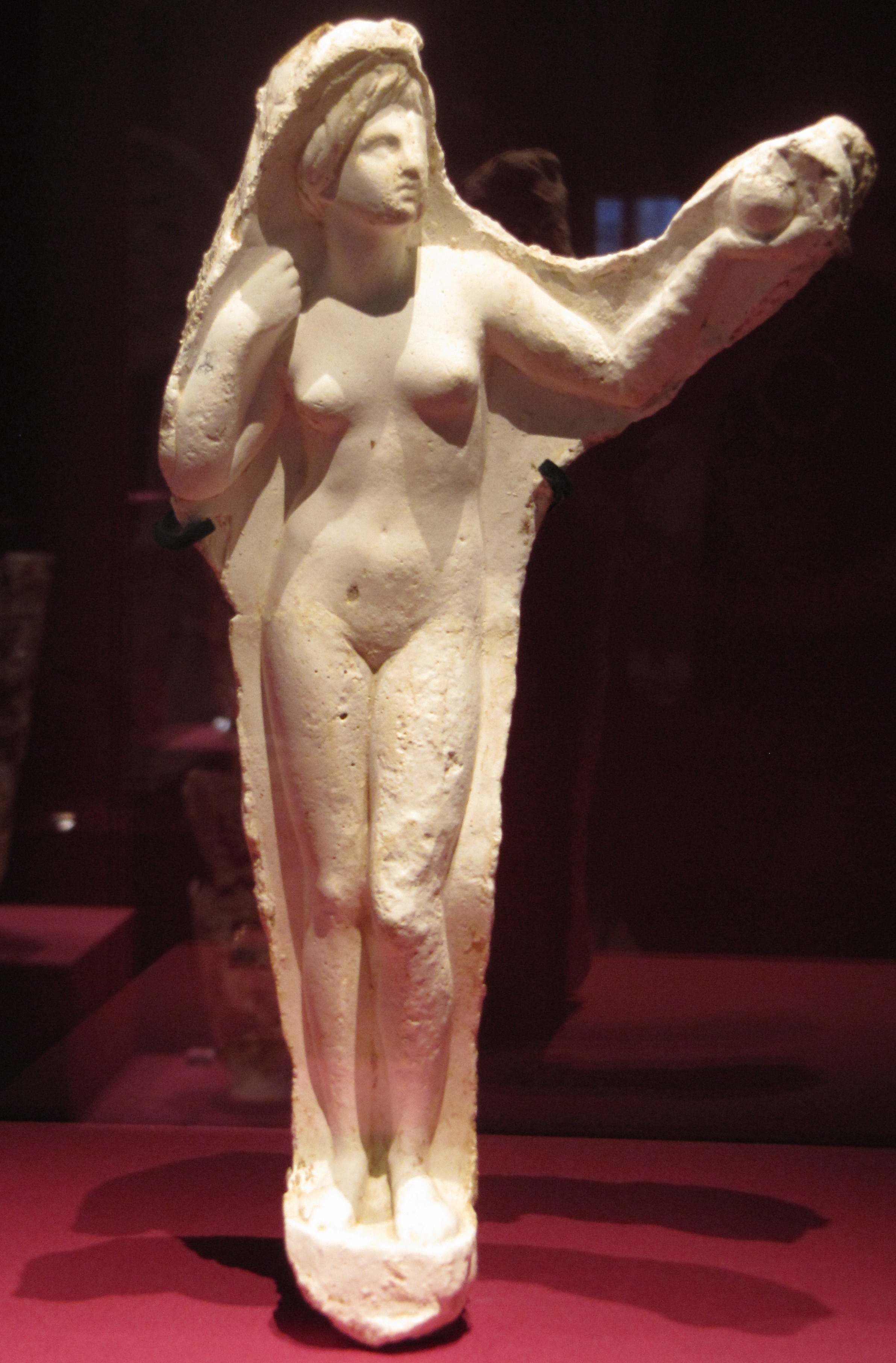
The city's most remarkable chapter came after Alexander's empire fractured. Between 180 BC and roughly 10 AD, Alexandria of the Caucasus served as one of the capitals of the Indo-Greek kings, rulers who fused Hellenic culture with the traditions of the subcontinent. The archaeological evidence of this fusion is startling. In the 1930s, French archaeologist Roman Ghirshman excavated near modern Bagram and unearthed a trove that no single civilization could have produced alone: Egyptian and Syrian glassware sat alongside bronze statuettes of Greek gods, the celebrated Begram ivories depicted Indian scenes in classical style, and Roman-era bowls spoke to trade networks stretching from the Mediterranean to the Ganges. A bronze figurine of Alexander himself turned up -- a conqueror still presiding over his city, cast in miniature, centuries after his death.
The Collector Who Saw It First
Before Ghirshman, an Englishman named Charles Masson had already recognized what lay beneath the Afghan soil. Masson -- born James Lewis, a deserter from the East India Company's army who reinvented himself as a scholar -- spent decades in the 1830s and 1840s gathering coins, rings, seals, and small artifacts from the Bagram area. His collections provided the first modern evidence that a significant Hellenistic city had existed here. Masson's work was largely forgotten for decades, but the objects he recovered now offer a window into a lost world where Greek medallions depicted soldiers in Corinthian helmets, where Eros and Psyche appeared on decorative roundels, and where Harpocrates -- the Greco-Egyptian god of silence -- stood rendered in Afghan bronze.
Ruins Between Empires
Today, what remains of Alexandria in the Caucasus is a rectangular tell measuring roughly 500 by 200 meters, accompanied by a circular citadel about three kilometers northeast of Bagram Air Base. The tell sits beside the main road heading north, a reminder that the strategic value of this location has not changed in two and a half millennia. That continuity has come at a cost. Shelling during the Afghan War of the 21st century damaged the archaeological site, and decades of conflict have made sustained excavation nearly impossible. The city that once connected the Mediterranean world to India now lies in a landscape still defined by the collision of outside powers -- a pattern Alexander himself set in motion when he marched his army through these foothills and decided that this crossroads needed a city with his name.
From the Air
Located at 34.99N, 69.31E in the Shomali Plain at the southern foot of the Hindu Kush, approximately 3 km northeast of Bagram Air Base (OABG). The rectangular tell and circular citadel are visible from medium altitude along the main road heading north. The Panjshir Valley extends northeast, and the snowcapped Hindu Kush ridgeline dominates the northern horizon. Kabul lies roughly 60 km to the southeast.