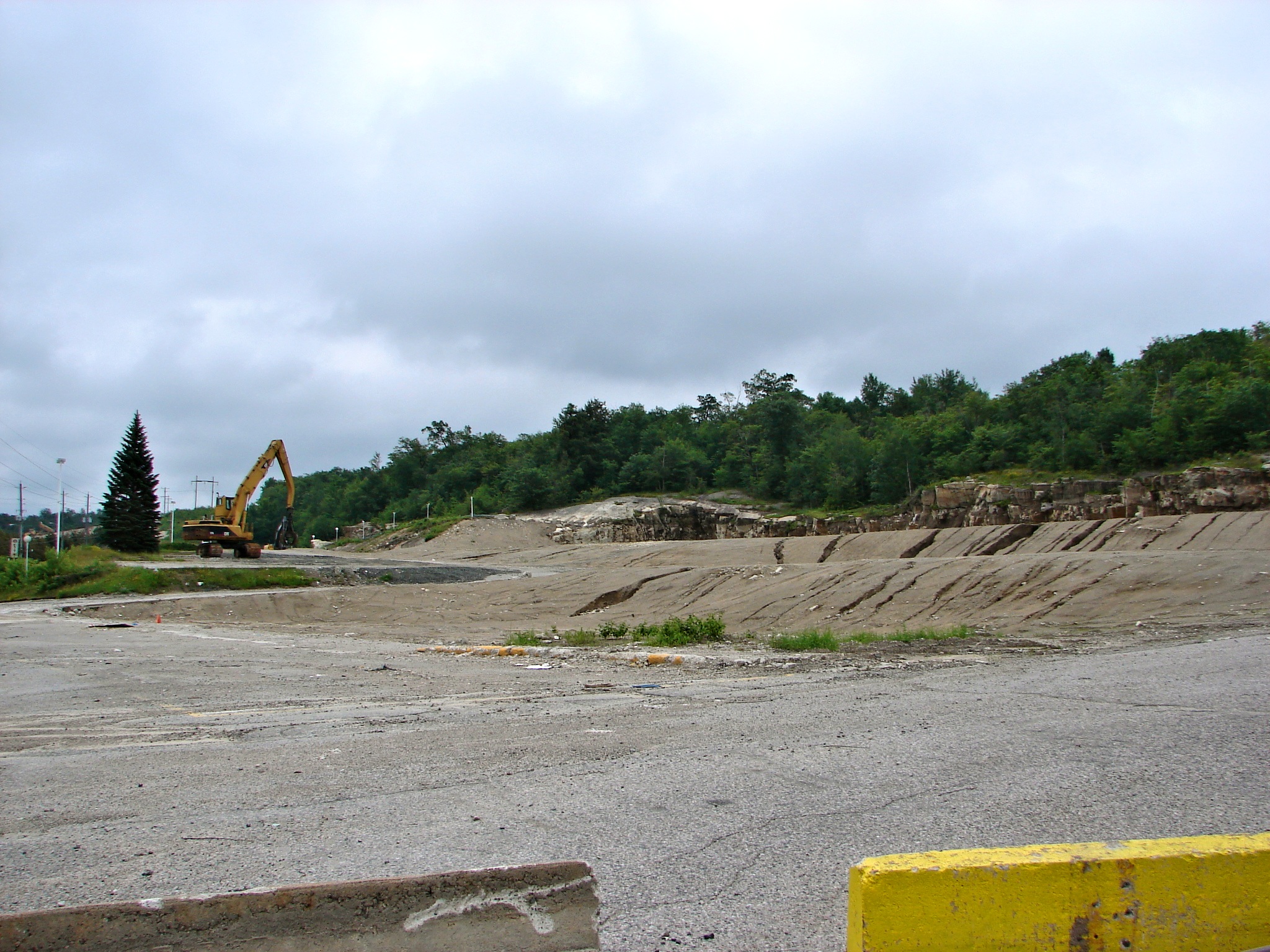
Algo Centre Mall
Doloris Perizzolo was opening pull-tab lottery tickets at the booth inside the Algo Centre Mall when the ceiling above her gave way. It was 2:20 in the afternoon on Saturday, June 23, 2012. A section of the rooftop parking deck -- roughly 12 metres by 24 metres of concrete and steel -- collapsed through two floors of the shopping centre in Elliot Lake, Ontario, killing Perizzolo, 74, and Lucie Aylwin, a 37-year-old employment consultant at College Boreal. More than twenty others were injured. The collapse itself took seconds. The failures that caused it had been accumulating for decades.
A Parking Lot in the Sky
The Algo Centre Mall opened in 1980 in Elliot Lake, a small Northern Ontario city that had grown up around uranium mining. The mall was more than a shopping centre -- it housed a grocery store, a hotel, a library, government offices, and dozens of retail tenants. For a remote community of roughly 11,000 people, it was the commercial and social centre of town. But the building carried a fatal design compromise from the start. The parking lot was placed on the roof. Consulting engineer John Kadlec later testified that he had raised concerns during construction about sloppy workmanship, structural columns that were already crooked, and steel beams that were rusting despite being brand new. The hollow-core concrete slabs used in the roof deck were structurally inefficient, and no adequate waterproofing was ever installed. Water from rain and snowmelt seeped through the roof for years, corroding the steel supports from the inside out. To compound the problem, local drivers routinely used the roof deck as a shortcut to bypass the traffic lights at the corner of Hillside Drive and Ontario Avenue, subjecting the structure to traffic loads it was never designed to handle.
Warnings Buried, Reports Doctored
The leaks were not a secret. Water dripped through the mall ceiling so persistently that tenants complained for years. But the building's owners, the Nazarian family, treated the problem as a nuisance rather than a structural emergency. The public inquiry that followed the collapse revealed a pattern of deliberate concealment. The owner's son admitted that the company had pressured engineers to remove references to leaks and corrosion from their reports. Fictional repair invoices from a shell company called Empire Roofing and Restoration were fabricated to mislead the Royal Bank of Canada, which held the building's mortgage. Robert G.H. Wood, the engineer who signed off on a report declaring the mall structurally sound just weeks before the collapse, had privately acknowledged that the roof was at risk of caving in -- but altered his final report at the owner's request so the structural problems would not jeopardize the building's refinancing. Wood was charged with two counts of criminal negligence causing death. In June 2017, an Ontario Superior Court judge acquitted him, noting that other engineers had inspected the building and also failed to identify the danger.
Four Days in the Rubble
The rescue effort became its own crisis. Local authorities alerted the Commissioner of Community Safety by 4:00 that afternoon, and Toronto's Heavy Urban Search and Rescue team arrived at 4:25 the next morning after a 540-kilometre drive. They began probing the rubble immediately. But on Monday morning -- despite having detected signs of life in the debris -- rescue operations were suspended. Officials cited the danger of additional concrete falling on both survivors and rescuers. The decision sparked outrage. Residents lined up to volunteer to enter the structure themselves. The building's owners sought a court injunction to force the search to resume. Local MPP Michael Mantha, whose own constituency office had been inside the mall, appealed directly to Ontario Premier Dalton McGuinty, who urged rescuers to resume using heavy equipment. Prime Minister Stephen Harper offered the Canadian Forces. The bodies of Perizzolo and Aylwin were recovered on Wednesday, June 27 -- four days after the collapse.
A Town Remade
The loss of the Algo Centre Mall tore a hole in Elliot Lake that went far beyond the physical crater. An estimated 250 people had worked in the mall or its attached hotel. The grocery store, the library, a Scotiabank branch, Service Canada offices, a pharmacy -- all were gone overnight. Foodland leased the city's Collins Hall recreational facility and converted it into a temporary grocery store, which opened in October 2012. A permanent replacement store did not open at Pearson Plaza until April 1, 2016, nearly four years later. The library relocated. Service Canada moved to a new address. The mall site was eventually purchased by the city. The political fallout was equally total. The public inquiry's final report was released just twelve days before the 2014 municipal election. Incumbent mayor Rick Hamilton and two incumbent councillors who challenged him for the mayoralty were all defeated by newcomer Dan Marchisella. Only one sitting councillor won re-election. Both Professional Engineers Ontario and the Ontario Association of Certified Engineering Technicians and Technologists implemented mandatory continuing professional development programs in direct response to the collapse -- a formal acknowledgement that the profession's oversight systems had failed.
From the Air
Located at 46.384N, 82.650W in Elliot Lake, a small city in the Algoma District of Northern Ontario. The former mall site is in the town's commercial core near the intersection of Hillside Drive and Ontario Avenue. Elliot Lake sits in the Canadian Shield landscape of lakes, boreal forest, and exposed Precambrian rock. The town's grid pattern is visible from altitude against the surrounding wilderness. Nearest airports: Elliot Lake Municipal Airport (CYLK) approximately 5nm south of town; Sault Ste. Marie Airport (CYAM) approximately 80nm west. The Highway 108 corridor connecting Elliot Lake to the Trans-Canada Highway (Highway 17) is a prominent feature. Best viewed from 3,000-5,000 ft AGL. The surrounding landscape of abandoned uranium mine sites and tailings ponds is visible from altitude.