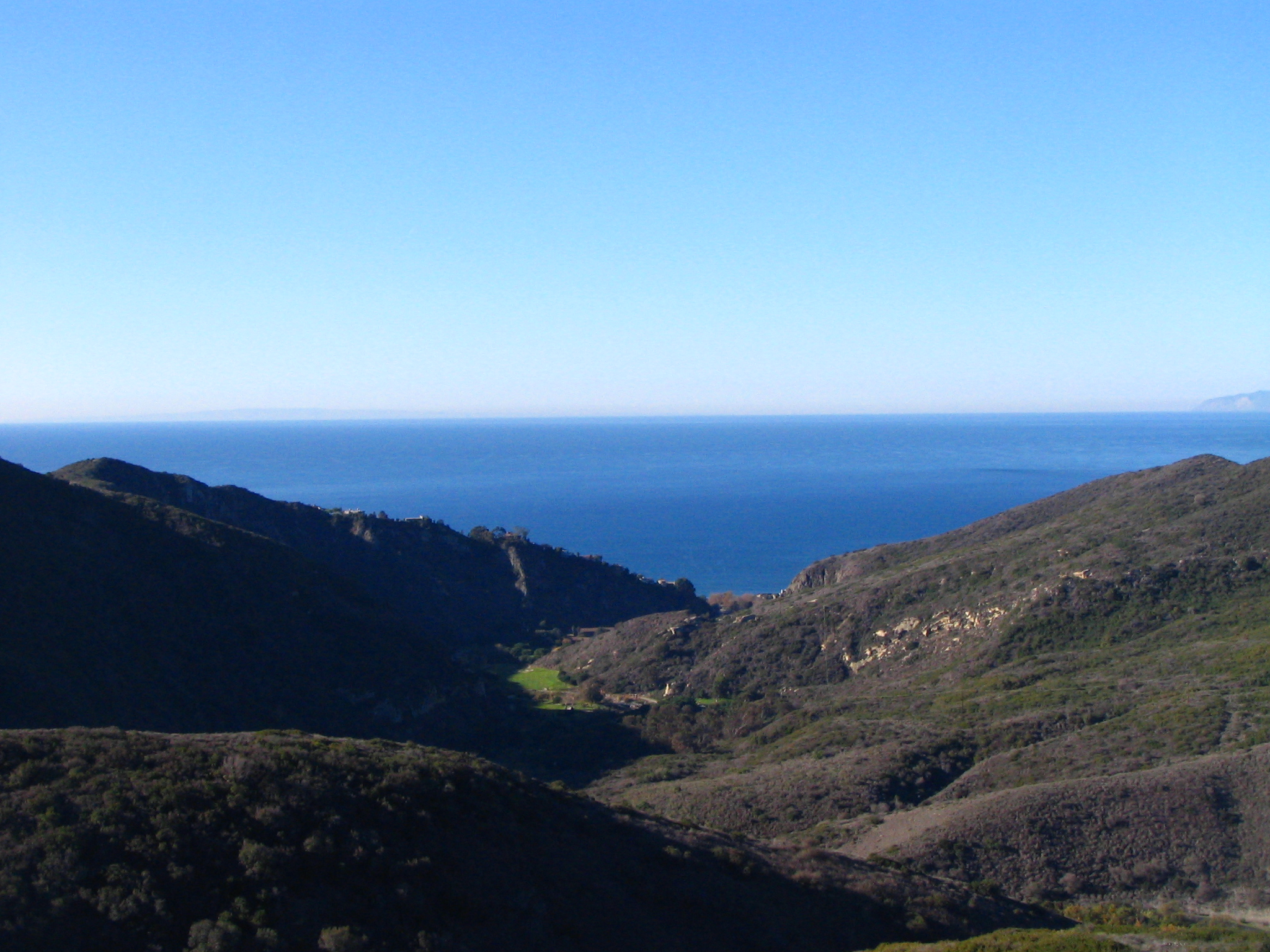
Aliso and Wood Canyons Wilderness Park
The trail names tell you where you are. Aswut means golden eagle in the Acjachemen language. Toovet means brush rabbit. Alwut means crow. Hunwut means black bear. These words mark paths through Aliso and Wood Canyons Wilderness Park, a rugged island of coastal canyons, grassland, and riparian woodland surrounded by five suburban cities in Orange County's San Joaquin Hills. The canyon rim rises abruptly from the valley floor, and from Temple Hill on a clear day, most of Orange County spreads below. The Acjachemen and Tongva peoples once used Aliso Creek as the boundary between their territories. Their village of Niguili stood near where Aliso Creek meets Sulphur Creek. Now the park shelters bobcats, bald eagles, and fossils from a time when this land lay beneath the Pacific Ocean.
Carved by a Greater River
Aliso Canyon began forming about 1.2 million years ago as the creek carved through rising hills during geological uplift. But the canyon's present shape dates to the Ice Age, ending roughly ten thousand years ago, when Orange County had a wetter climate and sea levels ran much lower. The creek cut a V-shaped valley with enormous erosive force. When the glaciers melted and seas rose, water backed into the canyon and created a shallow fjord. Sediment deposited by the creek slowly filled this inlet, leaving a flat valley floor above alluvium deposits reaching deep into the earth. Today's creek appears almost comically undersized for the canyon it occupies, an underfit stream whose gentle flow seems incapable of carving such a massive gap. The San Joaquin Hills themselves consist of marine sedimentary rock that once lay at the bottom of the Pacific. Where the creek exposed strata of the Monterey Formation, the Pecten Reef has yielded thousands of Miocene fossils: dolphins, whales, invertebrates, plankton, bryozoa, and algae dating from five to twenty-three million years ago.
Spanish Ships and Robbers Cave
The 1769 Portola expedition was the first European party to explore here. Spanish ships anchored in the bay at the canyon's mouth, and sailors harvested large timbers from the river area. The Spanish moved the Acjachemen people to Mission San Juan Capistrano in the following decades. After Mexican independence in 1821, the missions were secularized and divided into private land grants. Juan Avila received Rancho Niguel, encompassing most of the future park, in 1842. The canyon was used for sheep ranching through the first half of the twentieth century. A cave somewhere in the park still carries the nickname Robbers Cave, long after the bandits who inspired it were arrested. The 1960s brought proposals for a six-lane highway through the canyon and a national fitness center headed by former Los Angeles Rams coach George Allen. Neither materialized. The wilderness designation that followed preserved the habitat instead.
Old Growth in Orange County
The name Aliso comes from the Spanish designation of Aliso Creek, likely for the white alder native to the area. Wood Canyon takes its name from the groves of California live oak and sycamore growing along its floor. In 2021, the Old Growth Forest Network designated the park for its ancient oak and sycamore trees. Four major vegetation zones divide the canyon: riparian along the creek, chaparral on the slopes, coastal sage scrub in the side canyons, and seasonal grassland on the valley floor that flourishes in spring and diminishes by late summer. The park protects habitat for sensitive species including many-stemmed dudleya, Laguna Beach dudleya, Pomona rattleweed, and hummingbird sage. Native grassland ecosystems in the less-visited southwestern portion remain largely intact. About thirty miles of trails wind through the park, including the paved Aliso Creek Trail running its length and the unpaved Wood Canyon Trail popular with horseback riders.
Wildlife in the Urban Ring
Surrounded by Aliso Viejo, Dana Point, Laguna Beach, Laguna Hills, and Laguna Niguel, the park functions as one of the largest wildlife sanctuaries in coastal Orange County. Coyotes and bobcats roam the canyons. Up to five bald eagles have been counted in Aliso Canyon. Peregrine falcons fly along the canyon walls. California gnatcatchers, pond turtles, San Diego horned lizards, orange-throated whiptails, and Pacific pocket mice find refuge here. Aliso Creek was once a major steelhead stream, but dam construction, channelization, pollution, and invasive species have essentially eliminated them. Carp now thrive in the warm, silty waters near the mouth. Rangers regularly block and replant unauthorized trails created by hikers and mountain bikers taking shortcuts. The main entrance off Alicia Parkway in Laguna Niguel charges three dollars for parking, but no entrance fee. The park opens at seven in the morning and closes at sunset, the same hours it has kept since the wilderness designation took hold.
From the Air
Located at 33.54N, 117.74W in the San Joaquin Hills, Aliso and Wood Canyons Wilderness Park appears as a large undeveloped corridor between suburban cities. The canyon runs roughly north-south with Aliso Creek visible as a riparian ribbon. Temple Hill and ridge lines offer clear visual markers. Nearby airports include John Wayne Airport (KSNA) 7nm north and Laguna Beach Heliport (3CL0). Best viewed at 2,500-4,000 feet AGL to appreciate the park's extent against surrounding development and connection to Laguna Coast Wilderness Park to the north.