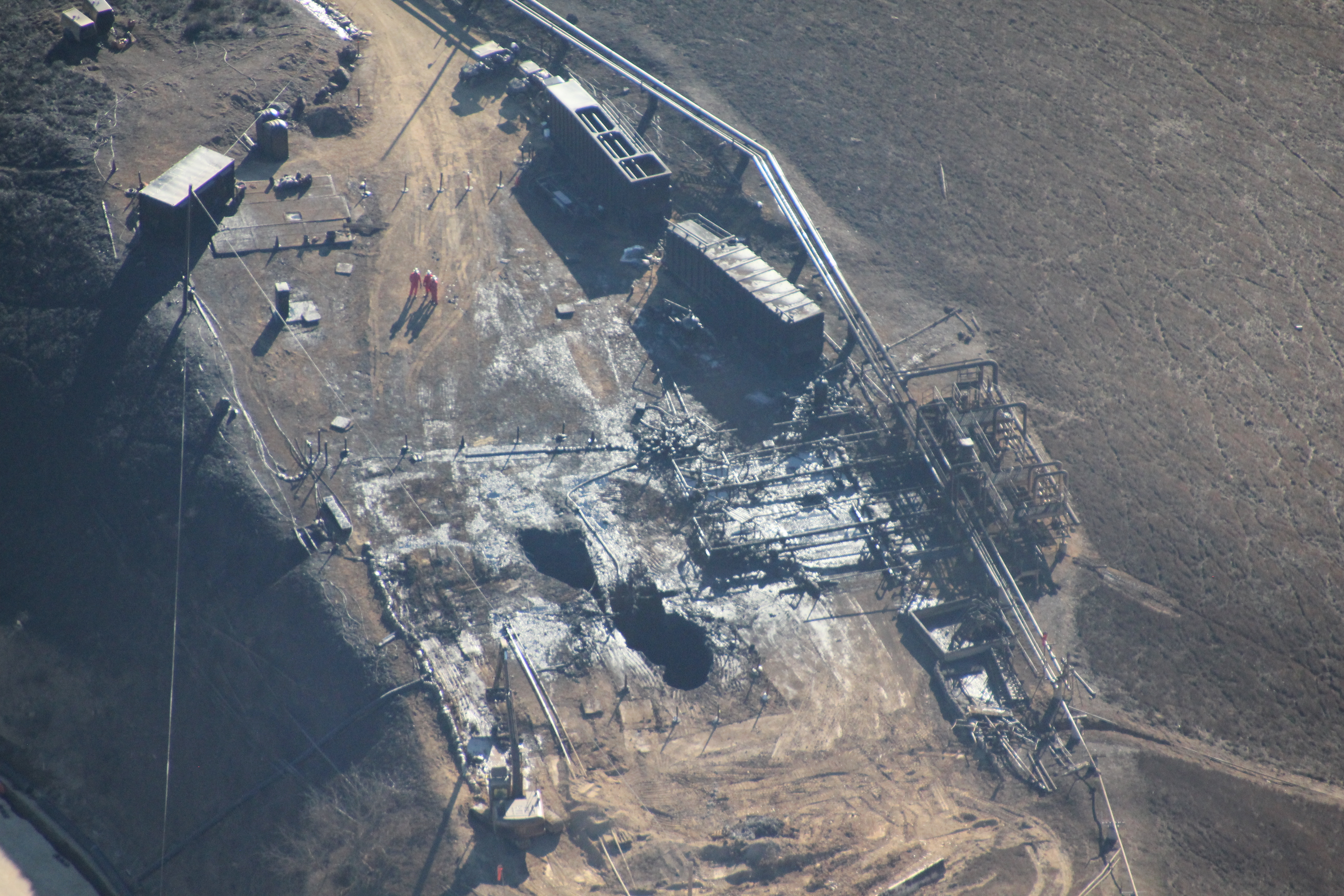
Aliso Canyon Gas Leak
You can't see methane. That's part of what made the Aliso Canyon disaster so strange and so frightening. Beginning on October 23, 2015, natural gas began hemorrhaging from a broken well at a massive underground storage facility in the Santa Susana Mountains near Porter Ranch, on the northern edge of Los Angeles. The gas was invisible, but residents could smell it—a rotten-egg stench that seeped into homes, triggered headaches, and drove families into the street. For 112 days, the leak continued.
What Was Leaking, and Where
The Aliso Canyon Underground Storage Facility belongs to Southern California Gas Company, a subsidiary of Sempra Energy, and is the second-largest natural gas storage facility of its kind in the United States. The facility stores billions of cubic feet of gas in natural underground reservoirs deep beneath the Santa Susana Mountains, accessed by dozens of wells. The leak originated at Well SS-25, where the outer casing of the well had corroded. When pressure built up, gas forced its way through the breach and began escaping to the surface. SoCal Gas attempted multiple fixes over weeks. All failed. The gas kept flowing—methane primarily, with smaller amounts of ethane and other compounds—at rates that made it, by official measurements, the worst single natural gas leak in United States history in terms of environmental impact.
The Porter Ranch Displacement
The neighborhood of Porter Ranch sits in the hills south and west of the Aliso Canyon facility, a suburban enclave of tract homes and good schools. When the smell of gas became overwhelming in late October 2015, residents began complaining of headaches, nosebleeds, and nausea. By November, state and local officials were calling for action. SoCal Gas eventually agreed to pay for temporary relocation of affected residents. More than 8,000 families were displaced at the peak of the crisis, moved to hotels and rental properties across the San Fernando Valley. Schools were temporarily relocated. The neighborhood, which had been built on the promise of clean suburban air, became a ghost town of empty driveways and darkened windows while the leak continued unabated.
Stopping the Flow
The well was finally sealed on February 18, 2016, after engineers drilled a relief well that intercepted Well SS-25 deep underground. Governor Jerry Brown had declared a state of emergency in January 2016. By the time the leak was stopped, an estimated 109,000 metric tons of methane had escaped—roughly the equivalent, in climate terms, of the annual greenhouse gas emissions of more than 570,000 cars. The environmental impact went beyond climate: air-quality monitors documented elevated levels of compounds associated with the gas stream. Studies of health effects on residents and first responders continued for years afterward, their findings disputed by some scientists and the company alike.
Aftermath and Reckoning
SoCal Gas faced criminal charges, civil suits, and regulatory scrutiny. The company paid hundreds of millions of dollars in fines, settlements, and remediation costs. Well SS-25 itself was permanently plugged. The broader question of whether Aliso Canyon should continue operating as a storage facility became a flashpoint for energy policy debates in California. Elected officials called for the facility's permanent closure; energy regulators argued that the state needed its storage capacity to balance natural gas supply. The dispute continued for years, with the facility's long-term future unresolved. What had been invisible infrastructure had become, briefly, the most visible energy story in America.
From the Air
Located at 34.32°N, 118.56°W in the Santa Susana Mountains, near Porter Ranch in the northwest San Fernando Valley. The Aliso Canyon facility's surface infrastructure—including well pads and access roads—is visible from the air at 2,500–4,000 feet MSL. Nearest airports: KVNY (Van Nuys, ~12 miles southeast), KWHP (Whiteman Airport, ~14 miles east). The surrounding Porter Ranch neighborhood and the canyon terrain are clearly visible against the chaparral hillsides.