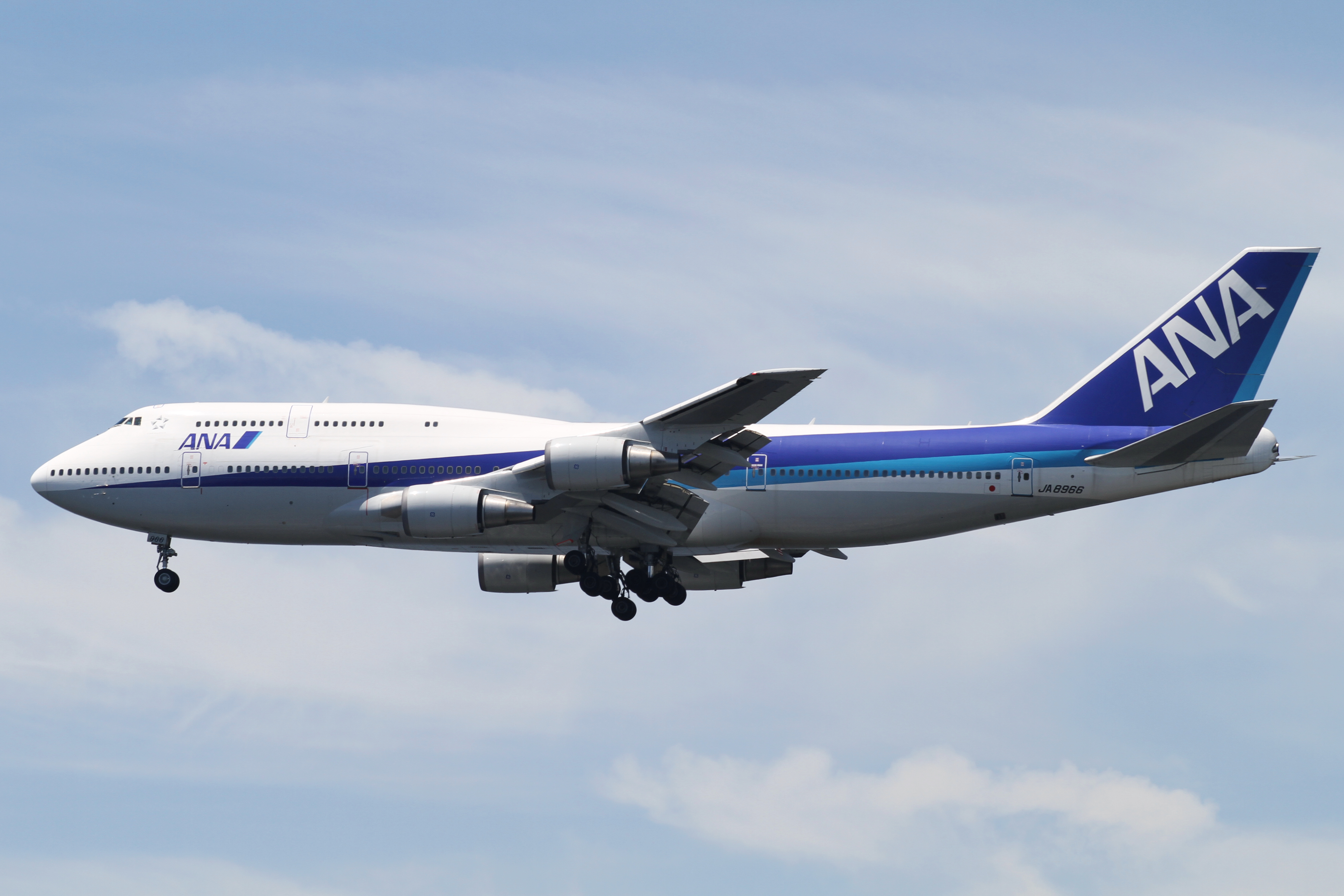
All Nippon Airways Flight 61
Yuji Nishizawa wrote the letter himself. One month before he boarded All Nippon Airways Flight 61 on July 23, 1999, the 28-year-old from Edogawa, Tokyo, mailed detailed warnings to the Ministry of Transport, to ANA, and to several major newspapers, explaining exactly how a person could bypass security at Haneda Airport by retrieving a checked bag containing a weapon from the baggage claim area and carrying it straight through to a departure gate without ever passing through a screening checkpoint. He even applied for a job as an airport security guard. The airport made a single phone call in response. No further action was taken. A month later, Nishizawa used the exact method he had described to smuggle a kitchen knife aboard a Boeing 747-481D packed with 503 passengers and 14 crew, bound for New Chitose Airport near Sapporo.
Twenty-One Minutes of Terror
At 11:48 A.M. Japan Standard Time, roughly 25 minutes after takeoff, Nishizawa forced a flight attendant at knifepoint to open the cockpit door. He pushed 34-year-old First Officer Kazuyuki Koga out of the cockpit and locked himself inside with 51-year-old Captain Naoyuki Nagashima. Despite the threat, Nagashima managed to activate his radio and alert air traffic control to the hijacking. Then Nishizawa stabbed the captain in the chest and seized the yoke. The aircraft began to descend. For roughly twenty minutes, the plane carrying more than 500 souls was in the hands of a man whose stated goal was to fly the jumbo jet under Tokyo's Rainbow Bridge. At 12:09 P.M., cabin crew and passengers overpowered Nishizawa. Off-duty pilot Junji Yamauchi, who happened to be aboard, rushed into the cockpit and took control. First Officer Koga followed, radioing ahead: "It's an emergency. The captain was stabbed. Prepare an ambulance." The 747 touched down at Haneda at 12:14 P.M. Captain Nagashima, a resident of Yokohama, was pronounced dead shortly after landing.
The Loophole Nobody Closed
Nishizawa's method was disturbingly methodical. He had discovered that passengers arriving on domestic flights could exit through the baggage claim area and then walk back into the departure gate zone without encountering any security screening. To exploit this, he booked two flights on the same day: a Japan Airlines round-trip to Osaka and ANA Flight 61 to Sapporo. He placed the knife in his checked luggage for the JAL flight. When he returned to Haneda from Osaka, he collected his bag -- knife inside -- from the carousel and simply carried it as hand luggage through to the Flight 61 departure gate. He had tested this exact route weeks earlier on a round-trip to Kumamoto. He had even booked backup tickets on two other departing flights that day -- ANA Flight 083 to Naha and Flight 851 to Hakodate -- in case something went wrong with his primary plan. His parents found the tickets and the knife in his bags on July 22, forcing him to delay by one day. But they did not stop him.
Trial and Aftermath
Investigation revealed that Nishizawa had taken a large dose of SSRI antidepressant medication before the hijacking. A defense-commissioned examination found he had Asperger syndrome. He told investigators he was an avid flight simulator enthusiast and that his dream was to fly the 747 under the Rainbow Bridge spanning Tokyo Bay. On March 23, 2005, a court found Nishizawa guilty but of diminished capacity, holding him only partly responsible for his actions. Presiding Judge Hisaharu Yasui sentenced him to life imprisonment. The case also broke new ground in Japanese media ethics. Authorities initially withheld Nishizawa's name, citing questions about criminal insanity. Four days after the hijacking, the Sankei Shimbun published his name and photograph, calling the incident a "serious crime." The decision triggered a broader shift in Japanese journalism, as other outlets followed suit in similar cases. Captain Nagashima's family sued ANA, the Japanese government, and Nishizawa's family, alleging negligent security. A settlement with undisclosed terms was reached on December 21, 2007.
A Permanent Change to Japanese Aviation
The hijacking of Flight 61 forced a comprehensive overhaul of airport security procedures across Japan. The Ministry of Transport ordered strict new inspections of all carry-on baggage at every screening checkpoint in the country. The specific loophole Nishizawa exploited -- the open path between baggage claim and departure gates -- was sealed permanently. For Haneda Airport, one of the busiest in Asia, the changes were immediate and visible. The incident remains the last fatal hijacking of a commercial aircraft in Japanese aviation history. Captain Nagashima is remembered not for the manner of his death but for his final professional act: even with a knife-wielding hijacker in the cockpit, he found a way to alert air traffic control, giving ground personnel and the airline critical seconds to begin emergency response. The 502 surviving passengers and crew owe their lives to his composure, to the courage of First Officer Koga and off-duty pilot Yamauchi, and to the passengers who helped subdue Nishizawa.
From the Air
Located at Haneda Airport (RJTT), 35.557N, 139.781E, on the western shore of Tokyo Bay. The airport sits at sea level on reclaimed land in Ota Ward, clearly visible from the air by its distinctive parallel runway configuration and proximity to the Rainbow Bridge to the north. Nearest alternate airports: Narita International (RJAA) approximately 35nm east, Yokota Air Base (RJTY) approximately 25nm west. Tokyo Bay's shoreline and the Rainbow Bridge -- the structure Nishizawa intended to fly under -- are prominent visual landmarks when approaching from the south.