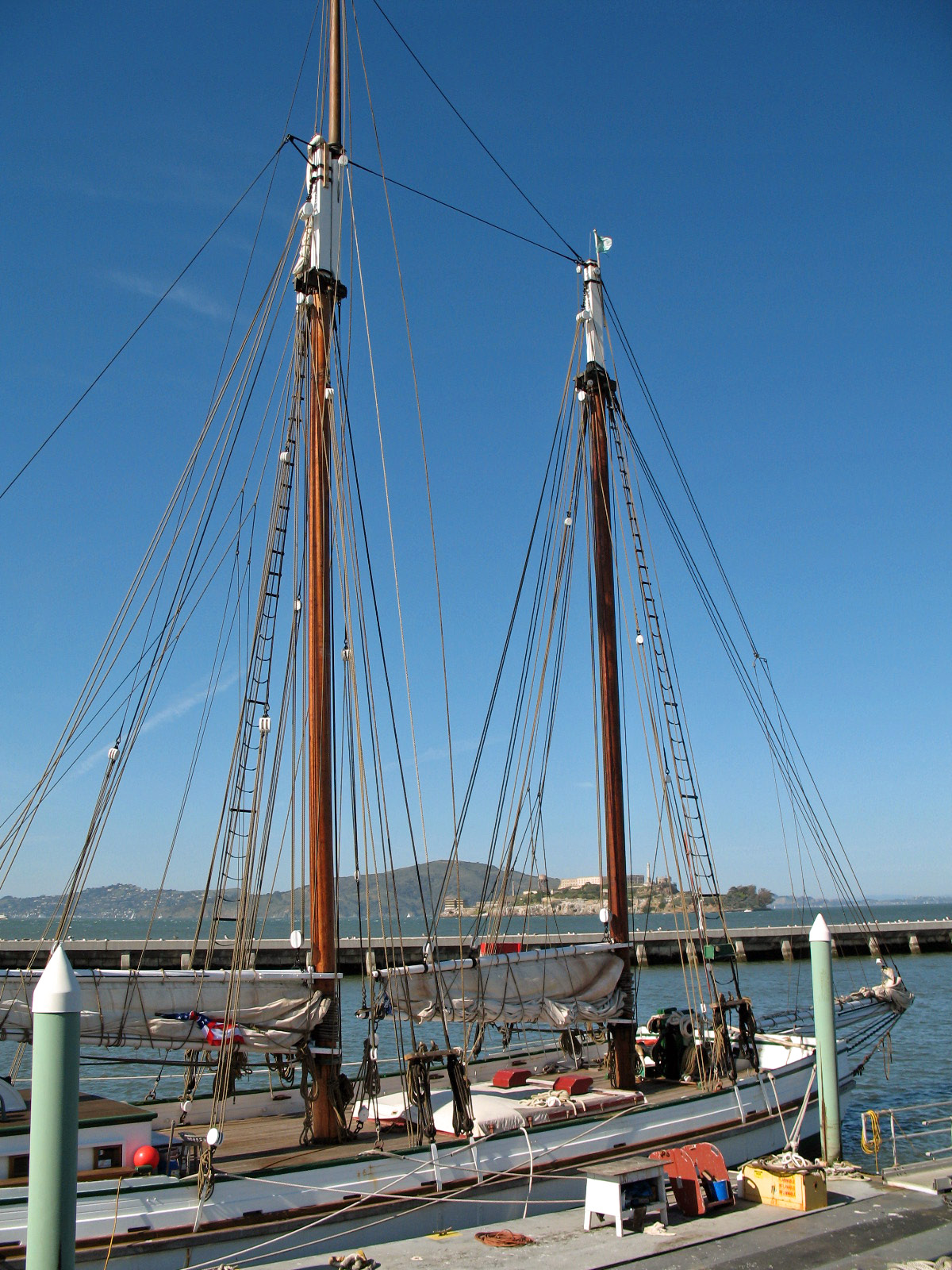
Alma (1891)
She has a flat bottom, a shallow draft, and the ungainly profile of a floating shoebox. The Alma, built in 1891, is a scow schooner -- a type of workboat designed to navigate the shallow waters of San Francisco Bay's marshes, sloughs, and tidal flats. She carried hay, grain, lumber, and salt between the agricultural communities around the bay and the docks of San Francisco. Today she is the last surviving example of a vessel type that once numbered in the hundreds, preserved as a National Historic Landmark at the San Francisco Maritime National Historical Park.
The Bay's Delivery Trucks
Before highways and truck transport, the communities ringing San Francisco Bay depended on flat-bottomed scow schooners to move bulk cargo. These vessels could be loaded and unloaded on mudflats at low tide, lying on their flat bottoms while wagons drove alongside. They navigated sloughs too shallow for deeper-hulled vessels, reaching farms, salt works, and small landings that had no deep-water access. The Alma worked this trade for decades, one of hundreds of scows that constituted the bay's internal transportation network. Her two masts carried lateen sails that could be handled by a small crew, making her economical to operate.
Last of Her Kind
As roads, bridges, and trucks replaced waterborne commerce, the scow schooner fleet disappeared. Vessels were abandoned, scrapped, or left to rot on the bay's mudflats. The Alma survived partly by luck and partly through the intervention of maritime preservationists who recognized that she represented an entire chapter of Bay Area history that was vanishing. She was acquired by the National Park Service and restored for display and sailing demonstrations at Hyde Street Pier, where she joins the Balclutha, C.A. Thayer, and other historic vessels in the maritime park's floating museum.
Sailing the Shallow Bay
The Alma still sails San Francisco Bay on public excursions offered by the maritime park, giving passengers the experience of traveling by wind power on the same waters her crew navigated 130 years ago. The bay has changed dramatically -- marshes have been filled, shorelines developed, bridges built -- but the wind and the tides remain the same. Sailing the Alma is a lesson in how the Bay Area's geography shaped its economy before the automobile: a network of waterways connecting agricultural hinterlands to the urban center, powered by the prevailing westerlies that blow through the Golden Gate every afternoon.
From the Air
The Alma is docked at Hyde Street Pier at 37.81N, -122.42W in San Francisco's Fisherman's Wharf area. The historic vessels at the pier are visible from low altitude. Nearest airports: KSFO 12nm south, KOAK 8nm east.