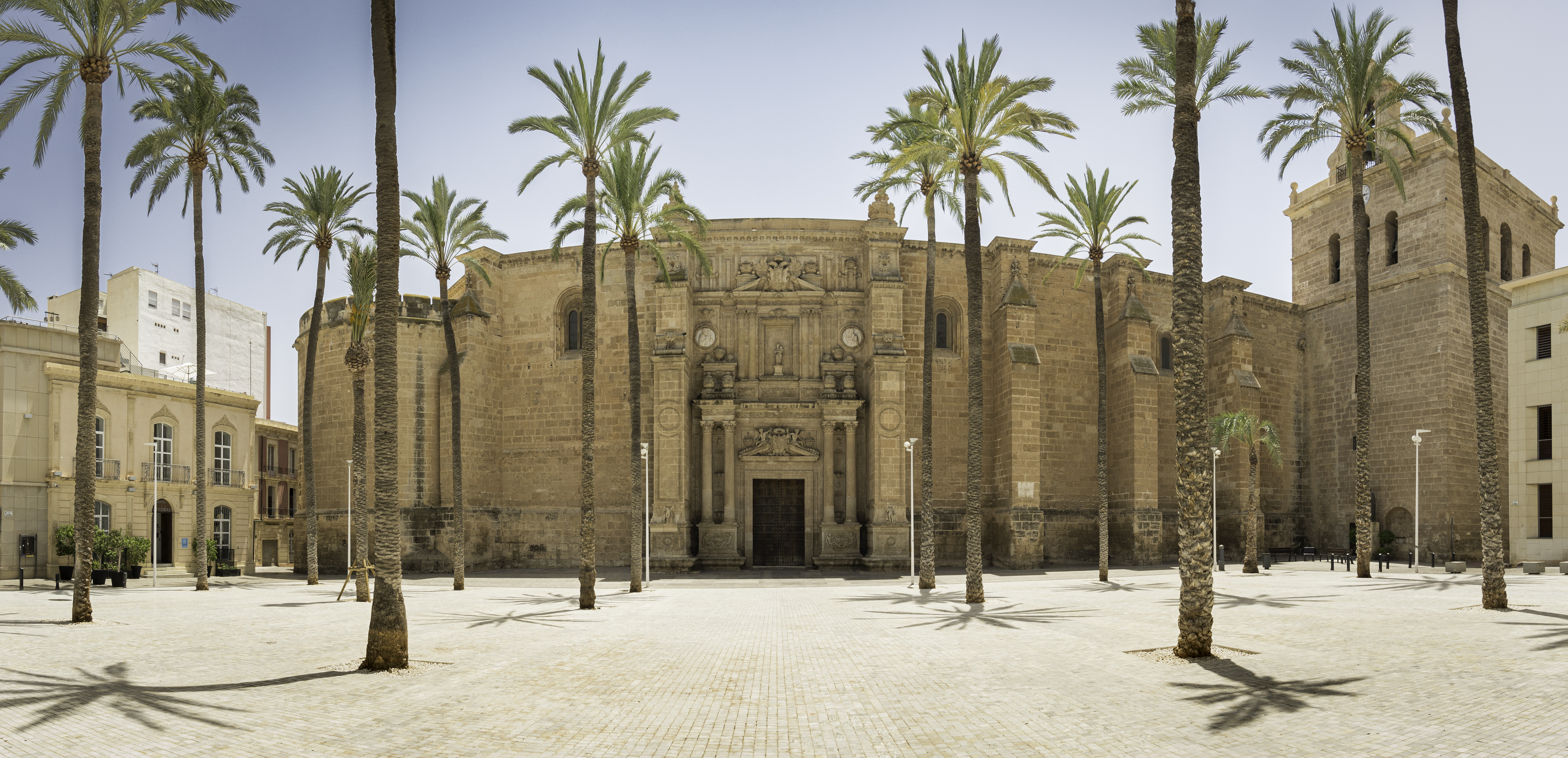
Almería Cathedral
Most cathedrals invite worshippers to look upward, toward vaulted ceilings and stained glass. The Cathedral of Almeria invites them to look outward -- through windows that double as arrow slits, past walls thick enough to withstand cannon fire, across battlements designed to repel attackers arriving by sea. Built between 1524 and 1562 on a coast plagued by Barbary pirate raids, this is a cathedral that prayed for peace while preparing for war.
Born from Destruction
The cathedral that stands today exists because its predecessor did not survive. An earthquake in the early 16th century destroyed the original church, and the decision to rebuild provided an opportunity to address a persistent problem: Almeria's Mediterranean coastline was under constant threat from North African corsairs. The new cathedral was designed from the ground up as both a house of worship and a fortress, its construction spanning nearly four decades from 1524 to 1562. The architects blended Gothic ribbed vaults and Renaissance detailing with unmistakably military features -- corner towers, thick walls, and limited external openings that could be defended in a siege. The result is a building unlike any other cathedral in Spain, one whose beauty is inseparable from its functionality as a defensive structure.
Stone and Style
Inside, the cathedral rewards close attention. Gothic ribbed vaults soar over the main nave, their geometry precise and elegant despite the fortress-like austerity of the exterior. Renaissance elements appear in the ornamentation and in the proportions of the side chapels, reflecting the transition between architectural eras that the cathedral's long construction period straddled. The main facade, the retrochoir, and the choir all display the work of craftsmen who understood that even a fortified building could be beautiful. The cloister provides a moment of enclosed calm, its columns and arcades creating a contemplative space that contrasts with the warlike exterior. The last bell was cast in 1805, adding its voice to a bell tower that had been calling the faithful -- and warning of danger -- for nearly three centuries.
Patrimony and Hollywood
The cathedral was declared a Monumento historico-artistico perteneciente al Tesoro Artistico Nacional on June 3, 1931, placing it under Spain's highest level of heritage protection as a Bien de Interes Cultural. This recognition came partly in acknowledgment of the building's unique character as a fortified cathedral, a type rare even in the Mediterranean basin where such threats were common. The building gained unexpected international attention on March 21, 1969, when its plaza was used as a filming location for the American film Patton, starring George C. Scott. The cathedral's imposing stone facade provided the backdrop for scenes set during World War II -- another era when the Mediterranean coast was a theater of conflict. The proximity of the Alcazaba fortress above and the port below places the cathedral within a compact urban landscape where a millennium of military and religious architecture coexists within walking distance.
A Cathedral on Guard
The Cathedral of Almeria remains the seat of the Roman Catholic Diocese of Almeria, an active parish church where services continue beneath the same vaults that sheltered frightened congregations during pirate raids centuries ago. Its defensive architecture, once a practical necessity, has become its most distinctive feature -- the reason visitors seek it out among the many grander, more ornate cathedrals of Andalusia. The thick walls that once absorbed cannon fire now absorb the Mediterranean heat, keeping the interior cool even in Almeria's famously scorching summers. Standing in the nave, looking up at the Gothic vaults and out through the narrow defensive windows toward the sea, the building's dual nature is inescapable: it was built to worship God and to survive everything else.
From the Air
Located at 36.84°N, 2.47°W in central Almeria, near the Alcazaba fortress. The cathedral's blocky, fortified profile is distinctive from the air compared to more ornate Spanish cathedrals. Nearest airport: LEAM (Almeria Airport), approximately 9 km east. Best viewed at 2,000-4,000 ft AGL, where the cathedral, the Alcazaba above, and the port below form a clear defensive triad along the Mediterranean coast.