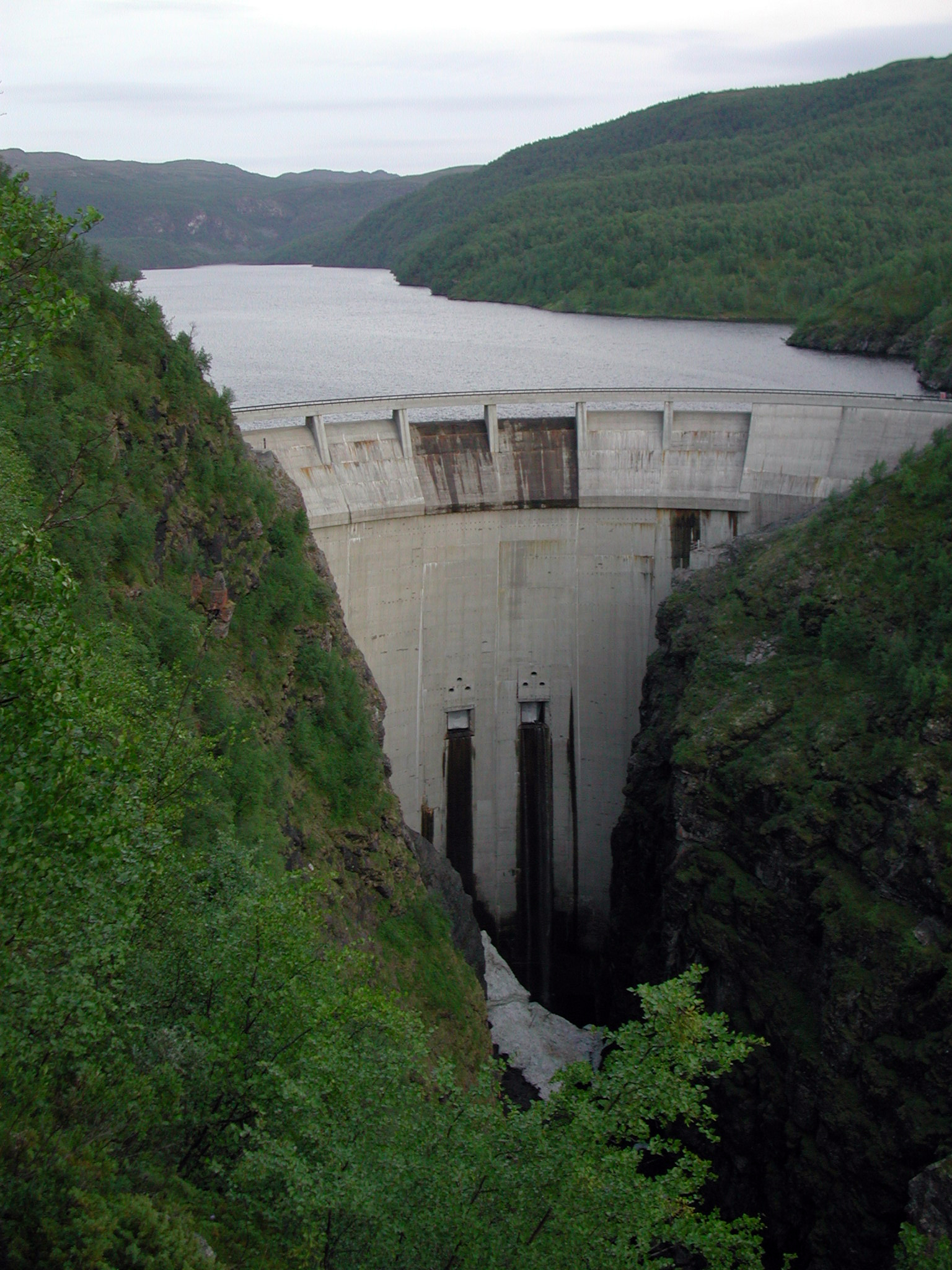
Alta Hydroelectric Power Station
The plot of Disney's Frozen II, in which an indigenous people confront a colonial power that dammed their sacred river, is not entirely fiction. It draws heavily on the real story of the Alta Hydroelectric Power Station, a dam on the Alta-Kautokeino River in Finnmark county, Norway, whose construction in the 1980s provoked hunger strikes, mass arrests, and a rupture between the Norwegian state and its Sami population that took decades to heal. The dam itself is an engineering achievement: Norway's tallest, harnessing a 185-meter fall to generate 150 megawatts of electricity. But its significance has always been less about watts than about who decides what happens to a river.
The Plan That Would Drown a Village
The Norwegian Water Resources and Energy Directorate published plans in the 1970s to dam the Alta-Kautokeino River for hydroelectric power. The original proposal was blunt: build a dam, create an artificial lake, and inundate the Sami village of Maze. The river was widely considered the best Atlantic salmon river in the world, and the Sami communities along its banks depended on reindeer migration routes that the reservoir would disrupt. After fierce political resistance, a revised plan scaled back the displacement, but the fundamental conflict remained. The state wanted electricity. The Sami wanted their river. The salmon, as always, had no vote.
Hunger Strikes and Human Chains
In 1978, opponents organized under the unwieldy but unmistakable name Folkeaksjonen mot utbygging av Alta-Kautokeinovassdraget, the People's Action Against Development of the Alta-Kautokeino Waterway. They filed for injunctions. They lobbied. And when construction was set to begin in the fall of 1979, they acted. At the construction site at Stilla, activists sat down in front of the machines. Simultaneously, Sami activists camped outside the Stortinget, the Norwegian parliament, and began a hunger strike. Declassified documents later revealed that the government drew up plans to deploy military forces in support of the police. Prime Minister Odvar Nordli defused that particular escalation by promising a parliamentary review, but the Stortinget confirmed its decision to proceed with the dam.
Ten Percent of Every Officer
When construction resumed in January 1981, more than a thousand protesters chained themselves to the site. The police response was staggering in its scale: at its peak, ten percent of all Norwegian police officers were stationed in Alta, housed aboard a cruise ship moored for the purpose. The protesters were forcibly removed. For the first time since World War II, individuals were arrested and charged under Norwegian laws against rioting. The Sami central organizations severed all cooperation with the Norwegian government, a rupture that reverberated through the country's politics for years. In early 1982, the Supreme Court ruled in favor of the government, and organized resistance ended. The dam was built, the reservoir Virdnejavri filled, and the power station began generating electricity in 1987.
What the River Left Behind
The station sits 40 kilometers from the river's mouth, drawing water from the vast Finnmarksvidda plateau. Its two generators produce 150 megawatts from the fall between the reservoir and the powerhouse. Between the dam and the station, the river runs dry. Below the station, the salmon still run, though the relationship between dam and fishery remains contested. The real legacy, however, is political. The Alta controversy led directly to the creation of the Sami Parliament in 1989, fundamentally reshaping indigenous rights in Scandinavia. The 2023 Norwegian film Let the River Flow depicts the conflict through a young Sami woman's eyes, and Disney's Frozen II brought a fictionalized version of the story to a global audience. The dam generates clean power. It also generated a reckoning.
From the Air
Located at 69.70N, 23.82E in Finnmark county, Arctic Norway. The dam and reservoir Virdnejavri are visible from altitude, with the dry riverbed between dam and powerhouse a distinctive feature. Nearest airport is Alta Airport (ENAT), approximately 30 km northwest. The Finnmarksvidda plateau stretches to the south and east. Approach from the west at 3,000-4,000 feet for views of the dam, reservoir, and the river canyon below.