Altamont Free Concert
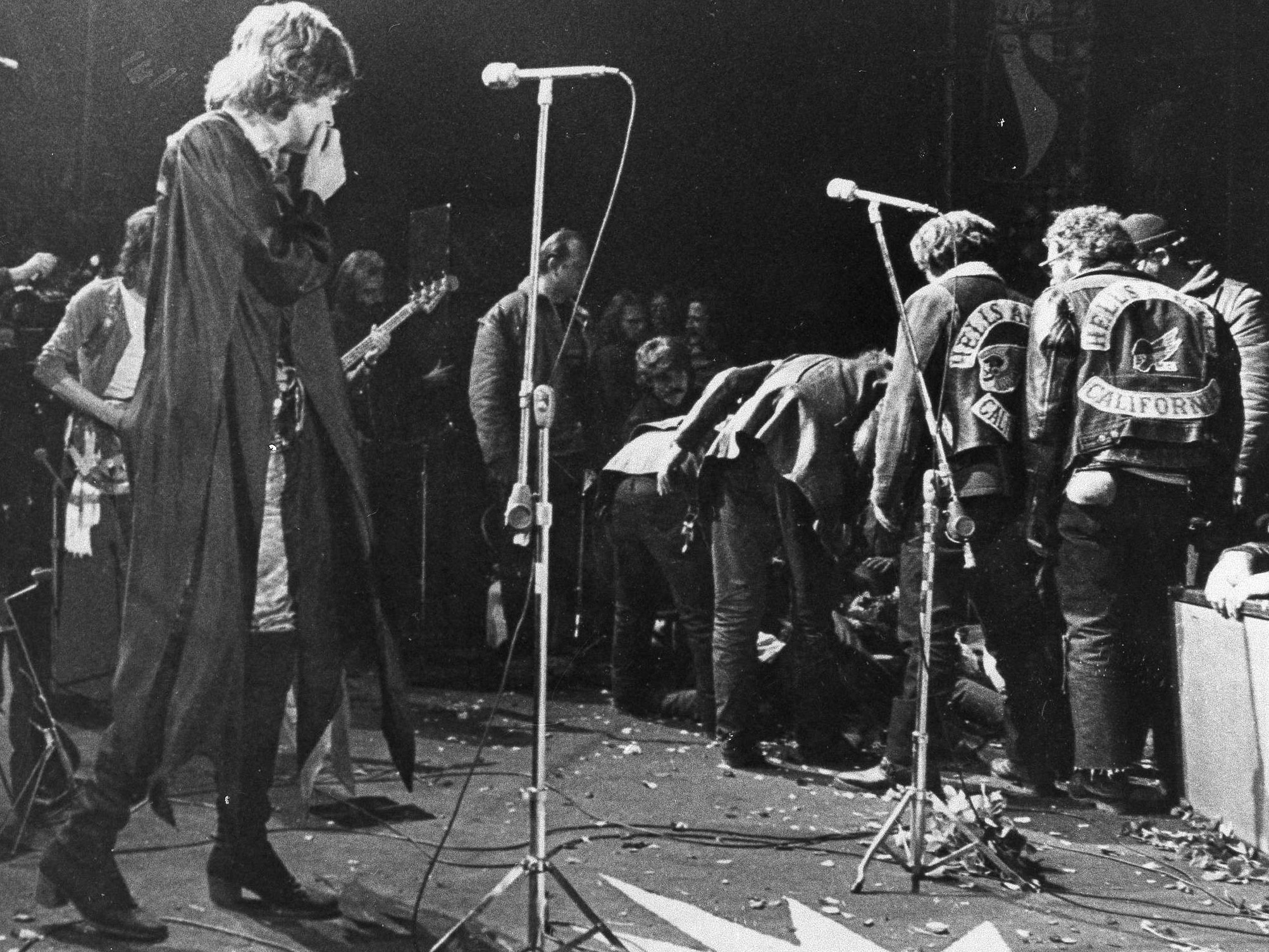
Rolling Stone magazine called it "rock and roll's all-time worst day." On December 6, 1969, roughly 300,000 people descended on the Altamont Speedway in the brown hills east of Tracy, California, expecting a Woodstock West. What they got instead was chaos: inadequate facilities, a stage built at the bottom of a slope instead of on top of a hill, and the Hells Angels motorcycle club serving as security for $500 worth of beer. By nightfall, four people would be dead, including 18-year-old Meredith Hunter, stabbed in front of the stage while the Rolling Stones played "Under My Thumb."
A Dream Unravels
The concert began as an act of goodwill. Critics had complained about high ticket prices during the Rolling Stones' 1969 American tour, so the band announced a free show to end their run. The original plan called for Golden Gate Park, but a football game at nearby Kezar Stadium made permits impossible. Sears Point Raceway was next, until the owners demanded $100,000 in escrow. Just two days before the concert, Altamont Speedway owner Dick Carter offered his property for free. The hasty relocation meant no time to adjust the stage design. At Sears Point, the stage would have sat atop a rise, with audience pressure pushing backward. At Altamont, the stage stood only 39 inches high at the bottom of a slope, with the crowd pressing forward and down. There were no medical tents. Not enough portable toilets. And no real security plan.
Angels at the Gate
The decision to use the Hells Angels as security would become Altamont's defining tragedy. Both Jefferson Airplane and the Grateful Dead had used the Angels at previous concerts without incident. The British Rolling Stones may have been misled by their experience with a self-described "Hells Angels" group in London, a non-outlaw club that had provided peaceful security at their Hyde Park concert earlier that year. The actual arrangement was murky. Some claimed the Angels were hired to guard the stage for $500 in beer. Rolling Stones road manager Sam Cutler insisted the only agreement was that the Angels would keep people away from the generators. Whatever the understanding, by early evening, violence had already erupted between Angels and crowd members. Jefferson Airplane's Marty Balin was knocked unconscious by an Angel during his band's set. The Grateful Dead, sensing danger, chose not to play at all.
The Killing of Meredith Hunter
The Rolling Stones took the stage after sundown. Some 4,000 to 5,000 people were jammed against the stage's edge. During "Sympathy for the Devil," fights erupted so frequently that the band stopped and restarted the song. Then, during "Under My Thumb," 18-year-old Meredith Hunter approached the stage. Witnesses saw him draw a revolver. Hells Angel Alan Passaro stabbed Hunter five times as the crowd closed around them. The Maysles Brothers' documentary Gimme Shelter captured the killing in a two-second sequence: Hunter's hand rising with the silhouette of a gun, Passaro entering from the right with his knife. The band continued playing after calling for a doctor, fearing that stopping would trigger a full riot. Passaro was later acquitted after a jury viewed the footage and concluded he acted in self-defense. Three other deaths occurred that day: two in a hit-and-run accident, one by drowning in an irrigation canal.
The End of an Era
Less than four months earlier, Woodstock had embodied the counterculture's ideals of peace and love. Altamont became its inverse, a symbol for the death of the Woodstock Nation. As Richard Brody wrote in The New Yorker, what died at Altamont was "the Rousseauian dream itself" that young people, freed from social constraints, would spontaneously create a gentler order. Don McLean immortalized the day in "American Pie," filling a verse with Altamont symbols: Jack Flash, the Devil, an angel born in Hell. The concert's cultural fallout extended beyond music. In 2008, a former FBI agent revealed that some Hells Angels had plotted to kill Mick Jagger in revenge for the Stones' lack of support and the negative portrayal in Gimme Shelter. The assassins reportedly approached Jagger's Long Island residence by boat, but a storm nearly sank them before they could act.
What Remains
The Altamont Speedway still stands in eastern Alameda County, now called Altamont Motorsports Park. The brown California hills look much as they did in December 1969, dotted with wind turbines instead of hundreds of thousands of concertgoers. In January 2022, the Library of Congress released 30 minutes of previously unseen footage shot from the stage that day, obtained from the Prelinger Archives. The film shows the chaos from the performers' perspective: the pressing crowd, the confusion, the impossible situation. The Altamont Free Concert remains rock music's cautionary tale, a reminder of how quickly utopian dreams can turn to nightmare when planning fails and violence takes hold.
From the Air
Located at 37.74N, 121.56W in the hills east of Tracy, California. The former speedway sits in rolling terrain visible from cruising altitude in clear weather. Nearby airports include Livermore Municipal (KLVK) approximately 12nm northwest and Tracy Municipal (KTCY) approximately 8nm southeast. Best viewed at 3,000-5,000 feet AGL when approaching from the Bay Area.