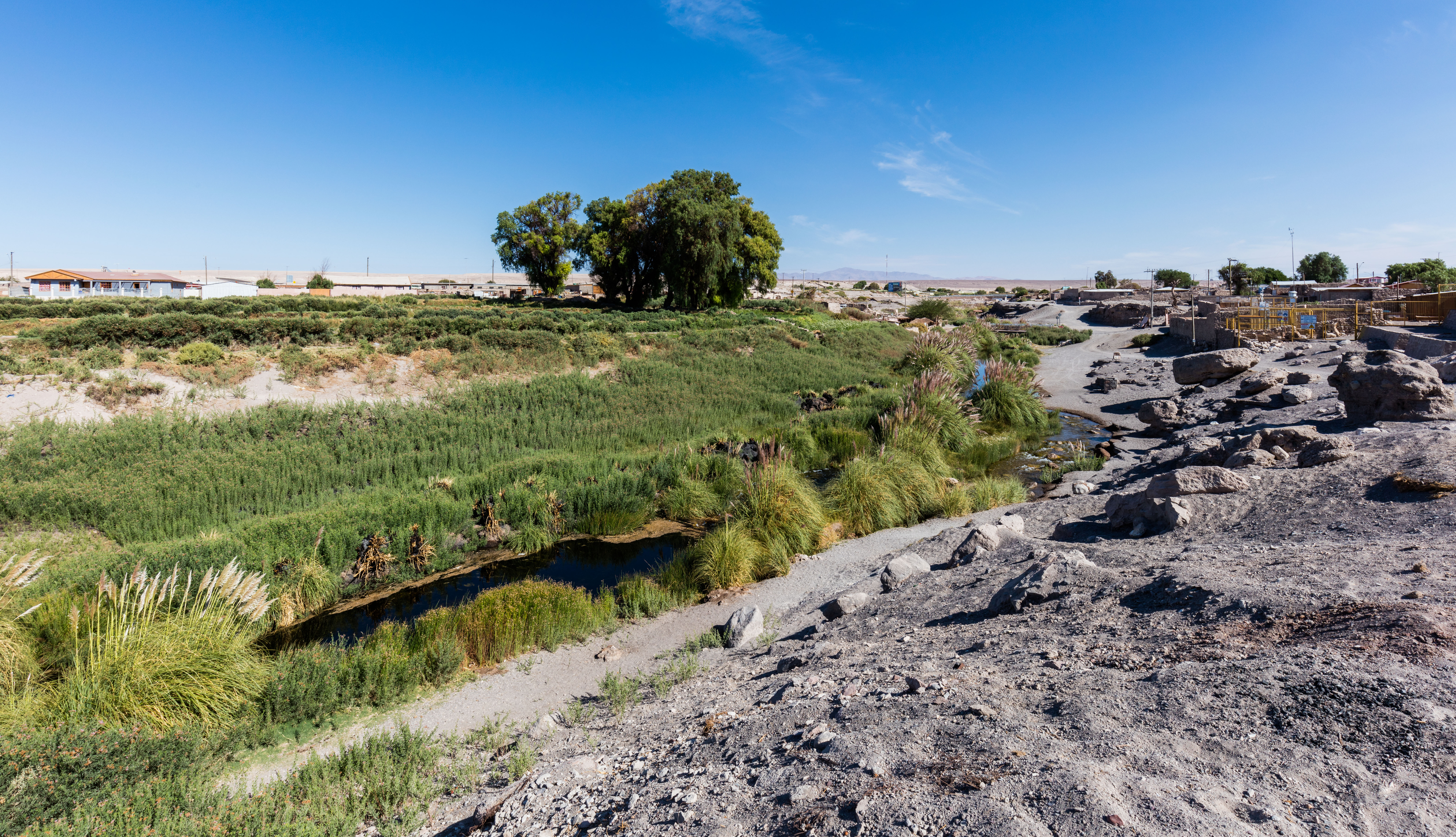
Alto Loa National Reserve
It took six years of negotiation among a government agriculture ministry, a Quechua indigenous community, and two of the world's largest mining companies to agree on what should seem obvious: that 300,000 hectares of Atacama Desert surrounding the source of Chile's longest river deserved protection. Alto Loa National Reserve, created in 2005, is Chile's largest natural reserve -- and it exists not because the land was untouched, but precisely because it had already been parceled into mining concessions and water rights that had to be painstakingly unwound.
Where the Loa Begins
The Loa River is Chile's longest, running 440 kilometers from its source at 4,277 meters in the Andes to the Pacific coast. In a country defined by rivers, the Loa is unusual: it flows through the driest desert on Earth, making its headwaters a matter of existential importance to every community and ecosystem downstream. Alto Loa encompasses those headwaters and the surrounding landscape between the communes of Ollagüe and Calama, 215 kilometers northeast of Antofagasta. At 3,000 meters elevation, the reserve sits in a desert climate with minimal annual precipitation and temperatures swinging between 25.5 and minus 17.1 degrees Celsius. Within its boundaries lie three salt flats -- San Martin (also called Carcote), Ascotan, and Ollagüe -- their white surfaces shimmering against the brown desert like windows into a different geology.
The Negotiated Wilderness
Alto Loa's creation required something rare in conservation: a deal that satisfied everyone without fully satisfying anyone. Codelco and SQM, two mining giants with existing concessions across the reserve's territory, agreed to honor their pre-existing permits while accepting the new protected status. The Quechua community of Ollagüe, a small village 205 kilometers northeast of Calama, secured the right to develop tourism within the reserve and to administer the land they claim as ancestral territory. The government, through CONAF (Chile's national forestry corporation), retained administrative oversight. The result is a reserve where mining trucks may share unpaved roads with tourist vehicles, where drilling permits coexist with habitat protections -- a pragmatic compromise that reflects the reality of conservation in a country where mining is the economic backbone.
Life in the Desert's Margins
More than 250 plant species and 70 animal species find refuge within Alto Loa's boundaries -- numbers that seem improbable given the landscape's austerity. Guanacos graze on sparse vegetation. Condors ride thermals above the salt flats. Viscachas, the rabbit-like rodents of the high Andes, sun themselves on rock outcrops, while cougars hunt them in the pre-dawn hours. The reserve's plant life includes the queñoa tree, a hardy species of Polylepis that grows at altitudes where most trees have long surrendered, and the yareta -- a dense, slow-growing cushion plant that can live for thousands of years and resembles nothing so much as a bright green rock. In the reserve's wetlands, three species of flamingo nest: the Chilean, James's, and Andean, their presence a signal that the water supply these wetlands depend on remains -- for now -- intact.
The Atacameno Voice
The Consejo de Pueblos Atacamenos -- the Council of Atacama Peoples -- represents the Atacameno and Quechua communities of the region, and their relationship with Alto Loa is neither simple appreciation nor simple opposition. They have pressed the government and mining companies on wetland degradation, particularly the impact on flamingo nesting areas. But they have also embraced the economic possibilities of ethno-tourism, building on models pioneered at San Pedro de Atacama and the Valle de la Luna, where indigenous communities have successfully managed tourist operations in protected areas. In Alto Loa, the Quechua community of Ollagüe runs tourism concessions, guides visitors across the salt flats, and interprets a landscape that their ancestors have inhabited for centuries. The reserve exists, in part, because they insisted it should.
From the Air
Alto Loa National Reserve is located at approximately 21.45S, 68.55W at around 3,000 m elevation in northern Chile's Atacama Desert. The reserve stretches between Ollagüe and Calama, 215 km northeast of Antofagasta. Three salt flats (Carcote, Ascotan, Ollagüe) are visible as bright white features from altitude. Nearest airport is El Loa Airport (SCCF) at Calama. The reserve borders Bolivia to the northeast. Excellent visibility in dry desert conditions; the Loa River valley provides a visual corridor through the landscape.