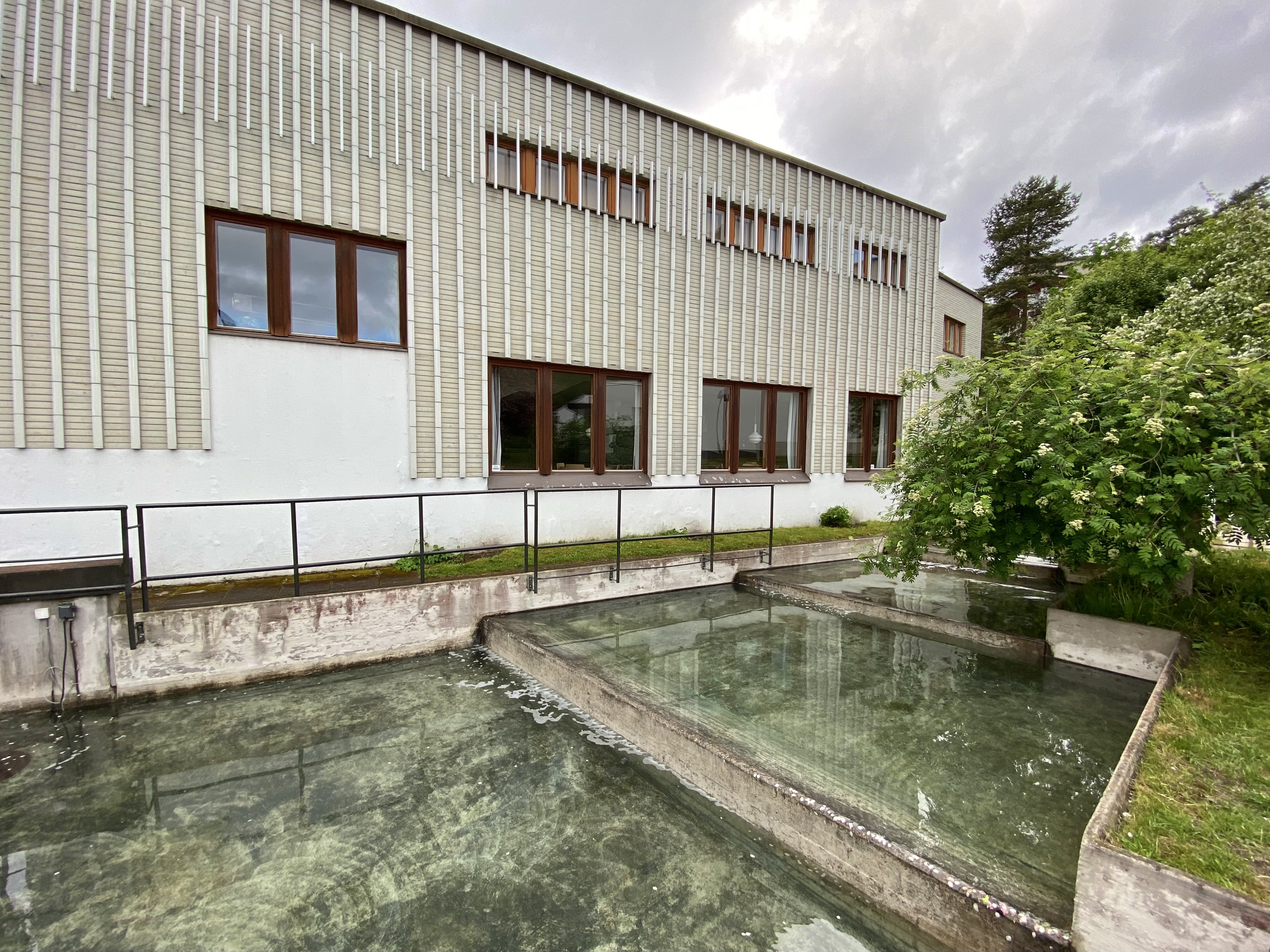
Alvar Aalto Museum
There is a particular kind of recursion at work in Jyvaskyla. The Alvar Aalto Museum, founded in 1966 to preserve the legacy of Finland's most celebrated architect, occupies a building that Aalto himself designed. Completed in 1973 on a slope beside Lake Jyvasjarvi, the museum is simultaneously an exhibit and an artifact -- a place where you study Aalto's work while standing inside it. The building sits alongside the Museum of Central Finland, which Aalto designed in 1961, near the University of Jyvaskyla campus he shaped between 1951 and 1971. In this corner of central Finland, you cannot escape the man's influence. It is the landscape itself.
Guardian of a Legacy
The museum operates across four locations in two cities. The Jyvaskyla building serves as the national and international center for everything related to Aalto's work. Villa Aalto and Studio Aalto, both in the Munkkiniemi district of Helsinki, open their doors to visitors who want to see where the architect lived and worked. The fourth location is the most unusual: the Muuratsalo Experimental House, a summer residence Aalto built for himself and his wife Elissa on the shores of Lake Paijanne between 1952 and 1954. All four sites are open to the public. Beyond exhibitions, the museum's building heritage section maintains a national register of protected Aalto buildings and provides expert guidance on their conservation, working closely with the Finnish National Board of Antiquities.
The Lakeside Building
Aalto placed the museum on a slope that descends toward Lake Jyvasjarvi, and the relationship between building and water is characteristic of his approach -- architecture that defers to landscape rather than dominating it. Inside, a permanent exhibition surveys his career, while the gallery hosts rotating shows on architecture and design. The museum also produces touring exhibitions that travel internationally. Before the Jyvaskyla Art Museum was established in 1998, this building doubled as the city's visual arts venue, a reminder of how central Aalto's presence was to the cultural life of a city that might otherwise have remained a quiet regional capital. The cluster of Aalto-designed buildings near the university creates something like a pilgrimage route for architecture students, who arrive from around the world to walk through spaces that appear in every modernism textbook.
The Playground at Muuratsalo
The Experimental House on Muuratsalo island reveals Aalto at his most playful and uninhibited. He described the compound as a combination of an architect's studio and an experimental center, a place to try things "not yet sufficiently well developed to be tried out in practice," where the proximity of nature could inspire both form and structure. The facade is a patchwork of different brick types and laying patterns -- a laboratory of materials that would have been reckless on a commissioned building but was exactly right for a private retreat. The house is enclosed by a courtyard that frames the surrounding landscape through its entrance, mediating between interior shelter and exterior wilderness. The Aalto family used it as their summer home until 1994. Since then, the museum has maintained the property, preserving not just the structure but the experimental spirit it embodies.
An Architect's City
Jyvaskyla's relationship with Aalto runs deeper than any single building. Born in nearby Kuortane, Aalto grew up in the region and returned repeatedly throughout his career to leave his mark. The university campus, the museums, Saynatsalo Town Hall on its nearby island -- these projects span three decades and trace the evolution of his thinking from early rationalism to the organic humanism of his mature work. Walking from the university to the museum, you pass through different eras of one architect's mind. The museum anchors this constellation, offering context that transforms individual buildings into chapters of a larger story. For architecture enthusiasts arriving by air, the density of significant Aalto works within a twenty-kilometer radius of Jyvaskyla Airport makes this region one of the most concentrated portfolios of any single architect anywhere in the world.
From the Air
Located at 62.23N, 25.73E on the shore of Lake Jyvasjarvi in Jyvaskyla, central Finland. The museum building is part of a cluster of Aalto-designed structures near the University of Jyvaskyla campus. Nearest airport is Jyvaskyla Airport (EFJY), approximately 20 km to the north in Tikkakoski. Best viewed at 2,000-3,000 feet to appreciate the lakeside setting and the relationship between the museum, the adjacent Museum of Central Finland, and the university campus. The lake district geography is striking from above.