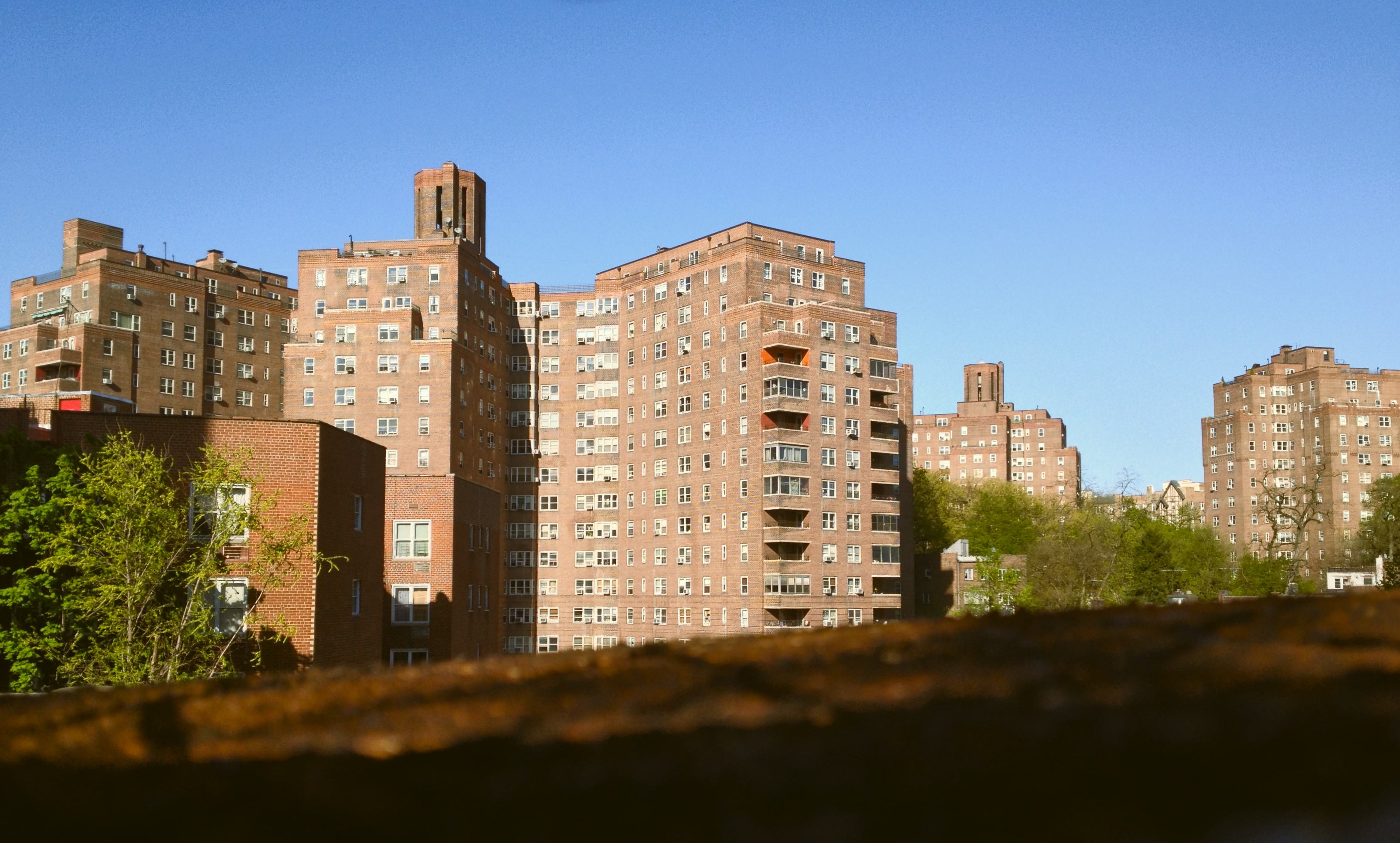
Amalgamated Housing Cooperative
In 1927, a group of garment workers pooled their resources and built themselves a neighborhood. Not a row of tenements, not a speculative developer's project, but a self-governing cooperative at the southern edge of Van Cortlandt Park in the Bronx. The Amalgamated Housing Cooperative was the brainchild of the Amalgamated Clothing Workers, a Manhattan-based socialist labor union that believed working-class New Yorkers deserved attractive, affordable homes they actually owned together. What they built in Tudor-style brick and communal ambition would survive the Great Depression, draw admiration from President Franklin D. Roosevelt, and reshape how New York City thought about housing for decades to come.
The Garment Workers' Gamble
The idea was radical for its time: a limited-equity cooperative where residents owned shares rather than individual units, keeping prices permanently affordable by preventing speculative resale. The Amalgamated Clothing Workers organized the venture, drawing on their membership of immigrant garment workers who knew firsthand what cramped, overpriced tenement living looked like. The original cluster of buildings went up in 1927 with 300 units, designed by an architectural team that included Herman Jessor, then a young architect who would go on to design the majority of New York City's postwar housing cooperatives. The Tudor-style buildings, with their courtyards and gardens, looked nothing like the dark tenements their residents had left behind. This was housing as a statement: working people could live with dignity.
Surviving What Broke Everything Else
When the Great Depression devastated New York's real estate market, the Amalgamated did something remarkable. It survived. While private developments collapsed and foreclosures swept through the city, the cooperative's communitarian structure and its residents' commitment to collective ownership held the project together. The co-op's governance model, where residents made decisions democratically, created a resilience that investor-driven housing simply could not match. Franklin D. Roosevelt took notice, praising the Amalgamated as a model of what self-help affordable housing could achieve. The cooperative became proof of concept, demonstrating that working-class people could build and sustain their own housing without depending on government subsidies or private developers.
A Blueprint That Scaled
After World War II, New York City looked at the Amalgamated and decided to go big. The cooperative became the template for a wave of state-sponsored limited-equity housing projects: Penn South in Manhattan, Rochdale Village in Queens, and the massive Co-op City in the Bronx, among others. Herman Jessor designed many of these larger developments in partnership with Abraham Kazan, and at times with the backing of Robert Moses, the controversial power broker who reshaped New York's urban landscape. The Amalgamated's sister co-op, Park Reservoir, became the state's first Mitchell-Lama cooperative, adding buildings on Sedgwick and Orloff Avenues in the blocks west of Jerome Park Reservoir. But scale came with trade-offs. Some observers suggested that the sheer size of these later developments, combined with state sponsorship, diluted the communitarian spirit and self-governance that had made the Amalgamated work in the first place.
Still Standing, Still Affordable
The Amalgamated grew from its original 300 units to a complex of 1,468 units across 11 buildings. The newest addition, the second of two 20-story towers, was occupied in 1971, and Park Reservoir added another 273 units across the neighborhood. Nearly a century after its founding, the cooperative remains what it was designed to be: a place where working-class and middle-class New Yorkers can afford to live. The Tudor courtyards still open onto Van Cortlandt Park. Residents still govern themselves. The limited-equity model still prevents the speculative price spirals that have made much of New York unaffordable. In a city where the affordable housing crisis deepens every year, the Amalgamated stands as both a monument to what was possible and an uncomfortable reminder of a model that was never fully replicated at the scale the city needed.
From the Air
Located at 40.885N, 73.891W in the Kingsbridge Heights section of the Bronx, at the southern edge of Van Cortlandt Park. The Tudor-style buildings and paired 20-story towers are visible from above. Best viewed at 2,000-3,000 feet AGL. Nearest airports: KTEB (Teterboro, 7nm west), KLGA (LaGuardia, 9nm southeast). The complex sits just west of the Major Deegan Expressway (I-87).