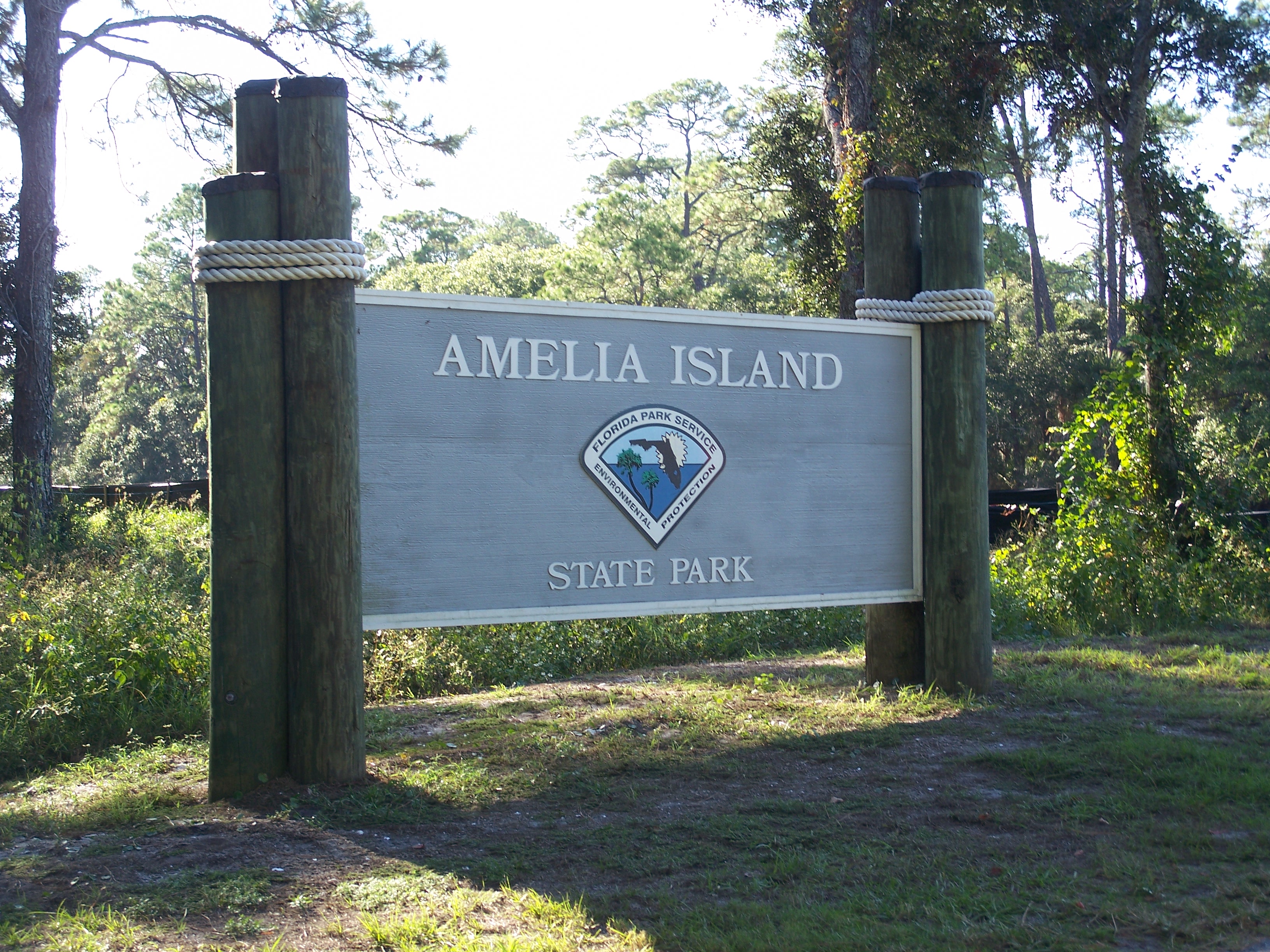
Amelia Island
Eight flags. That is the claim Amelia Island makes, and no other place in the United States can match it. French, Spanish, British, Patriot, Green Cross, Mexican, Confederate, and American banners have all snapped in the salt wind above this narrow barrier island at the northeastern tip of Florida. The Timucua people, who called it Napoyca, knew it for a thousand years before any of those flags existed. When Jean Ribault sailed past in 1562 and named it Ile de Mai, he set in motion a centuries-long contest for control of a strip of land barely a few miles wide, where the St. Marys River meets the Atlantic and every empire with ambitions in the New World wanted a foothold.
A Revolving Door of Empires
The parade of colonial powers across Amelia Island reads like a compressed history of European expansion in the Americas. Spanish Franciscans built the Santa Maria de Sena mission here in 1573, naming the island Isla de Santa Maria. The British came and went, trading Florida for Havana in the Treaty of Paris of 1763. Lord Egmont claimed a 10,000-acre plantation that covered almost the entire island. Then the Spanish returned, loyalists fled, and by 1785 a woman named Mary Mattair, her children, and a single enslaved worker were the sole occupants left on the island after the British evacuation. The Spanish Crown let Mattair stay, granting her land within what is now Fernandina Beach. Georgia's colonial governor James Oglethorpe gave the island its current name, honoring Princess Amelia, daughter of George II of Great Britain, even though Spain still held the territory.
Soldiers of Fortune and the Green Cross
The early nineteenth century brought the island's most colorful chapter. In 1812, American insurgents calling themselves the Patriots of Amelia Island seized Fort San Carlos with the tacit approval of President James Madison, who wanted to annex East Florida. Congress balked, fearing war with Spain during the War of 1812, and the scheme collapsed. Then came Gregor MacGregor, a Scottish soldier of fortune who stormed the fort on June 29, 1817, with 150 men recruited from Charleston and Savannah. He raised the Green Cross of Florida over the ramparts and proclaimed the Republic of the Floridas. By September, broke and outgunned, MacGregor sailed for the Bahamas. French pirate Louis-Michel Aury moved in next, claiming the island for revolutionary Mexico and establishing a Supreme Council of the Floridas. The United States finally ended the revolving door on December 23, 1817, when a naval force captured the island and held it, as President James Monroe put it, in trust for Spain.
From Cannonballs to Cotton
Spain formally ceded Florida to the United States through the Adams-Onis Treaty in 1821. The island settled into a quieter era of plantation agriculture, its fields worked by enslaved people. Then the Civil War arrived. Confederate sympathizers seized the still-unfinished Fort Clinch on January 8, 1861, two days before Florida officially seceded. Robert E. Lee himself visited in late 1861 to survey coastal defenses. Union forces took the island back on March 3, 1862, arriving with 28 gunboats under Commodore Samuel Dupont. The island became a magnet for freedom-seekers. By 1863, twelve hundred freedmen and their children lived on Amelia Island alongside just two hundred white residents. Chloe Merrick, an abolitionist teacher from Syracuse, New York, established a school and orphanage for the freedmen in 1863, later marrying Florida's Governor Harrison Reed and continuing her educational mission across the state.
Island Time
Today Amelia Island moves at a pace that would mystify the filibusters and privateers who once fought over it. The communities of Fernandina Beach, Amelia City, and American Beach occupy this slender barrier island, the southernmost of the Sea Islands chain that stretches from South Carolina and the northernmost barrier island on Florida's Atlantic coast. The Amelia Island Trail connects to the East Coast Greenway, a 3,000-mile system of paths from Maine to Florida. Five golf courses wind through the live oaks and palmettos. Fernandina Beach Municipal Airport, designated KFHB, sits on the island itself, a former military airbase once used by the Navy, Coast Guard, and Florida Air National Guard. From 1980 to 2008, the island hosted a Women's Tennis Association tournament. Since 2009, it has been home to the annual Petanque America Open, bringing the French game of boules to a place where the French flag first flew more than four centuries ago.
From the Air
Amelia Island sits at 30.62N, 81.45W, a narrow barrier island at the Florida-Georgia border where the St. Marys River meets the Atlantic. Fernandina Beach Municipal Airport (KFHB) is located on the island itself. The island is clearly visible from altitude as a slender strip between the Amelia River and the ocean. Approach from the east for the best view of the barrier island profile. Jacksonville International Airport (KJAX) lies approximately 25 nm to the south. Best viewed at 2,000-4,000 ft AGL for the full shape of the island, its marina, and the historic Fernandina Beach waterfront.