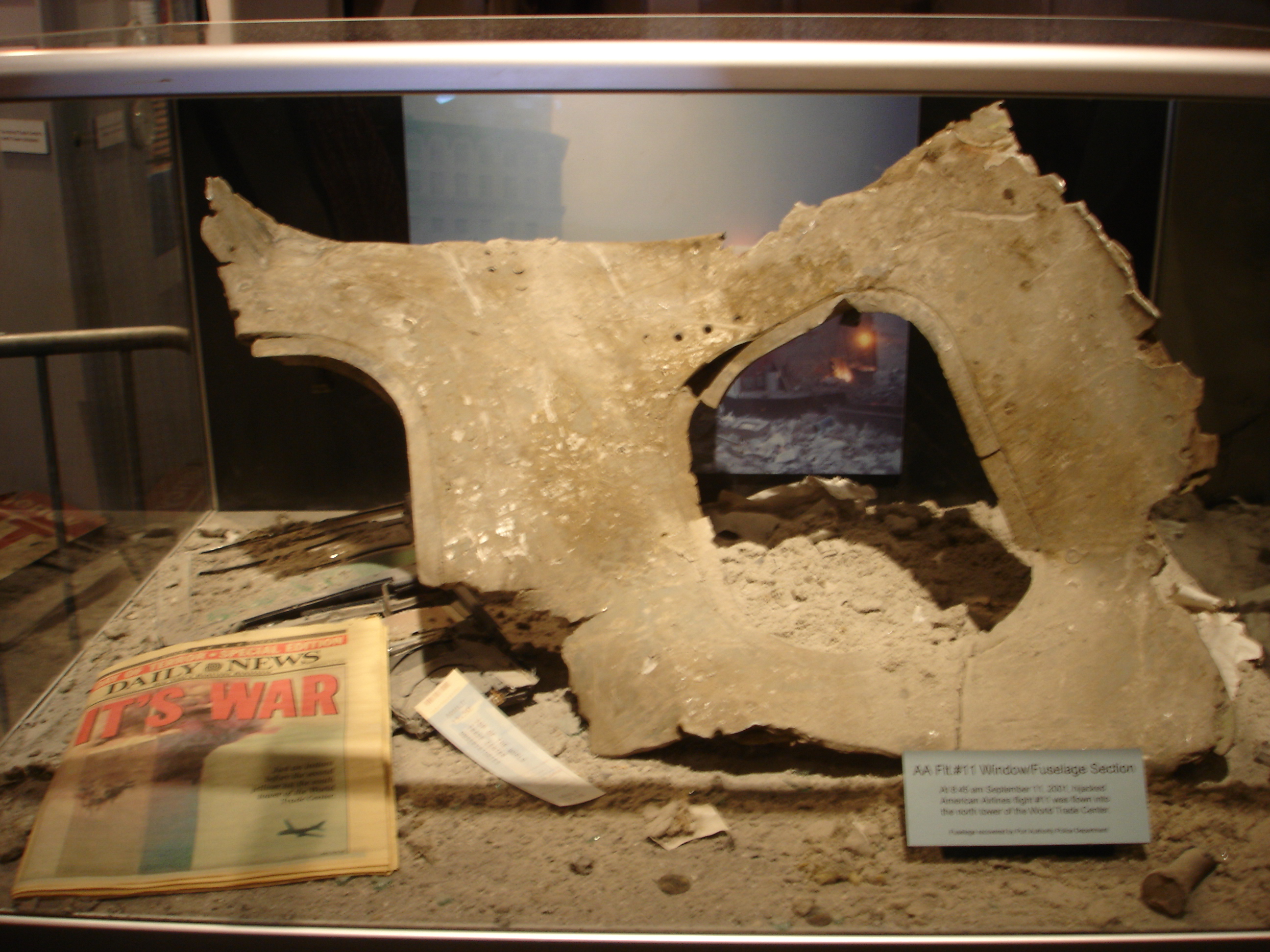
American Airlines Flight 11
At 7:59 a.m. on September 11, 2001, a Boeing 767-200ER lifted off from Runway 4R at Boston Logan International Airport, bound for Los Angeles with 81 passengers and 11 crew members. The aircraft was at 58 percent capacity -- higher than the Tuesday morning average of 39 percent for that route, but still far from full. Within fifteen minutes, five hijackers had killed a passenger, stabbed two flight attendants, and breached the cockpit. Within the hour, lead hijacker Mohamed Atta had flown the airplane into the North Tower of the World Trade Center. It was the deadliest single act of terrorism in human history.
Portland to Logan
The plan began before dawn in Portland, Maine. Atta and fellow hijacker Abdulaziz al-Omari arrived at Portland International Jetport at 5:41 a.m. and checked in for a Colgan Air commuter flight to Boston. At the ticket counter, Atta grew visibly angry when told he would need to check in again at Logan, insisting he had been promised "one-step check-in." The ticket agent, Mike Tuohey, felt uneasy but let him pass, later reflecting that he worried about racially profiling the man. The computer passenger screening system flagged Atta for extra luggage scrutiny -- but only luggage, not the passenger himself. By 6:45, both men had landed in Boston. Meanwhile, three other hijackers arrived at Logan by car. At 6:52, Marwan al-Shehhi, who would pilot United Flight 175 into the South Tower, called Atta from an airport pay phone. The attacks were confirmed as ready to begin. By 7:40, all five hijackers were aboard Flight 11.
Fifteen Minutes of Silence
The 9/11 Commission estimated the hijacking began at 8:14, when the pilots stopped responding to Boston Air Route Traffic Control. At 8:21, the plane's transponder was switched off. In the cabin, the hijackers had stabbed flight attendants Karen Martin and Barbara Arestegui, slashed passenger Daniel Lewin's throat, and forced everyone to the rear of the aircraft. How they breached the cockpit door remains unknown; flight attendant Betty Ong, who managed to reach American Airlines by phone, said she believed they had "jammed their way in." Ong and fellow attendant Amy Sweeney relayed critical details in real time: seat numbers, injuries, the number of hijackers. Air traffic controllers learned the plane had been hijacked only when Atta, intending to address the cabin, accidentally transmitted his announcement to ground control instead.
8:46
Traveling at roughly 440 miles per hour and loaded with approximately 10,000 gallons of jet fuel, the Boeing 767 struck the North Tower's northern facade between the 93rd and 99th floors at 8:46 a.m. The impact severed all three stairwells above the crash zone, trapping close to a thousand people with no way down. Burning jet fuel channeled through elevator shafts and ductwork, igniting fires as far down as the main lobby -- nearly a hundred floors below. Between 100 and 200 people fell or jumped from the upper floors, unable to escape the heat and smoke. The highest survivors in the North Tower came from the 91st floor. Everyone above that line was killed by the fire, the toxic fumes, or the tower's eventual collapse 102 minutes later. On the streets below, only six cameras happened to be recording. French filmmaker Jules Naudet, shooting a documentary about the FDNY, captured the only known clear footage of the plane's impact.
What Was Found, What Was Lost
Rescue workers began discovering body fragments from Flight 11 within days. Some found passengers still strapped to airplane seats. One flight attendant's remains were recovered with her hands bound -- suggesting the hijackers had used plastic handcuffs. Within a year, medical examiners had identified 33 of the 92 people on board; additional identifications followed in 2006 and 2007 using newer DNA technology. Hijacker Satam al-Suqami's passport was found soaked in jet fuel on the street below, picked up by a passerby and given to a detective moments before the South Tower fell. Atta's checked luggage, which had never been loaded onto the plane in the rushed transfer from Portland, contained study papers, a videocassette for a Boeing 757 simulator, a folding knife, and pepper spray. The flight's black boxes were never recovered. In 2013, a piece of the wing flap mechanism was found wedged between two buildings at Park Place, twelve years after the crash. The onboard defibrillator surfaced during roadwork in 2014. At the National September 11 Memorial, the names of the 87 passengers and crew are inscribed on the North Pool, on Panels N-1, N-2, and N-74 through N-76.
From the Air
The World Trade Center site is located at 40.711N, 74.013W in Lower Manhattan. The One World Trade Center tower now dominates the skyline at 1,776 feet. The National September 11 Memorial and Museum occupies the footprints of the original Twin Towers. The Hudson River is immediately to the west; the Brooklyn Bridge is 0.7 nm to the northeast. Newark Liberty International Airport (KEWR) is 9 nm to the southwest; LaGuardia (KLGA) is 8 nm to the northeast. Recommended viewing altitude: 3,000-5,000 ft AGL for full site context.