American Beach, Florida
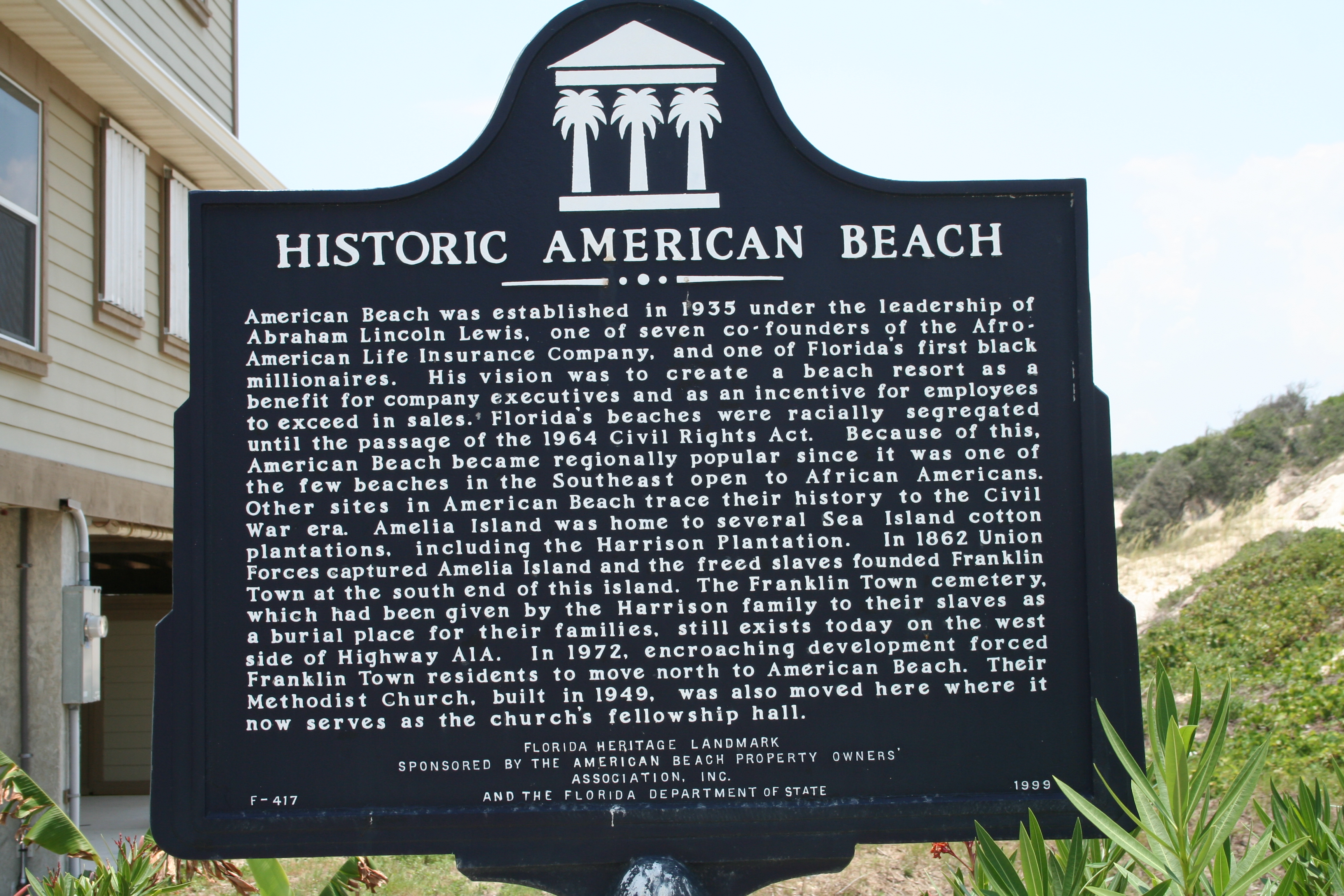
The slogan was direct and devastating in what it revealed: "Recreation and Relaxation without Humiliation." That was the promise of American Beach, a stretch of Amelia Island shoreline in Nassau County, north of Jacksonville, where Black families could do something white Floridians took for granted. They could go to the ocean. Before the Civil Rights Act of 1964, Black beaches across the South were often located far outside city limits, forcing families to walk miles for the simple pleasure of salt water and sand. Abraham Lincoln Lewis, Florida's first Black millionaire and president of the Afro-American Life Insurance Company, decided his community deserved better. In 1935, he co-founded American Beach, and for decades it thrived as "The Negro Ocean Playground."
A Millionaire's Gift
A. L. Lewis was one of the original founders of the Afro-American Life Insurance Company in 1901. With little formal education, he became a world traveler, investor, and philanthropist, building wealth that made him the first African American millionaire in Florida. He channeled that fortune into amenities for Black communities shut out of white-owned facilities: the Lincoln Golf and Country Club, business ventures across Jacksonville, and American Beach itself. The beach was open to all, though it served primarily the Black families who had nowhere else to go. Over time, it attracted a constellation of celebrities. Folklorist Zora Neale Hurston visited. So did Cab Calloway, Ray Charles, Hank Aaron, Joe Louis, actor Ossie Davis, and Sherman Hemsley. James Brown, however, was turned away from performing outside Evans' Rendezvous, a nightclub on the beach.
Hurricane and a Changing World
In 1964, Hurricane Dora slammed into American Beach, destroying many homes and buildings. That same year brought the Civil Rights Act, which desegregated Florida's public beaches. The twin blows transformed the community. Black Jacksonvillians who had traveled to Amelia Island because they had no other choice now had access to beaches closer to home. The necessity that had sustained American Beach as a destination evaporated. Visitors dwindled, buildings fell into disrepair, and developers began eyeing the valuable oceanfront property. What had been a vibrant resort community risked becoming just another stretch of condominiums.
The Beach Lady's Stand
A. L. Lewis's granddaughter had other plans. MaVynee Betsch, known to locals as the Beach Lady, returned to American Beach in 1977 determined to preserve it. She fought developers, lobbied officials, and made herself the community's fierce guardian. Betsch wanted American Beach to stand as a monument to Black Americans' determination to build joy and dignity in the face of Jim Crow. Her efforts bore fruit. On January 28, 2002, American Beach was listed on the National Register of Historic Places. The following year, Amelia Island Plantation purchased Nana Dune, a towering sand formation named after Betsch, and donated it to the National Park Service.
Memory Made Permanent
The American Beach Museum, officially named the A. L. Lewis Museum, was a lifelong dream of MaVynee Betsch. It opened to the public on September 6, 2014, dedicated to Lewis's contributions to the Black community in Jacksonville and to the story of American Beach itself. The museum joins the preserved historic district, the dune, and the weathered buildings that still line the shore as tangible reminders of what this place meant. Director John Sayles captured something of its spirit in his 2002 film Sunshine State, set in a fictionalized version of the community. Today, American Beach stands as both a place and a question: what do we owe to the spaces where people found freedom before freedom was law?
From the Air
American Beach sits at 30.573N, 81.446W on the Atlantic side of Amelia Island, in Nassau County north of Jacksonville. From the air, it is visible as a small community on the barrier island's ocean-facing shore. The distinctive Nana Dune rises prominently from the beach. Fernandina Beach Municipal Airport (KFHB) is approximately 4nm north on Amelia Island. Jacksonville International Airport (KJAX) lies about 18nm southwest. Jacksonville Naval Air Station (KNIP) is roughly 15nm south.