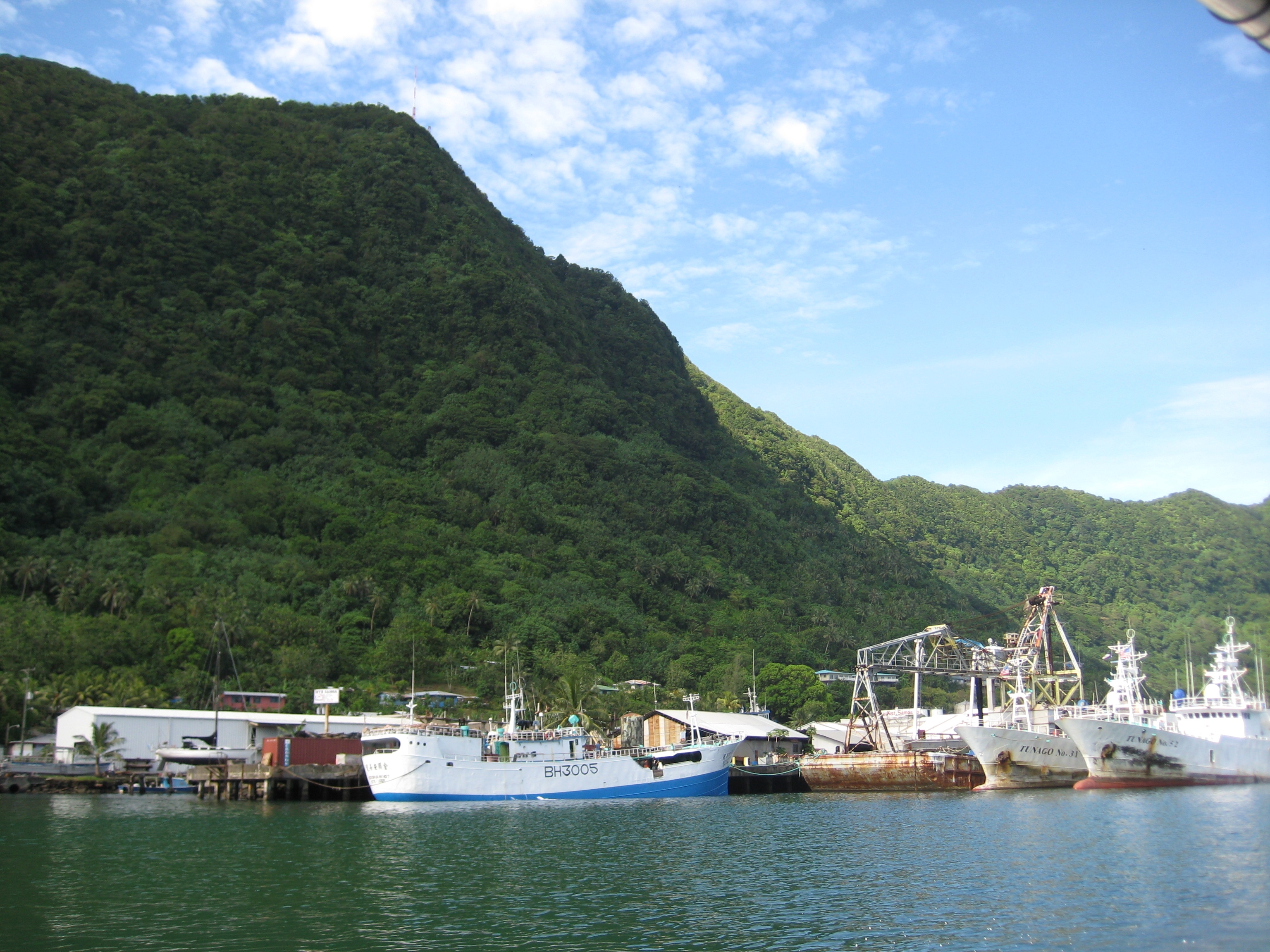
American Samoa
American Samoa occupies a peculiar position: an American territory where the U.S. Constitution doesn't fully apply, where traditional Samoan customs legally override certain federal rights, and where 90% of the land remains communally owned according to systems predating any American presence. The islands split from independent Samoa through 19th-century colonial treaties, creating two Samoas separated by a hundred kilometers and an international boundary. Pago Pago harbor - pronounced 'Pango Pango' - ranks among the most dramatic natural harbors in the Pacific, a volcanic caldera collapsed into the sea that sheltered American warships and inspired Somerset Maugham's story 'Rain.' Today, tuna canneries drive the economy while traditional village life continues in the shadow of American flags. It's a place of contradictions that somehow work.
An Unusual Territory
American Samoans occupy a unique legal status: they are U.S. nationals but not U.S. citizens, free to travel and work anywhere in America without visas or green cards, yet lacking voting rights in federal elections. The territory maintains its own immigration system separate from federal jurisdiction - regular U.S. visas don't work here. This arrangement exists partly to protect Samoan land tenure: because the Constitution doesn't fully apply, traditional restrictions on land ownership by non-Samoans remain legal, preventing the displacement that has occurred elsewhere in the Pacific. The fa'asamoa - the Samoan way - holds legal force in American Samoa in ways it couldn't under normal constitutional jurisdiction. The result is a territory that feels simultaneously American and utterly Polynesian, where village chiefs (matai) maintain genuine authority alongside elected officials.
Pago Pago Harbor
The harbor that made American Samoa strategically valuable remains its visual centerpiece. Mountains rise directly from the water to heights exceeding 1,500 feet, their slopes cloaked in dense tropical vegetation. Flower Pot Rock (Fatu ma Futi) stands sentinel at the harbor mouth, home to seabirds and fruit bats. The canneries that process tuna harvested from Pacific waters line the harbor shore, employing much of the local workforce and shipping canned fish to American supermarkets. Cruise ships occasionally call, their passengers disgorged briefly into a covered market that materializes when ships arrive. Above the harbor, World War II gun emplacements at Blunt's Point Battery offer both historical interest and spectacular views - the U.S. Navy administered the territory until 1951, and the defensive works from that era remain well preserved.
National Park of American Samoa
The National Park of American Samoa protects portions of three islands and surrounding coral reefs - one of the most remote and least-visited units in the national park system. On Tutuila, the park encompasses rainforest rising from the harbor to ridgeline summits, with trails through habitat where fruit bats (flying foxes) still flourish. The Manu'a Islands of Ta'u, Ofu, and Olosega offer the park's most pristine environments: To'aga Beach on Ofu is frequently cited as one of the finest beaches in the Pacific, its coral reef so healthy and accessible that snorkelers encounter the marine diversity that has vanished from more developed shores. Getting to the Manu'a Islands requires small-plane flights from Tutuila or infrequent ferries, but those who make the journey find Pacific landscapes essentially unchanged since Polynesian navigators first arrived.
Traditional Life
American Samoa has preserved Polynesian traditions more completely than perhaps any other American territory or state. The village remains the fundamental unit of social organization, with extended families (aiga) headed by chiefs (matai) who control family lands and represent families in village councils (fono). Daily life follows patterns established centuries ago: the Sa prayer time at dusk when villages grow quiet; Sunday observance when activity ceases; the protocols of kava ceremony and feast preparation. The annual Flag Day celebration on April 17 features fautasi races - fifty-person longboat competitions that draw teams from villages across the territory. Tisa's Tattoo Festival each October celebrates the traditional body art that originated in Samoa and spread throughout Polynesia. For visitors, the key is respect: ask permission before photographing or exploring; sit down in traditional houses; don't walk through villages during Sa or on Sundays.
Getting There
American Samoa lies off most travel routes, which explains its preservation. Hawaiian Airlines operates twice-weekly flights from Honolulu - over five hours of flying. Daily flights connect to Apia in independent Samoa, offering an alternative route through Auckland or Sydney. The territory uses U.S. dollars and U.S. postal service, but has its own immigration requirements separate from federal systems. Most visitors come for the national park, the diving, or family connections. There are no five-star hotels; accommodation runs to small hotels and guesthouses. The aiga buses - family-operated vehicles with open sides and distinctive designs - provide cheap transportation around Tutuila. Two Dollar Beach and Tisa's Barefoot Bar offer accessible swimming and snorkeling. What American Samoa offers is authenticity: Pacific islands where the traditional and the American have merged into something found nowhere else.
From the Air
Located at 14.30°S, 170.70°W in the South Pacific, approximately 4,100km southwest of Honolulu. The main island of Tutuila appears from altitude as a dramatically mountainous volcanic landmass with Pago Pago Harbor cutting deep into its southern coast. Pago Pago International Airport (PPG) lies on flat land at Tafuna, 5km southwest of the harbor. The Manu'a Islands (Ta'u, Ofu, Olosega) lie 100km to the east. Independent Samoa lies 100km to the west across international waters.