American Tobacco Company
The machine changed everything. In 1882, James Bonsack invented a device that could roll more than 133 cigarettes per minute -- what a skilled hand roller produced in an hour. Most manufacturers rejected it; the public distrusted machine-made uniformity. James Buchanan Duke of Durham, North Carolina, embraced it. He struck a secret deal with Bonsack for reduced royalties, hired one of the inventor's own mechanics to keep the machines running better than anyone else's, and used the cost advantage to undercut every competitor in the industry. By 1890, Duke had forced his five largest rivals to join him in forming the American Tobacco Company. In its first year, the consortium produced 90% of all cigarettes made in the United States. Within two decades, it had swallowed roughly 250 companies and controlled 80% of America's cigarettes, plug tobacco, smoking tobacco, and snuff. Its equity ballooned from $25 million to $316 million.
The Machine and the Monopoly
Duke's rise began in 1879, when he chose to enter the cigarette business rather than compete head-to-head with Bull Durham, the dominant smoking tobacco brand also headquartered in Durham. The first Bonsack machine was installed in Duke's plant on April 30, 1884, and the secret royalty agreement gave him a permanent edge: he paid $0.20 per thousand cigarettes while competitors paid $0.30. Duke poured $800,000 into advertising in 1889 alone while accepting net profits of less than $400,000 -- a deliberate strategy to bleed rivals dry. When they capitulated, the five constituent companies of American Tobacco (W. Duke & Sons, Allen & Ginter, W.S. Kimball & Company, Kinney Tobacco, and Goodwin & Company) joined forces. The company was listed on the New York Stock Exchange in 1890 and quickly became known as the 'Tobacco Trust.'
Trust and Dissolution
Duke's ambition did not stop at cigarettes. The American Tobacco Company expanded into Great Britain, China, and Japan while consolidating every form of tobacco product -- plug, pipe, snuff, cigars. The strategy of international expansion combined with total vertical consolidation ultimately made the Trust vulnerable. The Sherman Antitrust Act had been passed the same year American Tobacco was founded, and in 1907 the company was indicted for violating it. When the Department of Justice filed suit in 1908, 65 companies and 29 individuals were named. On May 29, 1911, the Supreme Court ordered American Tobacco to dissolve -- on the same day it ordered the breakup of Standard Oil. The dissolution, negotiated over eight months, split the company's assets into four entities: a reduced American Tobacco Company, R. J. Reynolds, Liggett & Myers, and Lorillard. The monopoly became an oligopoly, and the newly independent competitors channeled their rivalry into the aggressive advertising that would define the tobacco industry for the next century.
Lucky Strikes and Silver Screens
After dissolution, American Tobacco reinvented itself through marketing. Under George Washington Hill, the company's president, Lucky Strike cigarettes became a cultural force. In 1927, Hill made a bold move: he directed advertising at women, the first major cigarette company to do so. He hired Albert Lasker of the Lord & Thomas agency and public relations pioneer Edward Bernays, whose campaigns linked smoking to liberation and sophistication. Lucky Strike soon commanded 38% of American cigarette sales. The company sponsored radio hits like Your Hit Parade and the Jack Benny Show, and signed Frank Sinatra and Lawrence Tibbett as promoters. Even during the Great Depression, American Tobacco thrived -- Hill's salary exceeded $2 million. The company also pioneered collectible cigarette cards from the 1870s through the 1940s, producing sets through brands like Recruit, Mecca, Fatima, and Turkey Red that documented everything from actresses and sports to costumes and lighthouses.
The Long Unraveling
By mid-century, the tobacco industry faced mounting scrutiny over health concerns, and American Tobacco began diversifying. In 1969, the company restructured into a holding company called American Brands, Inc., with American Tobacco operating as a subsidiary. Through the 1970s and 1980s, American Brands acquired non-tobacco businesses -- an exit strategy that accelerated when it sold its tobacco operations to Brown & Williamson in 1994. American Brands renamed itself Fortune Brands, leaving the American Tobacco name to history. Plants closed across the South. The Reidsville, North Carolina factory changed hands from Brown & Williamson to Commonwealth Brands in 1996, keeping 100 of its 311 employees, before ITG Brands announced its final closure in 2018.
The Campus Reborn
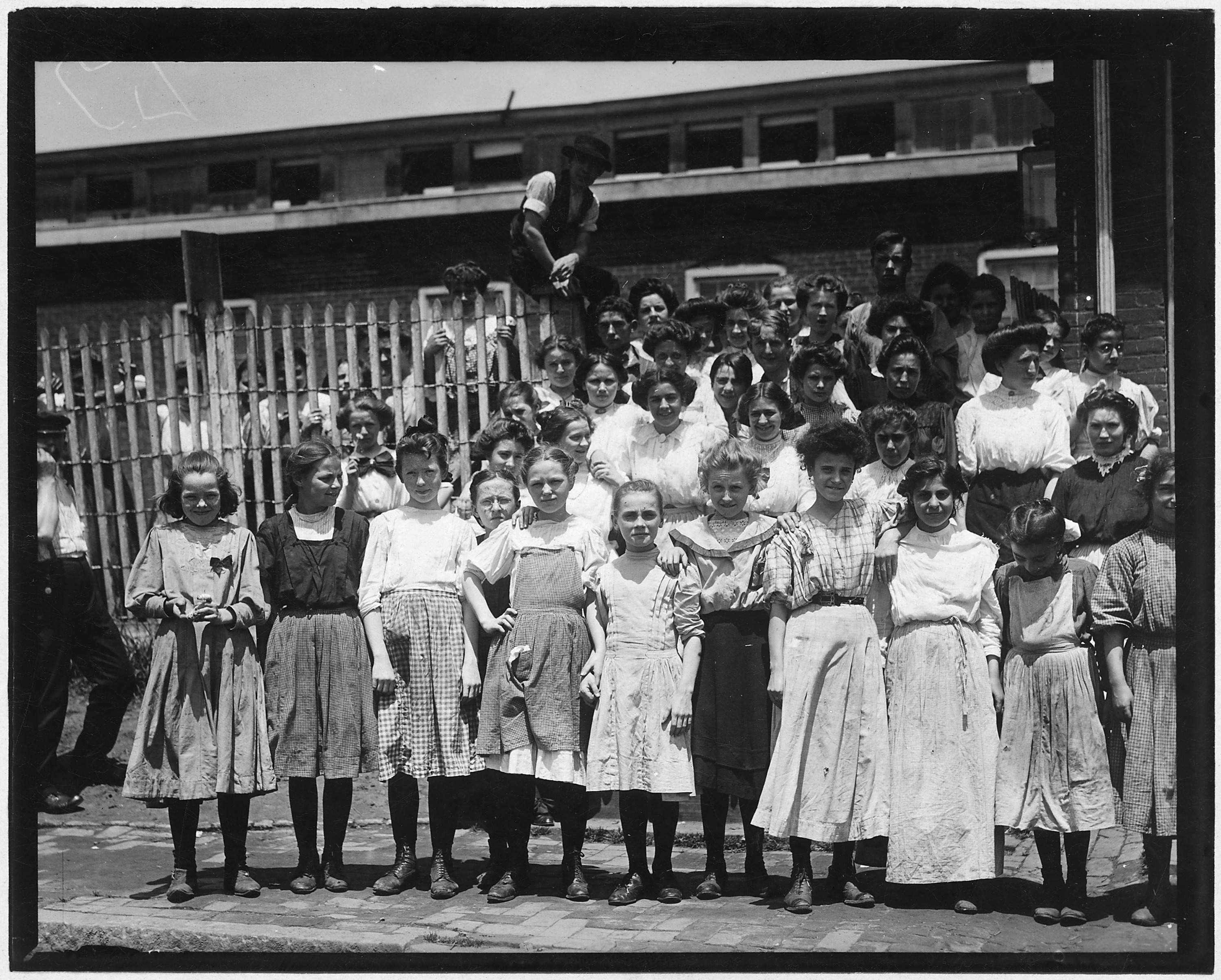
The old American Tobacco headquarters in Durham sat abandoned for years. Then, in 2004, Capitol Broadcasting reopened it as the American Tobacco Campus -- a complex of offices, shops, and restaurants with a waterfall feature running through its center. The redevelopment was listed on the National Register of Historic Places in 2000 as the American Tobacco Company Manufacturing Plant. Nearby, the Watts and Yuille Warehouses and Smith Warehouse also received historic designations. Today, much of the campus is used by Duke University, the institution that shares a name with the family whose tobacco fortune built it. The brick warehouses that once housed child laborers (documented in Lewis Hine's haunting 1910 photographs) now host startups and lunch crowds. Durham's relationship with tobacco shaped everything about the city -- its wealth, its architecture, its identity. The campus is a place where that complicated history is still visible in every brick.
From the Air
Located at 35.99N, 78.90W in Durham, North Carolina. The American Tobacco Campus is a distinctive complex of brick industrial buildings south of downtown Durham, recognizable by the large brick smokestack and the cluster of renovated warehouse structures along Blackwell Street. The Durham Bulls Athletic Park (baseball stadium) is immediately adjacent and serves as an excellent visual reference. Nearest airports: Raleigh-Durham International Airport (KRDU) approximately 12 nm to the southeast; Durham's Triangle Flight Center is closer in. The Research Triangle region's flat Piedmont terrain makes the campus easy to spot in clear weather. Best viewed at 2,000-3,000 ft AGL to appreciate the campus layout and its relationship to downtown Durham.