Amerikamura
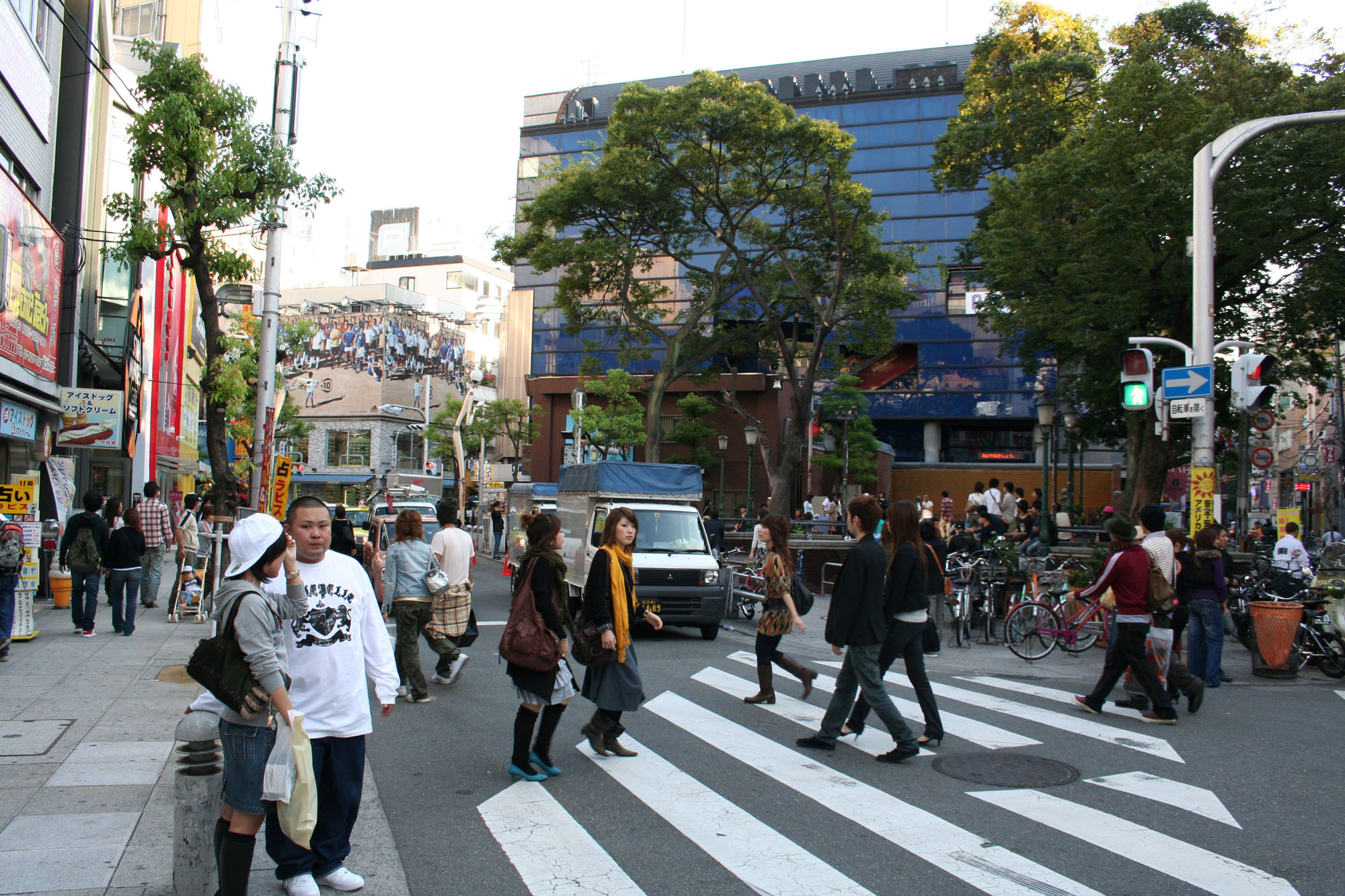
A miniature Statue of Liberty stares down from a rooftop on a narrow Osaka side street, watching over a crowd that Lady Liberty's sculptor never imagined. Below her, teenagers in layered vintage denim pose against graffiti-splashed walls, DJs haul crates of records into basement clubs, and the air carries the competing scents of takoyaki and American-style burgers. This is Amerikamura, or Ame-mura as the locals call it, a few compact blocks in Osaka's Chuo-ku district that have served as the city's beating heart of youth culture since the early 1970s. It started with one man, one warehouse, and a suitcase full of secondhand American clothes.
Blue Jeans and Vinyl
Amerikamura's origin story belongs to the late 1960s and early 1970s, when local entrepreneurs began converting disused warehouses in the blocks between Nagahori Street and Dotonbori into shops selling imported American goods. The breakthrough came when a shop owner returned from the West Coast of the United States with used Levi's, vintage band T-shirts, and crates of secondhand records, stocking a renovated warehouse with the kind of American pop culture ephemera that young Osakans craved but could not find anywhere else. The formula was irresistible. More shops followed, filling the surrounding alleys with imported denim, sneakers, and music. By the 1980s, the area had earned its name: Amerika-mura, the American Village, and its reputation had spread well beyond the Kansai region.
Triangle Park and the Fashion Stage
The soul of Amerikamura is Sankaku Koen, Triangle Park, a modest concrete plaza ringed by shops, bars, and nightclubs. The name comes from the triangular shape of the public space, and despite being more hardscape than greenery, it functions as Osaka's most democratic runway. On weekends, the park fills with young people showcasing elaborate street fashion: gothic Lolita dresses layered over combat boots, meticulously deconstructed streetwear, hip-hop-inspired ensembles that would hold their own in Brooklyn or Shibuya. The fashion culture here draws frequent comparisons to Tokyo's Harajuku, but Ame-mura has its own energy, looser and louder, shaped by Osaka's famously outgoing personality and sharp sense of humor.
Neither Quite American Nor Entirely Japanese
The name is slightly misleading. Osaka's registered foreign population is a small fraction of the city's total, and the crowds in Ame-mura are overwhelmingly Japanese. The 'American' label refers less to who gathers here than to the imported aesthetic that sparked the neighborhood's identity: the denim, the vinyl, the sneaker culture, and the small-scale Statue of Liberty replica that serves as its most recognizable landmark. But Amerikamura has long since transcended its origins as a secondhand import bazaar. Today, it is a place where Japanese pop culture expresses itself at its most fashion-intense and experimental, blending Western influences with homegrown street style into something neither culture would produce on its own.
Murals, Music, and After Dark
In 1983, artist Seitaro Kuroda painted the 'Peace on Earth' mural in Amerikamura, one of the neighborhood's earliest permanent artworks and a signal that the area was becoming more than a shopping district. Today, the streets are layered with street art, from elaborate murals to sticker-bombed utility boxes, giving the neighborhood a visual texture that shifts block by block. As daylight fades, Ame-mura reveals its nightlife identity: basement clubs pump out everything from house to hip-hop, tiny bars seat six people elbow to elbow, and live music venues showcase both local acts and international artists. The area stretches from its western edge near Shinsaibashi Station all the way to the neon-drenched canal of Dotonbori to the south, making it easy to wander from vintage shopping into one of Osaka's most famous entertainment corridors without ever breaking stride.
From the Air
Located at 34.6721°N, 135.4980°E in central Osaka's Chuo-ku district, tucked between the Shinsaibashi shopping arcade and the Dotonbori canal entertainment strip. From the air, the area is part of the dense urban grid south of the Tosabori River. Osaka Itami Airport (RJOO) is approximately 13 km to the north-northwest, while Kansai International Airport (RJBB) sits about 40 km to the southwest on its artificial island in Osaka Bay. The Dotonbori canal and the distinctive curve of the Shinsaibashi covered arcade are the best aerial landmarks for orienting to this neighborhood.