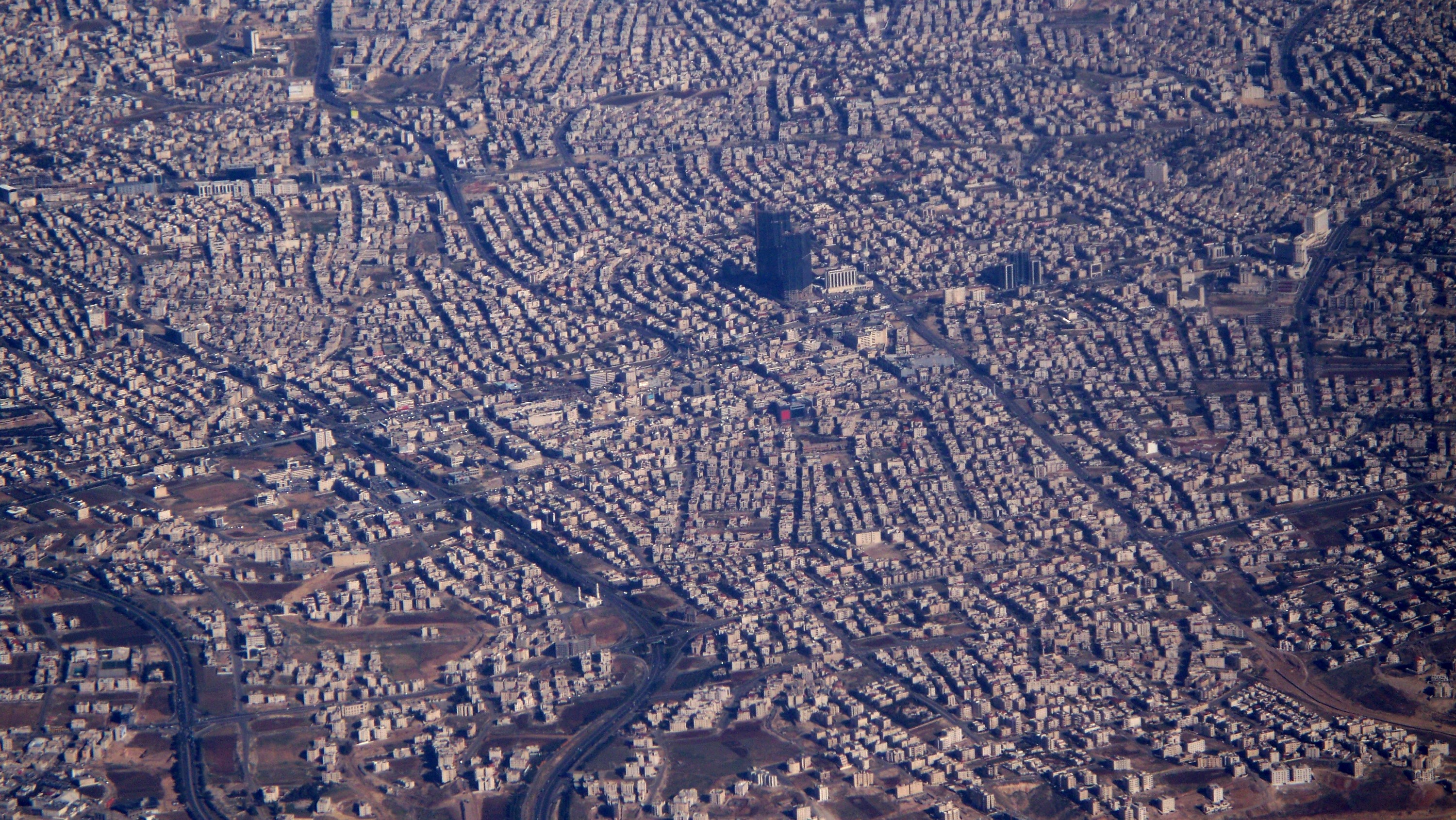
Amman
Ancient ruins and modern refugees share this capital. Amman, a Jordanian city of 4 million, has grown from small town to regional hub in a single century. The Romans knew it as Philadelphia, the city of brotherly love. Before them, the Ammonites gave Jordan its name. Today the city spreads across hills that were little more than villages when Jordan gained independence. Wave after wave of refugees from Palestine, Iraq, and Syria drove that growth, finding in Amman the stability their homelands had lost. Concerts still play in the Roman amphitheater. Civilizations layer atop one another at the Citadel. Gulf tourists browse the malls. Somehow Amman holds the ancient and the modern together without the conflict that pairing might imply.
The Citadel
Amman's highest hill belongs to the Citadel, where archaeology has peeled back one layer after another. Bronze Age settlements came first. Then the Romans raised the Temple of Hercules. Later, Islamic civilization added the Umayyad Palace. Many of these artifacts now reside in the Jordan Museum, but visitors still walk among the ruins themselves. From this hilltop, the Citadel offers sweeping views across the modern city below.
Jordan is full of encounters with antiquity, and the Citadel concentrates them all in one place. Roman Philadelphia, the Islamic period that followed, Ottoman and British rule before independence -- they coexist here in a proximity no museum can replicate. Civilization has occupied this hilltop continuously, and each era left its mark in stone.
The Downtown
Step into downtown Amman and the old city survives. The Roman amphitheater still hosts performances. Merchants in the souks sell what tourists want and locals need. Arabic script dominates the street signs; English retreats. After 1948, refugees filled these blocks, built businesses, and wove Palestinian identity into Jordanian life. Downtown is where Amman's working character persists.
This is not the Amman of wealth -- that has migrated to the western hills. Here, restaurants and cafes serve traditional food. Shops sell gold and spices. Human density packs the streets in a way that air-conditioned malls eliminate entirely. Downtown is Amman before oil money from the Gulf transformed whichever neighborhoods could attract it.
The Refugees
No other capital has absorbed refugees on Amman's scale. Palestinians arrived in 1948 and again in 1967. Iraqis followed after 2003. Syrians came after 2011. Each crisis expanded the population, and each wave of newcomers built and transformed entire neighborhoods. Jordan grew to accommodate them all, making Amman a refugee city in ways that reshape its very identity.
These newcomers brought skills, capital, and labor. Merchants, doctors, and workers rebuilt lives interrupted by war, and Jordan's economy absorbed them. Palestinian identity now permeates Amman. Iraqi restaurants serve loyal local clientele. Syrian businesses established in recent years are already woven into the commercial fabric. The refugees are not apart from Amman. They are part of what it became.
The Modern West
Modernity concentrates in west Amman. Abdoun and Sweifieh offer malls and restaurants catering to Gulf tourists and wealthy Jordanians. Embassies and international organizations cluster here, drawn by stability. In some ways, west Amman could be anywhere -- the same global brands, the same glass-and-steel buildings that globalization standardizes. This is what development looks like when oil money underwrites it.
But the west also displays Jordan's inequality starkly. Wealth coexists with camps where refugees still live. Consumption runs on income flowing in from elsewhere. West Amman is not false, yet it is far from all that Amman is. Visitors who never leave these neighborhoods see Jordan incompletely.
The Stability
Stability is Amman's greatest asset. The Hashemite monarchy has navigated regional chaos for decades, keeping Jordan functional while neighbors collapsed. Refugees came because Jordan was stable. Businesses located here because Jordan was predictable. Tourists visit because Jordan is safe. Stability is what Jordan sells, and Amman is where it goes on display.
That stability carries a cost. The monarchy maintains limits on expression and deploys security services to prevent what neighboring states experienced. Freedom and stability exist in tension here, a trade-off Jordan embodies more openly than most. Amman works because the state ensures it does -- and most residents, having seen the alternative, accept that bargain.
From the Air
Amman (31.95N, 35.93E) spreads across hills in northwestern Jordan, about 60km east of the Jordan River. Queen Alia International Airport (OJAI/AMM) sits 32km south of the city, with one runway 08L/26R measuring 3,660m and a second parallel runway alongside it. From above, the hilly terrain stands out clearly, and the Citadel crowns the highest point. Downtown, the Roman amphitheater is identifiable from altitude. Limestone gives the city its distinctive white stone appearance. Expect Mediterranean weather: hot dry summers and cool wet winters. Snow occasionally falls in winter, and dust storms can blow in from the east.