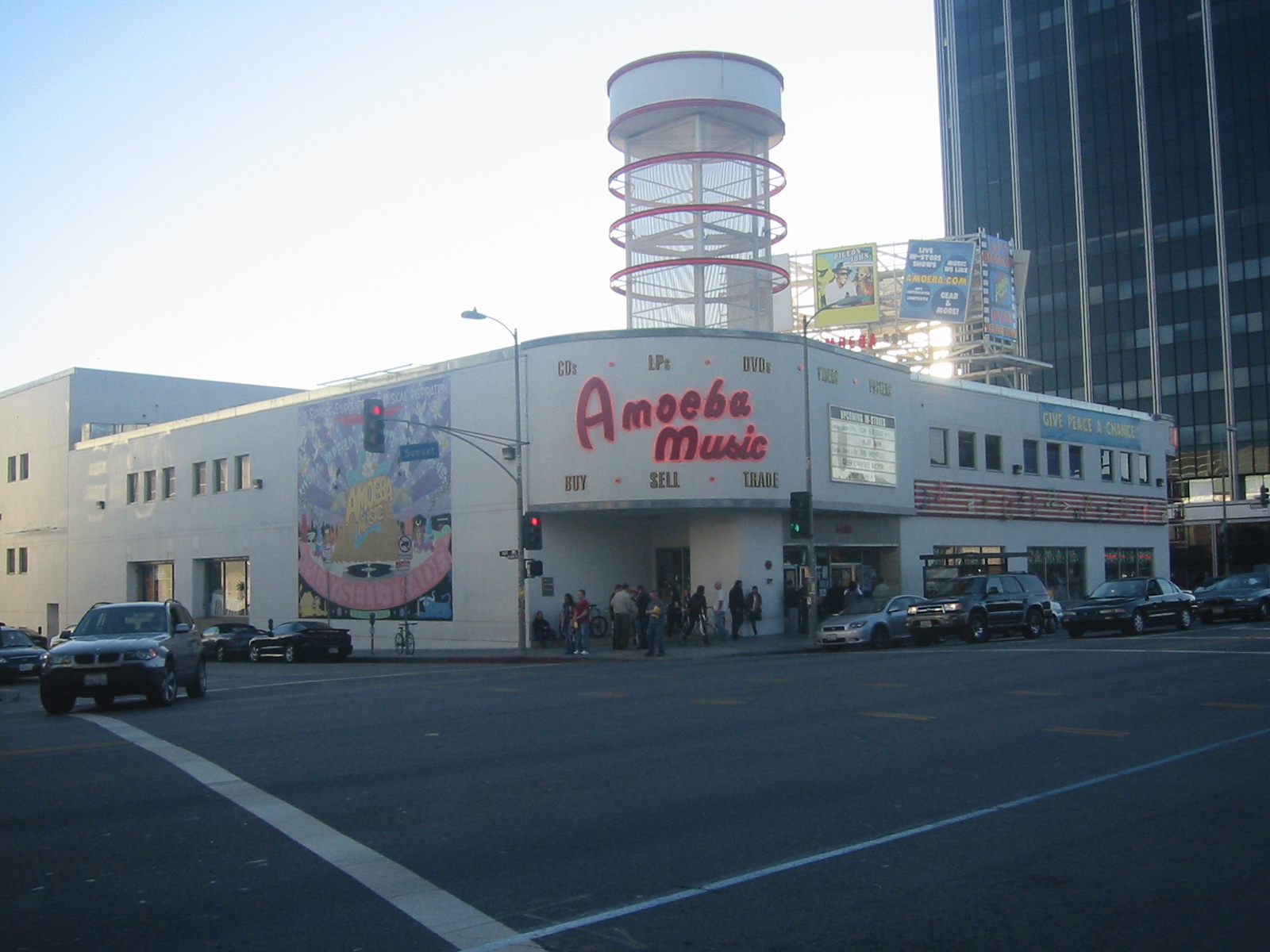
Amoeba Music
The San Francisco location of Amoeba Music occupies a cavernous former bowling alley on Haight Street, and walking in feels like entering a cathedral dedicated to the physical medium. Bins of vinyl stretch in every direction -- rock, jazz, hip-hop, classical, world music, soundtracks, spoken word. DVDs and VHS tapes line the walls. The listening stations are perpetually occupied. In an era when most music exists as data streams, Amoeba insists that the object still matters, and enough people agree to keep three locations thriving in Berkeley, San Francisco, and Hollywood — the last having relocated from its storied Sunset Boulevard home to a new space on Hollywood Boulevard in 2021.
Born in Berkeley, Raised on Haight
Amoeba Music opened its first store in Berkeley in 1990, founded by Marc Weinstein and Dave Prinz. The San Francisco location followed on Haight Street, positioning the store at the epicenter of the city's countercultural history -- the same neighborhood where the Summer of Love unfolded in 1967 and where the Grateful Dead, Jefferson Airplane, and Janis Joplin once lived within walking distance. The Hollywood location, which originally opened in a former bowling alley on Sunset Boulevard and later moved to Hollywood Boulevard, cemented Amoeba's reputation as the largest independent record store in the world.
The Economics of Physical Music
Amoeba thrives on a model that should be obsolete. The stores buy and sell used recordings alongside new releases, creating an ecosystem where a customer's old collection becomes someone else's discovery. Pricing specialists evaluate trade-ins on the spot. The sheer volume of inventory means that browsing -- the serendipitous encounter with something unexpected -- remains the store's primary appeal. Live in-store performances by touring artists draw crowds and reinforce the connection between music as art and music as physical artifact. The stores also stock music equipment, posters, and memorabilia.
Haight Street Anchor
On Haight Street, Amoeba serves as a cultural anchor in a neighborhood that has cycled through multiple identities. The blocks around the store host vintage clothing shops, head shops, and cafes that cater to tourists chasing the ghost of 1967, alongside the everyday businesses that serve actual residents. Amoeba bridges these worlds. It attracts vinyl collectors from around the world, local musicians building their libraries, and curious visitors who wander in because the storefront is impossible to resist. In a city where rents have driven out many independent retailers, Amoeba's survival is itself a statement about what a community chooses to value.
From the Air
Located at 37.77°N, 122.45°W on Haight Street in San Francisco. The store is in the Haight-Ashbury neighborhood, visible as the commercial strip south of Golden Gate Park. KSFO is approximately 9 nm south.