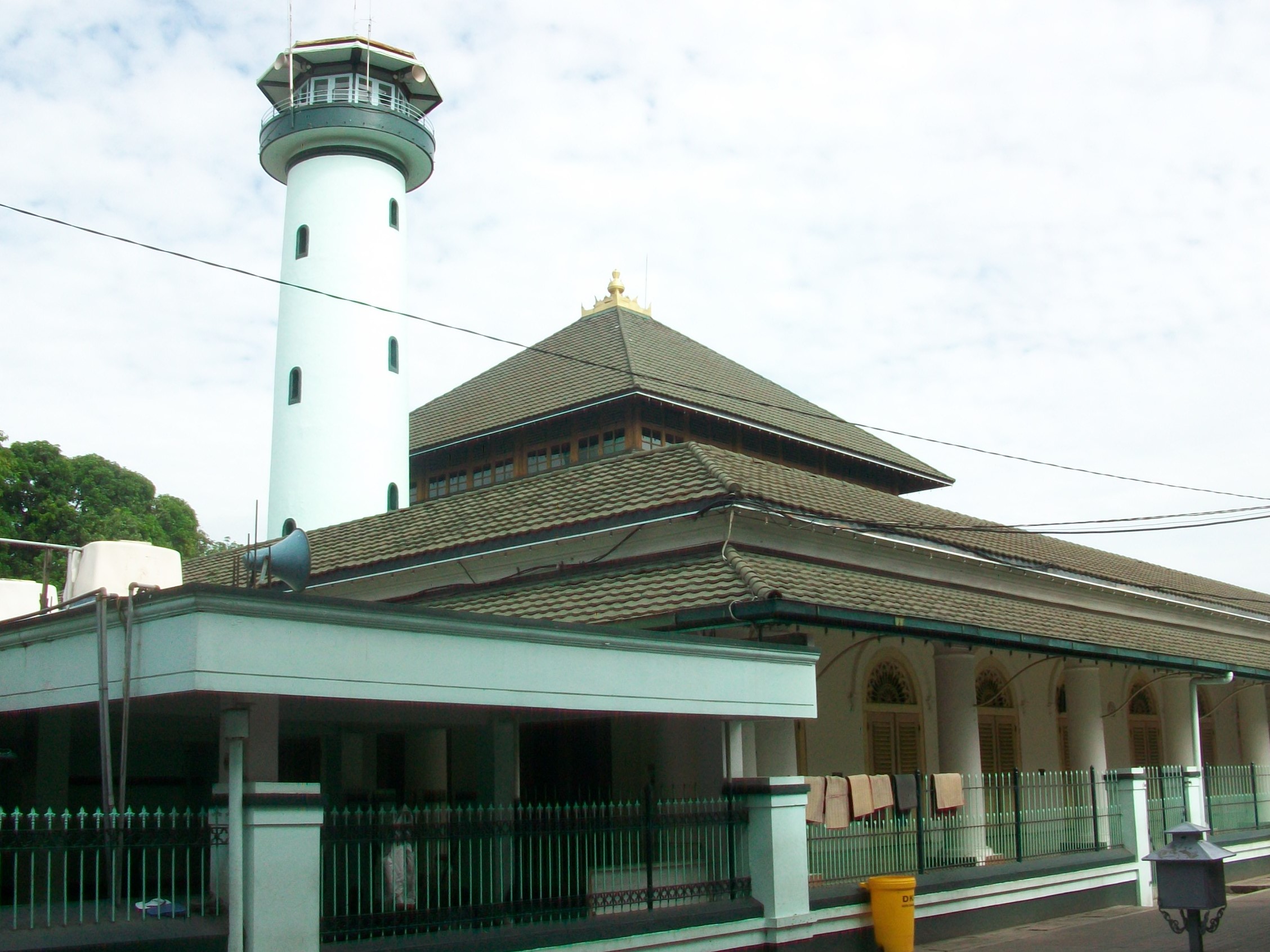
Where Java Learned to Pray
He came from Champa, in what is now central Vietnam, born around 1401 into a world where Islam moved along trade winds rather than by conquest. Raden Rahmatullah -- later known as Sunan Ampel -- arrived in Java in 1443, possibly to visit his aunt, a princess married to the king of the Majapahit empire. He never left. By 1421, according to tradition, he had already established a mosque in the port district of Surabaya, and from that modest structure he would help reshape the spiritual life of an entire island. The Ampel Mosque still stands in the same neighborhood, East Java's oldest, surrounded by narrow lanes where the call to prayer has sounded without interruption for six centuries.
The Saint Who Changed an Island
Sunan Ampel was one of the Wali Songo -- the Nine Saints of Java -- revered as the figures most responsible for Islam's spread across the island between the 15th and 16th centuries. What made their approach distinctive was enculturation: rather than demanding that Javanese converts abandon their Hindu-Buddhist traditions, the Wali Songo wove Islamic teachings into existing cultural forms. Sunan Ampel established a pesantren -- an Islamic boarding school -- called Ampel-Denta, which became one of Java's most important centers of religious learning.
His influence extended through his own family. His sons Sunan Bonang and Sunan Drajat became Wali Songo themselves, as did his grandson Sunan Kudus. His student Raden Patah would found the Sultanate of Demak, the first major Islamic state on Java. From one mosque in Surabaya, a lineage of saints and rulers radiated outward.
Layers of Architecture, Layers of Faith
The mosque's architecture tells the story of Java's religious layering. The roof rises in three tiers -- a form called tajuk that echoes Mount Meru, the cosmic mountain of Hindu-Buddhist cosmology, adapted here for Islamic worship. Five gapuros, or entrance gates, lead visitors through a sequence of walled compounds: the Jaba, then the Jaba Tengah with its ancillary shrine, and finally the Jeroan, the innermost precinct. The progression from outer to inner mirrors both Javanese temple tradition and the spiritual journey toward the sacred.
Arab and Chinese architectural elements appear throughout the surrounding district, reflecting the centuries of trade that brought Islam to Java in the first place. Buildings with Arabic calligraphy stand beside structures with Chinese ornamentation. The mosque absorbed these influences rather than resisting them, just as Sunan Ampel's teaching absorbed Javanese culture rather than replacing it.
A Grave Without Grandeur
Within the mosque complex lies the tomb of Sunan Ampel himself, who died in 1481. Unlike the elaborate mausoleums that mark the graves of other Wali Songo, his tomb is deliberately simple -- reportedly his own last wish. No cupola covers it. The restraint is striking given the reverence his name commands across Java.
Pilgrims visit daily, many traveling considerable distances. They come to pray near the grave of a man who, in the popular imagination, brought an entire civilization to a new faith without violence or coercion. Near the tomb, a well is said to hold auspicious water, used by those who wish to strengthen a pledge or an oath. Whether the water carries blessing or merely tradition, the line of visitors never seems to shorten.
The Quarter That Remains
The Ampel district surrounding the mosque preserves something increasingly rare in modern Surabaya: a neighborhood whose character has survived urbanization largely intact. Narrow lanes wind between shops selling religious goods -- prayer caps, copies of the Quran, Islamic calligraphy, perfume oils. The population today is predominantly Javanese and Madurese, though the district is still called the Arab Quarter, a name that persists from the Yemeni traders who settled here centuries ago.
Historical photographs from the Dutch colonial period show the same lanes, the same mosque visible at the end of a market street. The scene has not changed as dramatically as the photographs might suggest. Commerce and devotion still share the same narrow space, as they have since a saint from Champa decided this port neighborhood was where Java would learn to pray.
From the Air
Ampel Mosque (7.23S, 112.74E) is located in the Semampir district of northern Surabaya, near the old port area along the Madura Strait. The mosque complex is embedded in dense urban fabric and not individually visible from altitude, but the Ampel district sits within the recognizable grid of Surabaya's old northern neighborhoods. Juanda International Airport (WARR/SUB) lies approximately 20 km to the south, with runway 10/28 (3,000m). The Suramadu Bridge to Madura Island is visible to the northeast. Tropical monsoon climate with heavy rains November through April.