Amsterdam
In 1602, the Dutch East India Company - the VOC - became one of the world's first multinational corporations, financed by shares traded on the Amsterdam Stock Exchange. The company received a monopoly on Asian trade that would last two centuries, and Amsterdam became the warehouse of the world. Goods from every corner of the globe flowed through the city's harbors; spices from the Indies, grain from Poland, timber from Scandinavia. The profits were staggering. So was the cost: approximately 1.7 million people were enslaved by Dutch traders between the 17th and 19th centuries. Amsterdam built its Golden Age on global commerce, and that commerce included human beings. The canals that UNESCO designated a World Heritage Site in 2010 were dug with that wealth, lined with merchants' houses bought with that profit. The city remembers both - the architectural achievement and the moral reckoning it requires.
The Canal Ring
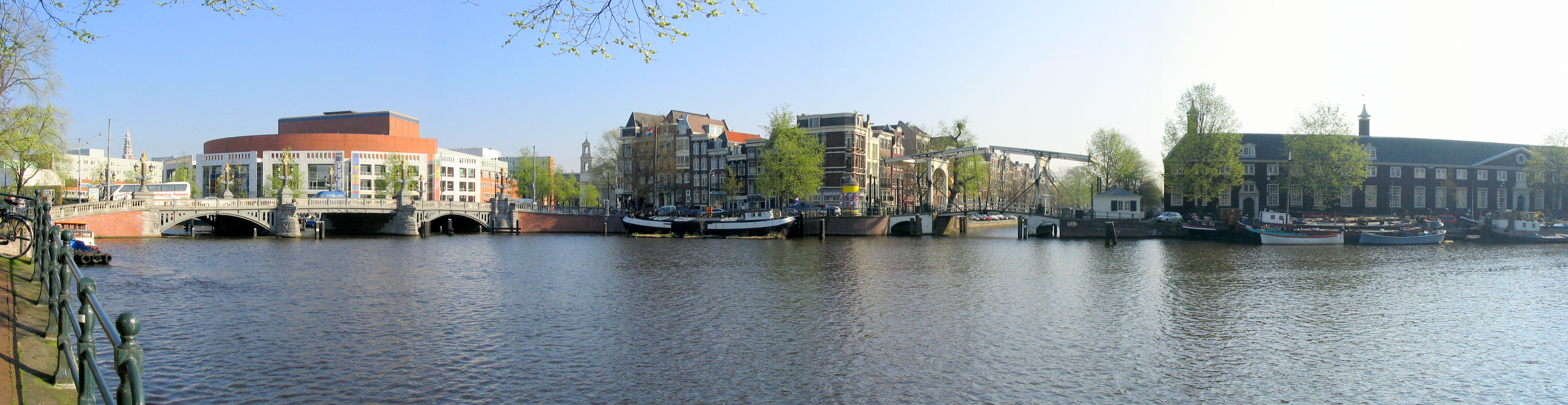
Construction began in 1613 and took over forty years. The grachtengordel - the canal ring - was urban planning on a scale Europe hadn't seen: three major canals dug in concentric semicircles around the medieval core, connected by radiating spokes, creating a system that functioned as transportation network, defensive moat, and prestige address simultaneously. Herengracht for the wealthiest merchants, Keizersgracht - Emperor's Canal - the widest at 28 meters, Prinsengracht for the professional classes.
The engineering required expertise in water control that the Dutch had developed over centuries of fighting the sea. The result was artificial but elegant - over 100 kilometers of canals, more than 1,500 bridges, a city that looks inevitable but was entirely planned. UNESCO's recognition called it 'a model of large-scale town planning' that served as reference throughout the world until the 19th century. The canal houses that line the water, narrow because property taxes were based on frontage width, tall to maximize floor space, tilted slightly forward so goods could be hoisted to upper floors without hitting the facade - these became the Amsterdam vernacular, repeated with variations down every canal.
The Hidden Annex
At Prinsengracht 263, behind a bookcase, eight people hid for two years. Anne Frank was 13 when her family went into hiding in July 1942, escaping the Nazi deportations that would eventually claim three-quarters of the Netherlands' Jewish population - the highest percentage in Western Europe. She was 15 when the annex was raided in August 1944. She died of typhus in Bergen-Belsen concentration camp in early 1945, weeks before liberation.
Her diary survived because Miep Gies, one of the helpers who had supplied the hidden residents, saved it from the ransacked annex. Anne's father Otto, the only resident to survive the camps, published it in 1947. The Anne Frank House is now one of Amsterdam's most visited sites, the narrow rooms where a teenager recorded her fears, her boredom, her hopes preserved exactly as they were. The site forces a confrontation that Amsterdam has embraced rather than avoided: the Golden Age tolerance that welcomed refugees also produced a society where neighbors were deported while other neighbors watched.
The Tolerance Tradition
Amsterdam became home to Rembrandt, Spinoza, and Descartes - artists and intellectuals fleeing the wars and persecutions that ravaged the rest of Europe. The city's pragmatic tolerance wasn't idealistic; it was commercial. Religious refugees brought skills and capital. Letting them worship as they pleased cost nothing and gained everything. The result was a city where a Portuguese-Jewish philosopher could write about God and nature, where a Dutch painter could revolutionize portraiture, where a French mathematician could think in peace.
This tolerance extended to commerce and culture more consistently than to colonial subjects. The same city that sheltered refugees ran slave ships to Suriname and plantation colonies in the Caribbean. Rembrandt painted The Night Watch while the VOC enforced monopolies with violence across the Indonesian archipelago. Amsterdam's current reckoning with this history - the debates over the term 'Golden Age' itself, the museum exhibitions acknowledging slavery - represents a city trying to be honest about complicated inheritance. The tolerance tradition continues, but its definition has expanded.
The Bicycle City
Amsterdam has more bicycles than people - approximately 880,000 bikes for 800,000 residents. The infrastructure that makes this possible wasn't inevitable; it was chosen. In the 1970s, Amsterdam faced the same pressure as other Western cities to accommodate cars. Highways were planned through historic neighborhoods. Then the oil crisis hit, children were dying in traffic accidents, and activists protested under the slogan 'Stop de Kindermoord' - Stop the Child Murder. The city changed direction.
The result is a transportation system that visitors find either liberating or terrifying. Bike lanes run along every major street, cyclists ignore traffic signals they consider advisory, and tourists walking in bike lanes learn quickly to get out of the way. The canal bridges have been retrofitted with bike ramps. Parking garages store bikes in three-story automated systems. What began as protest became policy and then infrastructure so embedded that alternatives seem unthinkable. Amsterdam's bikes are now as iconic as its canals - both representing choices that could have gone differently but now define the city.
The Perpetual Reconstruction
Amsterdam sits on water, and water is always moving. The houses along the canals rest on wooden piles driven into sandy soil; when the wood dries out or rots, buildings shift and tilt. The characteristic lean of canal houses isn't quaint - it's structural instability that requires constant monitoring and occasional heroic engineering. Entire buildings have been lifted on hydraulic jacks while new foundations were installed.
The city that Golden Age merchants built for permanence requires perpetual maintenance. Climate change raises sea levels that the Dutch have been fighting for centuries; now the fight intensifies. The same water management expertise that built the canals now builds flood barriers and pumping stations. Amsterdam accepts its precarity in ways that cities on solid ground never need to consider. The canals that made it wealthy also made it vulnerable. Every century brings new technology to address the same fundamental problem: how to keep a city afloat that was never supposed to exist where it exists.
From the Air
Amsterdam (52.37°N, 4.90°E) lies at the mouth of the Amstel River where it meets the IJ bay, an inlet of the IJsselmeer (the former Zuiderzee). The city's concentric canal ring pattern is visible from altitude as a distinctive semicircular grid surrounding the medieval core. Amsterdam Schiphol Airport (EHAM/AMS) lies 9km southwest - one of Europe's major hubs with six runways, the main ones being 18R/36L (3,800m) and 06/24 (3,500m). Schiphol sits 3-5 meters below sea level, protected by dikes and pumping stations. From the air, the flat polder landscape extends in every direction, crossed by canals and dotted with lakes. The central station sits on three artificial islands at the northern edge of the canal ring. The IJ waterway separates central Amsterdam from Amsterdam Noord. Weather is maritime Dutch - frequently cloudy and wet, with prevailing southwest winds. Fog can be an issue, especially in autumn and winter. The flat terrain provides no obstructions but also no visual landmarks outside the urban area; the Westerkerk church tower in central Amsterdam and the distinctive shape of Centraal Station help orient relative to the canal ring.