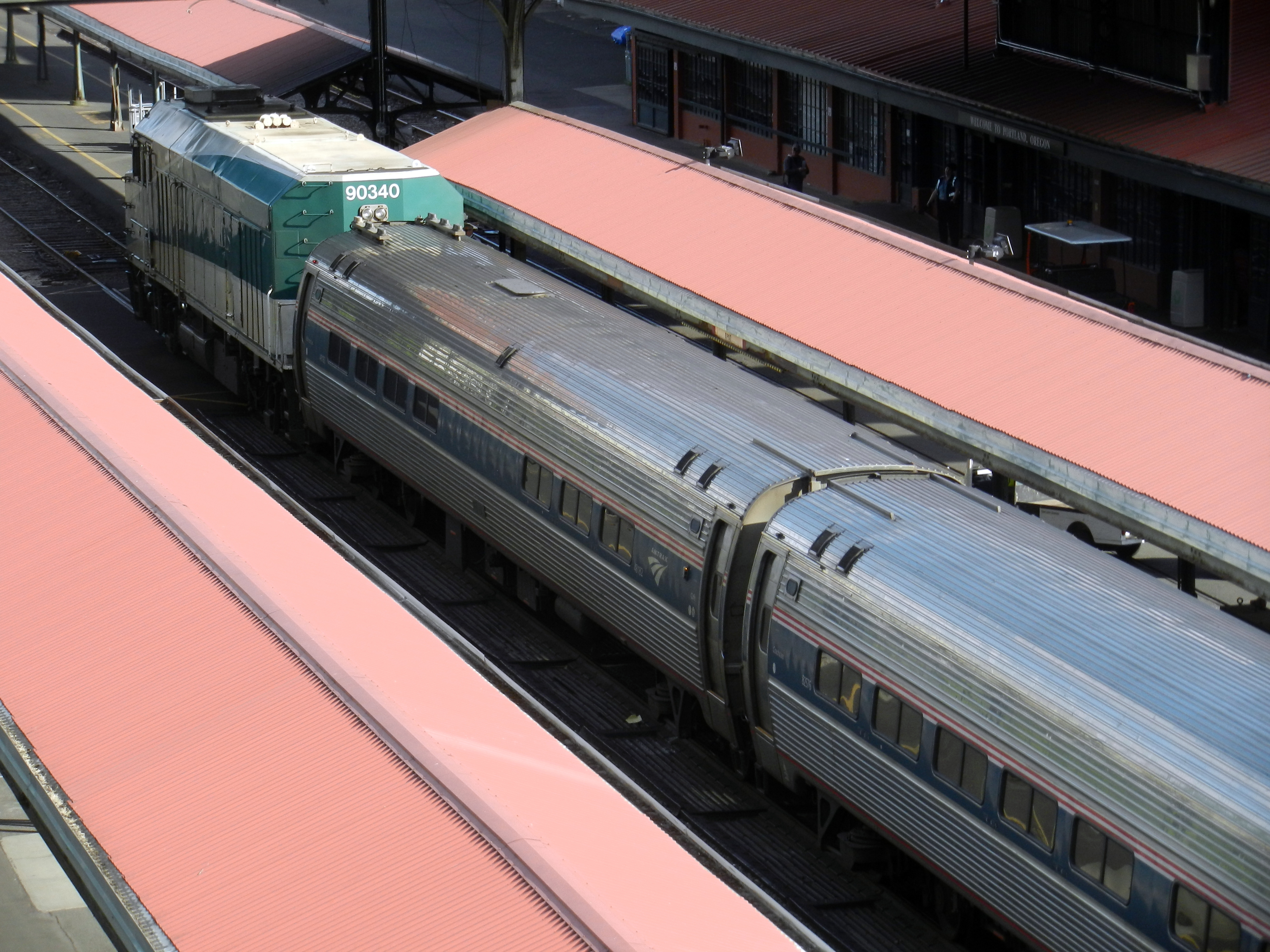
Amtrak Cascades
The train eases out of Vancouver's Pacific Central Station, leaving behind the glass towers and harbor cranes as it begins its journey south. Through the window, passengers watch the landscape transform: suburban sprawl gives way to farmland, farmland to forest, and always to the east, the Cascade Range rises in volcanic majesty. This is the Amtrak Cascades route, 460 miles of rail corridor connecting British Columbia to Oregon, threading through eighteen cities while paralleling one of North America's most dramatic mountain ranges. From Bellingham's college-town energy to Seattle's urban sophistication, from Tacoma's working waterfront to Portland's quirky charm, the Cascades offers a journey through the beating heart of the Pacific Northwest.
A Tale of Two Nations
The Cascades is one of the few passenger rail routes crossing an international border, linking Canada and the United States along a corridor that has connected these communities since the first rails were laid. Two daily trains operate between Vancouver and Seattle, with one continuing to Portland. Border formalities take place at Pacific Central Station for both departures and arrivals, with agents processing passports while passengers remain seated in climate-controlled comfort. The journey from Vancouver to Seattle takes roughly four hours, a civilized alternative to the congestion of Interstate 5 and the indignities of airport security. Passengers can work, read, or simply watch the scenery flow past.
The Mountain Backdrop
The route takes its name from the mountain range that dominates the eastern horizon throughout the journey. Mount Baker's glaciated cone rises north of Bellingham, its white summit visible for miles. Mount Rainier appears as the train approaches Seattle, so massive it seems to dwarf the city clustering at its feet. Further south, Mount St. Helens still shows the scars of its 1980 eruption, and Mount Hood guards the approaches to Portland. These volcanic sentinels of the Cascade Range form a chain running from British Columbia to Northern California, and the train route offers a continuous panorama of their grandeur.
Cities Along the Line
Each station stop reveals a different facet of Pacific Northwest life. Bellingham pulses with the energy of Western Washington University's student population. Everett and Tacoma speak of maritime industry and blue-collar tradition. Seattle needs no introduction, its skyline announcing arrival at the region's cultural and economic capital. Olympia serves as Washington's state capital, while Portland anchors the southern end with its bridges and books, its food carts and roses. For those continuing to Eugene, the train passes through the Willamette Valley's fertile farmland, ending at a university town known for track and field excellence.
Connections and Beyond
The Cascades route integrates with the broader Amtrak network through Seattle, where passengers can transfer to the Coast Starlight for journeys to Los Angeles or the Empire Builder heading east to Chicago. Many stations double as transit hubs, connecting to local bus systems, Greyhound services, and regional transit agencies. The train carries bicycles and accommodates passengers with mobility needs. While not the cheapest way to travel this corridor, the Cascades offers something air travel cannot: time to watch the landscape unfold, to feel the miles pass beneath you, to arrive rested rather than depleted.
From the Air
The Amtrak Cascades route runs 460 miles from Vancouver, BC (49.27N, 123.10W) to Eugene, OR. Major airports along the corridor include Vancouver International (CYVR), Seattle-Tacoma International (KSEA), Portland International (KPDX), and Eugene Airport (KEUG). From altitude, the rail line is visible tracking through the lowlands west of the Cascade Range, with the volcanic peaks of Baker, Rainier, St. Helens, Adams, and Hood forming a dramatic backdrop to the east.