Anacortes
The ferry horn sounds, long and low, and another boat pushes away from the Anacortes terminal bound for the San Juan Islands. This happens dozens of times daily, the town serving as mainland portal to an archipelago that draws kayakers, sailors, and island-dreamers from around the world. But Anacortes is more than a departure point. This town of 18,000 on Fidalgo Island has its own identity - a working waterfront where boats are still built and repaired, a historic downtown that has resisted generic redevelopment, and access to outdoor recreation that rivals anywhere in the Pacific Northwest. The ferries will take you to the San Juans, but Anacortes itself deserves more than a drive-through.
Ferry Town
The Washington State Ferries terminal dominates Anacortes's waterfront, its multiple lanes of waiting vehicles a permanent feature of the landscape. From here, boats depart for Friday Harbor, Orcas Island, Lopez Island, and Shaw Island - the major communities of the San Juan archipelago. The traffic is relentless in summer, manageable in winter, a rhythm that locals have learned to navigate.
The ferry system has shaped the town's economy and culture. Travelers need places to eat while waiting; restaurants have obliged. Kayak rentals serve paddlers heading to the islands. Bed and breakfasts accommodate those catching early boats. And the constant flow of visitors keeps the downtown alive with foot traffic that many small towns have lost. Anacortes exists in relationship to the islands it serves - not dependent on them, but certainly enriched by the connection.
The Working Waterfront
Beyond the ferry terminal, Anacortes maintains a maritime industry that goes back to its founding. Dakota Creek Industries builds and repairs vessels - everything from fishing boats to research ships. Smaller yards service the recreational fleet. Chandleries supply the boating community. The smell of fiberglass and marine paint drifts from workshops where craftsmen practice skills that elsewhere have vanished.
Cap Sante, a distinctive knob rising above the harbor, offers views of this working waterfront - the shipyards, the marinas, the fishing fleet that still operates from the commercial docks. Commercial fishing has declined from its peak, but boats still offload salmon and crab at facilities that have served the fleet for generations. Anacortes hasn't preserved its maritime heritage as museum; it continues it as livelihood.
Fidalgo Island
Anacortes occupies the northern portion of Fidalgo Island, connected to the mainland by bridge but feeling distinctly island in character. The Anacortes Community Forest Lands protect over 2,800 acres of forest within the city limits, laced with trails that offer hiking and mountain biking minutes from downtown. Heart Lake and Cranberry Lake provide paddling and fishing. The terrain rises to rocky viewpoints overlooking the San Juan archipelago and the distant peaks of the North Cascades.
The Swinomish Channel, separating Fidalgo from the mainland, runs past tribal lands where the Swinomish people have lived for centuries. The Rainbow Bridge crosses the channel, connecting to La Conner and the tulip fields of the Skagit Valley. This network of islands, channels, and bridges creates a landscape where water is never far, where the boundary between land and sea blurs into something uniquely Pacific Northwest.
Historic Downtown
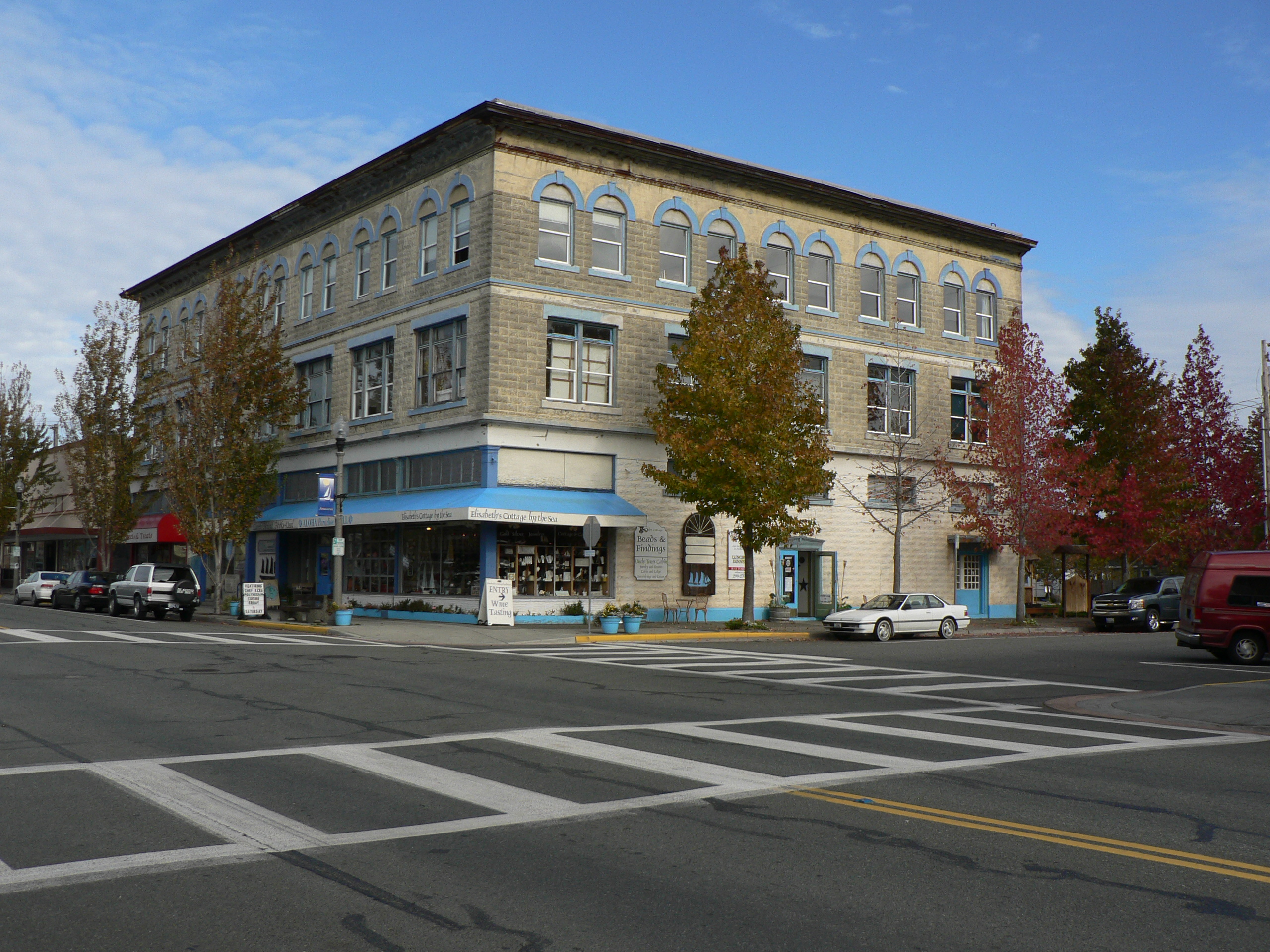
Commercial Avenue, Anacortes's main street, has maintained character that many towns have sacrificed. Independent retailers occupy historic buildings. Restaurants serve local seafood. The Majestic Inn and Spa occupies a restored 1889 hotel. The Arts Festival in August fills the streets with booths and performers. It's not a frozen museum district but a functioning downtown that happens to have preserved its best buildings.
The murals scattered throughout downtown capture the town's history - logging, fishing, shipping scenes painted on building walls, a public art project that has grown over decades. The Marine Life Center offers hands-on exhibits about local marine ecosystems. The Anacortes Museum chronicles the town's evolution from timber camp to ferry hub. Together, they tell the story of a place shaped by water, sustained by work, connected to islands it can see from its hilltops.
Gateway Adventures
For many visitors, Anacortes is the starting line. Kayak tours depart for multi-day paddles through the San Juan Islands. Sailing charters explore the archipelago. Bicycle tours begin here before continuing onto ferry-connected islands. The town serves as base camp for adventures that radiate in every direction - north to the San Juans, east toward the North Cascades, south to Deception Pass and Whidbey Island.
But the adventures don't require leaving town. The ACFL trail system offers world-class mountain biking. Washington Park, at the end of Fidalgo Head Road, provides shoreline hiking with views of the islands. Rosario Beach and Bowman Bay, within Deception Pass State Park, offer tide-pooling and swimming. Anacortes has learned that being a gateway doesn't preclude being a destination - that the same scenery drawing people to the islands makes the town itself worth exploring.
From the Air
Located at 48.51°N, 122.62°W on Fidalgo Island. Look for the Washington State Ferries terminal - a large complex with ferry slips and vehicle staging lanes on the waterfront. Cap Sante is a distinctive rocky knob visible above the harbor. The Deception Pass Bridge is visible to the south connecting to Whidbey Island. March Point (oil refinery) is visible to the east. The San Juan Islands scatter across the water to the west. Commercial marine facilities (shipyards, marinas) line the waterfront. The town extends across rolling terrain with significant forest cover. Nearest airports: Anacortes (74S), Bellingham International (KBLI) 20nm north. Ferry traffic is constant; watch for vessels departing and arriving.