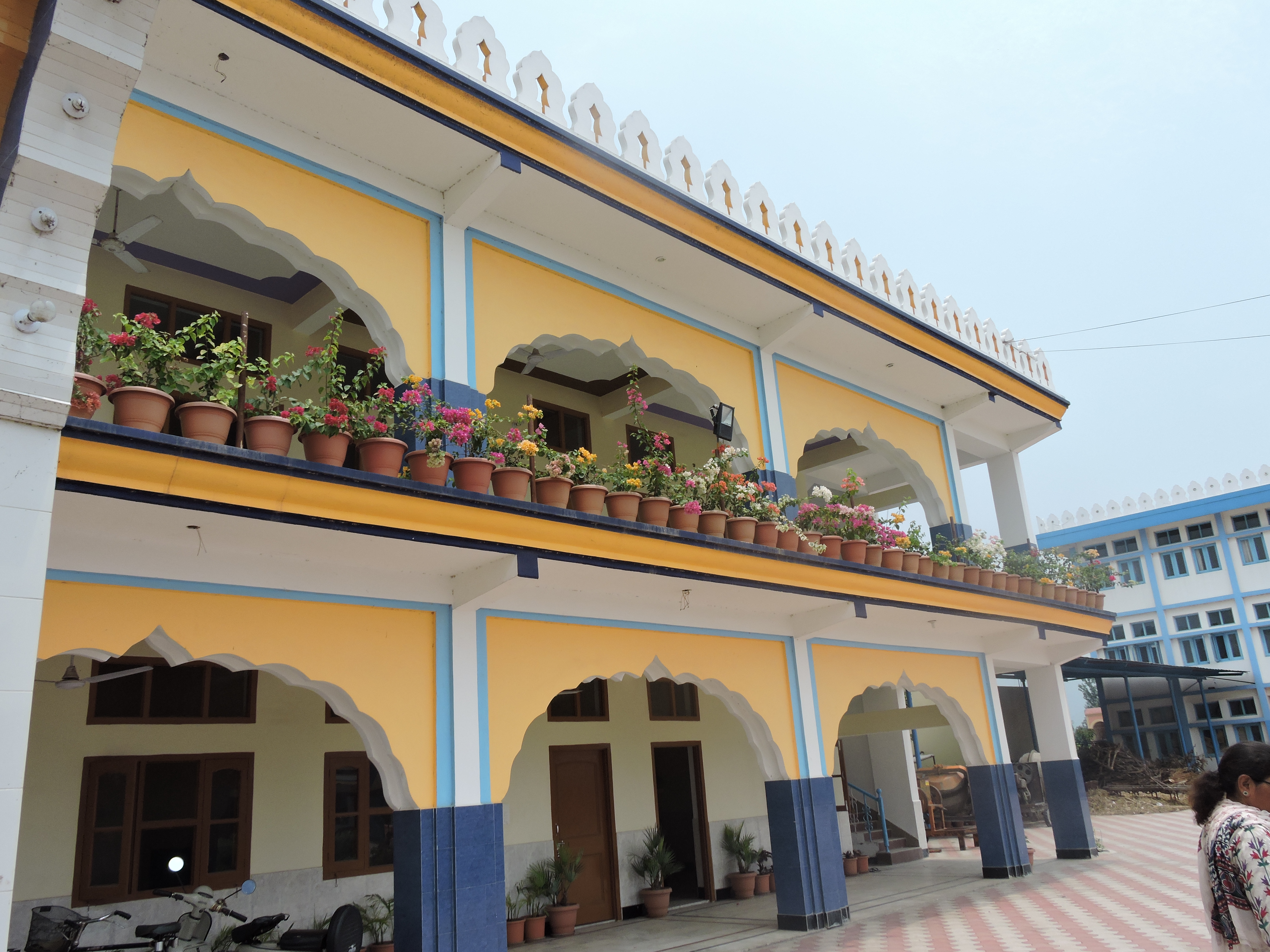
Anandpur Sahib
Every March, the Nihangs arrive. They come from across India -- turbaned warriors in blue and saffron, carrying curved swords and steel quoits, mounted on horses that stamp and wheel through the narrow streets. For three days during Hola Mohalla, Anandpur Sahib transforms from a small Punjabi city of 16,000 into one of the most extraordinary gatherings in the Sikh world. The procession starts opposite Gurdwara Anandgarh Sahib, winds through the bazaar to the village of Agampur, reaches the old fort of Holgarh, and finally descends to the sandy bed of the Charan Ganga, where tent pegging and sword demonstrations draw crowds in the thousands. This is the city where the Khalsa was born, and every year it remembers that birth with the sound of steel.
The Baisakhi of 1699
Anandpur Sahib's founding story is inseparable from the story of Sikhism itself. Founded in 1665, the city became the seat of Guru Gobind Singh, the tenth and last living Guru of the Sikhs. On the festival of Baisakhi in 1699, at the site where Takht Sri Keshgarh Sahib now stands, the Guru gathered his followers and called for volunteers willing to give their lives. Five men stepped forward -- the Panj Pyare, the Five Beloved Ones. The Guru baptized them through the new rite of Amrit, creating the Khalsa: a community of the initiated, bound by a shared identity and code of discipline. That single act reshaped Sikhism from a devotional movement into a martial and egalitarian brotherhood. In 1999, Baisakhi at Anandpur Sahib marked the 300th anniversary of the Khalsa's creation, drawing Sikhs from around the world to the city where their identity was forged.
Steel and Devotion
Hola Mohalla, celebrated the day before Holi, is Anandpur Sahib's signature festival and the one that best captures the city's character. Guru Gobind Singh himself established the tradition here, using it as an occasion for mock battles and martial training. Today, the gurdwaras are decorated, community kitchens feed tens of thousands, and religious conferences run alongside the spectacle of mounted Nihangs demonstrating the fighting arts their order has preserved for centuries. The highlight comes on the final day: a massive procession led by the Nihangs in their traditional blue dress, weapons glinting in the spring sun, moving through the bazaar with a disciplined energy that sits somewhere between parade and pilgrimage. When they reach the sandy riverbed of the Charan Ganga, the martial demonstrations begin -- riding, sword-wielding, tent pegging -- watched by a crowd that has traveled from Punjab, from Delhi, from the diaspora.
Sacred Geography
Anandpur Sahib sits where the Shivalik foothills descend to the Punjab plains, on the banks of the Sutlej River's tributaries. The setting gives the city a natural amphitheater quality: forested ridges to the north and east, flat agricultural land opening to the south and west. The Khalsa Heritage Memorial Complex, designed by architect Moshe Safdie, rises from a hillside on the city's edge with a series of petal-shaped galleries that tell the story of the Sikh people from their founding to the present. Takht Sri Keshgarh Sahib, one of the five Takhts that serve as seats of Sikh temporal authority, dominates the old town. Nearby, at Panj Piara Park, the world's tallest Khanda -- the double-edged sword that serves as the emblem of the Sikh faith -- stands 70 feet high, visible from the approaches to the city.
A Living City
Outside the festival months, Anandpur Sahib is a small municipal council overseeing about 3,270 households. It is not a grand metropolis -- its streets are narrow, its economy local, its rhythms governed by agricultural seasons and the calendar of Sikh observance. But the city's modest scale is part of what makes it powerful. This is not a pilgrimage site that has been polished into a tourist destination; it is a living town where faith is woven into daily commerce and conversation. The gurdwaras are not museums but active places of worship. The langars -- the communal kitchens that are a cornerstone of Sikh practice -- feed visitors and locals alike every day, not just during festivals. Anandpur Sahib matters because it is where the Khalsa was created, but it endures because it never stopped practicing what the Khalsa stood for: community, discipline, and radical equality before a shared meal.
From the Air
Located at 31.23N, 76.50E in the Shivalik foothills of Punjab, India. The city appears as a compact urban area along the river at the transition from hills to plains. The Khalsa Heritage Memorial Complex and Takht Sri Keshgarh Sahib are visible landmarks. Nearest major airport is Chandigarh (VICG) approximately 40 nm south-southwest. Terrain rises to the northeast into the Shivaliks. Best viewed at 3,000-5,000 feet AGL.