Anchorage: The Last Frontier City Where Moose Outnumber Traffic Cops
Anchorage is less a city than a base camp - half of Alaska's population lives here, but they're often preparing to leave. The outdoor store REI does more business in Anchorage than any other location. The airport handles more cargo than almost any American airport, much of it destined for Asian markets. The city occupies a bowl between the Chugach Mountains and Cook Inlet, a location that provides stunning views and regular earthquake danger. The 1964 Good Friday earthquake killed 139 people and dropped entire neighborhoods into the sea; the city rebuilt and kept growing. Anchorage is where Alaskans access civilization before returning to the wilderness that's always visible from city streets.
The Earthquake
On March 27, 1964 - Good Friday - a 9.2 magnitude earthquake struck southern Alaska, the second-largest ever recorded. In Anchorage, the shaking lasted four minutes. The Turnagain Heights neighborhood slid into Cook Inlet as the bluff liquefied; the J.C. Penney building downtown collapsed; Fourth Avenue dropped 20 feet. The death toll - 139 in Alaska, 131 in Anchorage itself - would have been higher if not for the holiday. The city rebuilt completely, incorporating earthquake-resistant construction that has been tested regularly since. Alaskans live with seismic risk the way Floridians live with hurricanes - acknowledged, prepared for, accepted as the price of location.
The Wildlife
Moose wander through Anchorage regularly - crossing roads, browsing in yards, occasionally charging runners who get too close. The city estimates 1,500 moose within city limits; moose-vehicle collisions are routine. Bears are less common but present - black bears in most neighborhoods, brown bears near the edges. The Alaska Department of Fish and Game relocates problem animals; the problem is that the humans moved into the animals' territory, not vice versa. The wildlife is a reminder that Anchorage is a temporary human claim on a landscape that remains fundamentally wild. The moose are not tourists; the humans are.
The Darkness
Anchorage's latitude - 61 degrees north - means extreme variation in daylight. Winter solstice brings less than 6 hours of daylight; summer solstice brings nearly 20 hours. The darkness affects everything: seasonal affective disorder rates are high; sun lamps are common; the spring equinox is celebrated with desperate joy. The summer compensates - baseball at midnight, hiking until 10 PM, the sense that sleep is optional when the sun refuses to set. The extremes create a culture that accepts the dark months as the price for the light ones. Alaskans are good at waiting.
The Oil
Alaska's economy runs on oil - the North Slope fields discovered in 1968 transformed the state, and Anchorage is where the oil money concentrates. The Permanent Fund Dividend sends every Alaskan a check each fall (around $1,600 in recent years), financed by oil royalties. There is no state income tax, no state sales tax. The lifestyle that oil money enables - the flights to Hawaii in January, the boats and ATVs and snowmachines - depends on continued extraction. The oil is running down; what happens when it ends is the question Alaska prefers not to answer. Anchorage enjoys the moment.
Visiting Anchorage
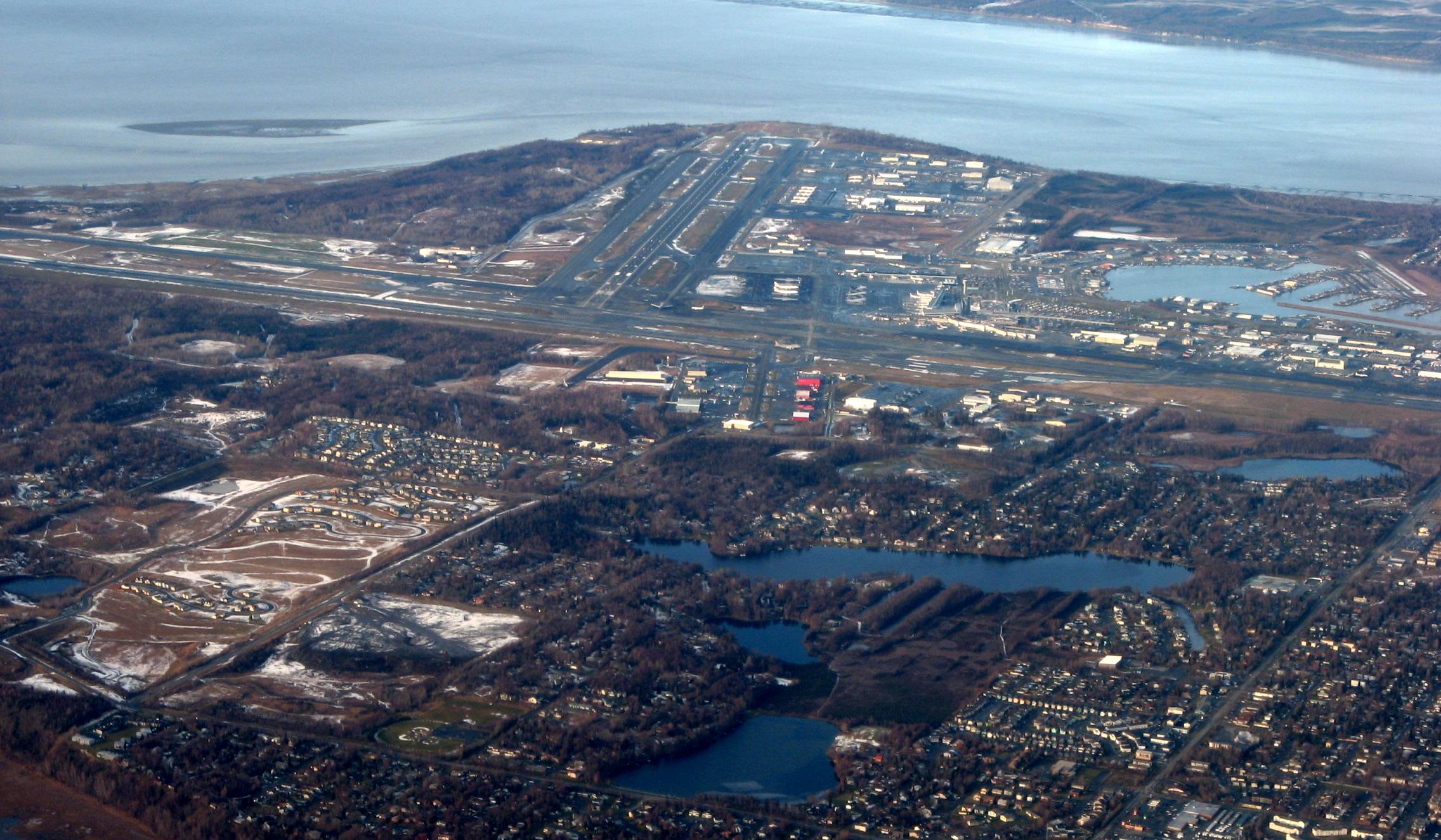
Anchorage is served by Ted Stevens Anchorage International Airport (ANC). The Anchorage Museum covers Alaska's history and indigenous cultures. Tony Knowles Coastal Trail offers 11 miles of waterfront walking and biking. Flattop Mountain provides a strenuous hike with views of the city and inlet. The Alaska Wildlife Conservation Center, 45 miles south, offers guaranteed wildlife viewing. For wilderness, Denali National Park is 240 miles north; Kenai Fjords National Park is 125 miles south. The summer season is brief - mid-May through mid-September for best weather. Winter offers northern lights when the clouds cooperate. Pack layers regardless of season.
From the Air
Located at 61.22°N, 149.90°W on the Cook Inlet surrounded by the Chugach Mountains. From altitude, Anchorage appears as urban development in a bowl between mountains and water - the city's grid visible, the Chugach rising immediately behind, Cook Inlet stretching toward volcanoes across the water. The airport is visible as a major facility. What appears from altitude as Alaska's largest city is the Last Frontier's base camp - where half the state's population lives, where the 1964 earthquake reshaped the landscape, and where wilderness begins at the city limits.