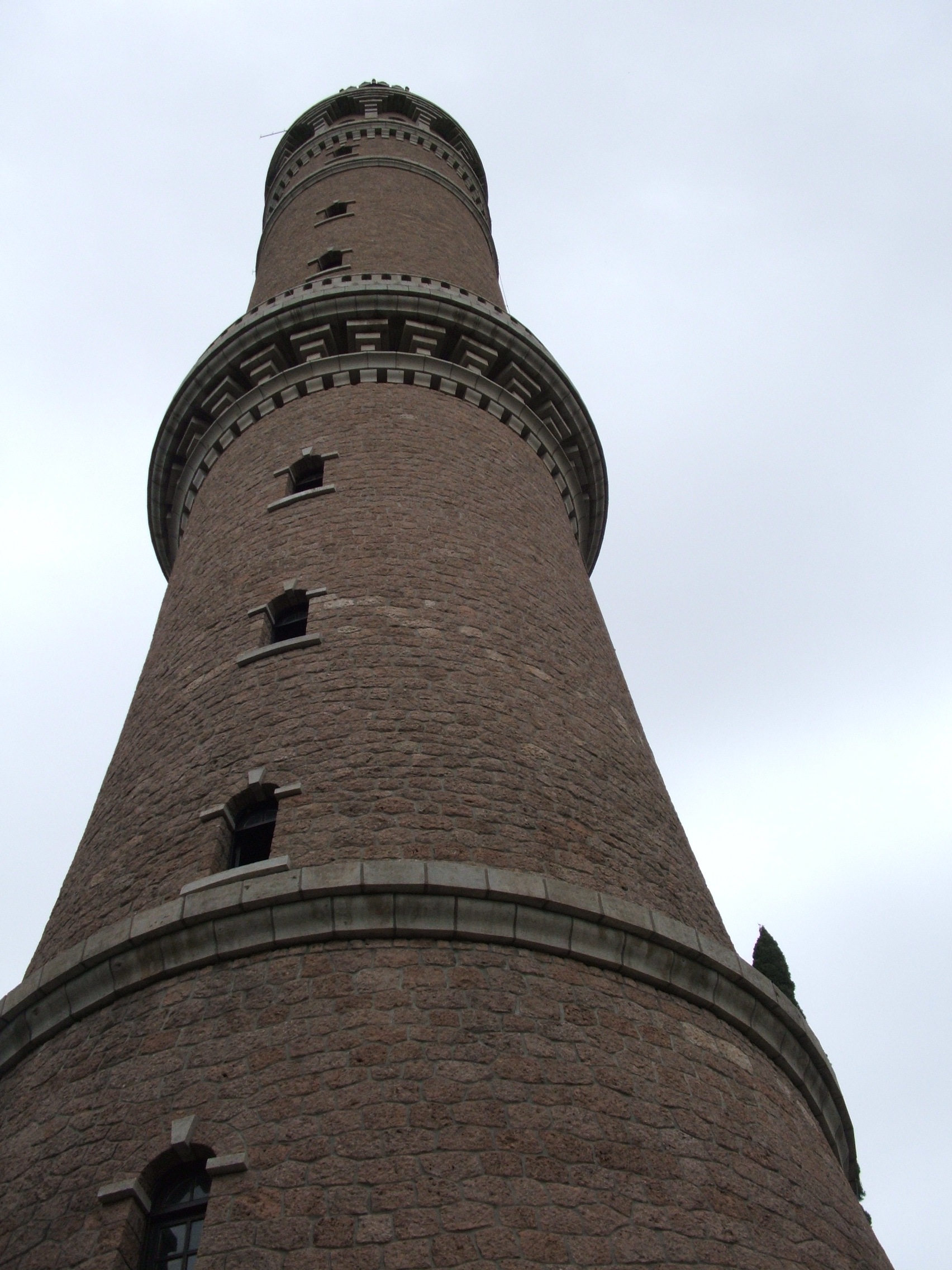
Anchorena National Park
In 1907, a wealthy Uruguayan named Aaron de Anchorena drifted over this stretch of coastline in a hot air balloon and fell in love with what he saw below. The rolling hills, the native forests meeting the Rio de la Plata, the wild beauty of the place convinced him to purchase the land and spend decades transforming it into something between a private estate and a botanical wonder. When he died in 1965, his will gave it all to the nation, stipulating that it should serve three purposes: conservation, public education, and a quiet refuge for Uruguay's presidents. Today, Anchorena National Park fulfills all three roles, its 1,369 hectares encompassing native woodland, exotic gardens, an English manor house, and South America's tallest lighthouse, all open to visitors willing to make the journey to this remote corner of the country.
A Landscaper's Vision
Aaron de Anchorena hired Hermann Botrich, a German landscape architect, to realize an ambitious dream: a park that would blend Uruguay's native flora with exotic species gathered from across the globe. Botrich carved out artificial ponds, cleared sections of forest to create savannah, and planted more than 200 non-native species including bald cypress, apricots, and over 50 varieties of eucalyptus. The result covers 464 hectares of intact native forest alongside 245 hectares of introduced vegetation, creating a botanical collection that rivals any in South America. Wandering the grounds today, visitors pass from subtropical woodland to stands of Australian eucalyptus to groves of Asian species, all united by Botrich's careful attention to visual harmony.
The Lighthouse Tower
The Gaboto Lighthouse Tower rises 75 meters above the park, making it the tallest lighthouse in Uruguay and one of the tallest in South America. Anchorena commissioned the brick tower in 1927, naming it after Sebastian Cabot, the explorer who sailed these waters four centuries earlier. Today the lighthouse serves as both a navigation aid and a museum, its interior housing historical and archaeological exhibits that chronicle the region's past. Visitors who climb to the top are rewarded with panoramic views across the park to the Rio de la Plata, understanding at last what Anchorena saw from his balloon all those years ago.
Wildlife Encounters
Anchorena did not stop at plants. He introduced 70 species of non-native wildlife to his estate, hoping to create a living menagerie mixing creatures from around the world with Uruguay's native fauna. Some experiments failed spectacularly: the kangaroos, buffalo, and peacocks have all died out. But others took hold, most notably a herd of chital deer brought from India, whose spotted coats still flash through the undergrowth. Native species including coatis, white-tailed deer, peccaries, and several species of monkey share the park with their exotic neighbors, while colorful birds both native and introduced fill the canopy with song.
The Presidential Retreat
The centerpiece of the park is Anchorena's English-style manor house, now serving as Uruguay's official presidential retreat. International summits have convened in its elegant rooms, and foreign dignitaries have strolled its gardens between sessions. Access requires advance reservation, with guided tours offered Thursday through Sunday. The two-hour tours, limited to 66 visitors per session due to bus capacity, reveal the gracious interiors where Uruguay's presidents escape the pressures of Montevideo. The surrounding grounds, however, are open to all who pay the modest admission fee, allowing visitors to explore the same landscapes that charmed both an aristocrat and the nation's leaders.
From the Air
Located at 34.28 degrees S, 57.93 degrees W, on the northern shore of the Rio de la Plata in southwestern Uruguay. The Gaboto Lighthouse Tower is a prominent landmark visible from distance. Nearest commercial airport: Carrasco International Airport (SUMU), Montevideo, approximately 180 km east. The park lies near Colonia del Sacramento, accessible via Route 21. The distinctive English manor house and surrounding formal gardens are visible from low altitude.