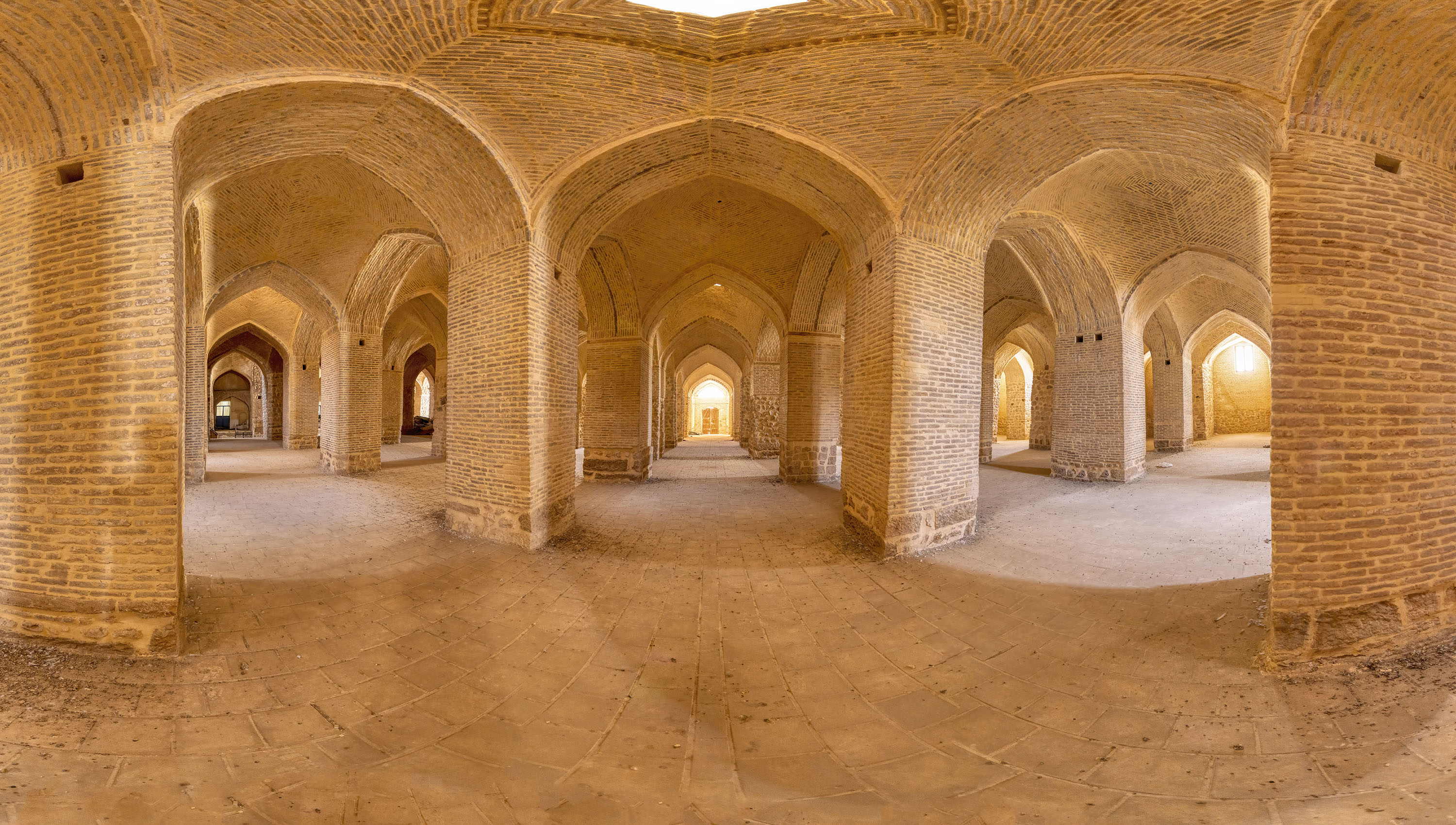
The Oldest Mosque in Shiraz: Built on Fire, Rebuilt by Time
Beneath the courtyard tiles of Shiraz's oldest mosque, there may be ashes from a Zoroastrian fire temple. The Ancient Congregational Mosque -- known locally as Masjid-e Jame Atiq -- was completed in 895 CE, raised to celebrate a moment of liberation: the Saffarid dynasty's reconquest of Shiraz from the Abbasid Caliphate. Amr ibn al-Layth chose this site deliberately, building his Friday mosque over a pre-existing religious compound. The gesture was political and spiritual at once. Eleven centuries later, the mosque still functions as a Shi'ite Friday mosque, though earthquakes, dynasties, and renovations have replaced nearly every original stone. What endures is the site itself -- the same patch of ground, the same orientation toward Mecca, the same purpose.
Layers Upon Layers
The mosque standing today is a palimpsest. The main structure dates from the 9th century, but the building has been rebuilt so many times that almost nothing visible is original. In the 11th century, two iwans -- the vaulted halls open on one side that define Persian mosque architecture -- were added. During the 12th century, builders completed the main prayer hall, its dome, the central courtyard, and an attached madrasa. The southern and western iwans and arcades arrived in the 17th century. Major renovations followed in the 18th and early 20th centuries. Earthquakes have damaged the structure repeatedly; extensive repairs after 1935 addressed the accumulated seismic toll. The result is a building that carries its history in its bones -- each era's work visible if you know where to look, each restoration a negotiation between preservation and necessity.
The Khuda Khane
In the center of the mosque's sahn -- its open courtyard -- stands a curious structure: the Khuda Khane, a small kiosk commissioned in 1351 by the Inju'id ruler Abu Ishaq Inju for storing Qur'ans. Also called Bayt al-Mashaf, the House of the Book, it sits on a raised marble platform with circular towers at each corner and arched loggias on all four sides. Twelve pointed arches rest on marble columns with bulbous bases and muqarnas capitals. A tile band wraps below the cornice, white Thuluth calligraphy on a blue background intertwined with floral arabesques. By the early 20th century, only the towers, the platform, and ruined inner walls remained. Iran's Archaeological Service rebuilt the kiosk between 1937 and 1954, following the original design. The date of construction is still visible on the southeast tower -- a 14th-century timestamp embedded in a 20th-century reconstruction.
Stone and Script
The Khuda Khane is built of rubble masonry but clad entirely in cut stone -- alternating square and rectangular panels that give the surface a geometric rhythm. The floral medallions carved in relief on the base platform belong to the refined decorative tradition of the Inju'id period. Inside, the rectangular core contains a square hall with four central doorways flanked by engaged columns and topped with flat muqarnas crowns. A small vestibule to the north houses a spiral staircase for roof access. The core measures roughly 5.5 meters across, enveloped by two-meter-wide loggias on three sides. The southern loggia, facing the mosque sanctuary, is wider at 3.5 meters -- a subtle architectural emphasis that draws the eye and the footstep toward the prayer hall.
The City Around It
Shiraz has been a cultural capital of Persia for centuries -- the city of Hafez and Saadi, of gardens and poetry. The Ancient Congregational Mosque sits within this living city, not as a museum piece but as a functioning place of worship. Friday prayers continue as they have for over a thousand years. The mosque and its Khuda Khane were added to the Iran National Heritage List on January 6, 1932, one of the earliest properties recognized. But heritage designation is just bureaucratic acknowledgment of what the community already knew: this ground has been sacred since before Islam arrived in Fars. The fire temple, the mosque, the Qur'an kiosk, the earthquake repairs -- each layer records a chapter of Shiraz's long conversation with the divine.
From the Air
Located at 29.61°N, 52.54°E in central Shiraz, Fars Province, Iran. The mosque sits in the historic city center, identifiable by its dome and minarets among the dense urban fabric. Shiraz International Airport (OISS) is approximately 15 km to the southeast. The city lies in a valley at roughly 1,500 meters elevation, surrounded by mountains. From altitude, Shiraz appears as a dense urban cluster in an arid valley with the distinctive green patches of its famous gardens visible. The mosque is near the Shah Cheragh shrine, whose mirrored dome is one of the most visible landmarks from above.