Ancon (archaeological site)
In 1870, workers building a railroad from Ancon to Pasamayo broke through the surface and found the dead. Large ancient tombs, packed with textiles and ceramics, emerged from the sandy ground 42 kilometers north of Lima. It was the beginning of a long reckoning with a place that had been continuously occupied for 10,000 years. Ancon is not Peru's most famous archaeological site, but it may be its most complete -- a single location where the entire sweep of Andean civilization, from the preceramic stone-tool makers of the lithic period to the final days of the Inca Empire, left its mark in layered deposits of shell middens, burial grounds, and the ruins of a culture that never quite left.
Ten Thousand Years of Shellfish
The earliest inhabitants of Ancon arrived roughly 10,000 years ago, during the lithic period, camping on the pampas of Ancon and Piedras Gordas. They left behind bifacial projectile points of the Paijan type, a style found elsewhere along the Peruvian coast. By the archaic period, the camps had given way to more permanent settlement: sedentary fishermen and shellfish gatherers who lived along the Bay of Ancon and left enormous middens -- heaps of discarded shells and refuse -- in the area called Las Colinas. The arid coastal soil offered little for agriculture, so these communities specialized in marine resources, trading their surplus with farming groups further inland. In 1959, archaeologist Jorge C. Muelle found a preceramic layer beneath Chavin-era remains at Las Colinas, pushing Ancon's known prehistory back by several thousand years and confirming what the site's stratigraphy had long suggested: people had been living and dying here far longer than anyone had imagined.
The City of the Dead
Ancon's great necropolis, also known as Miramar, is the site's most striking feature -- a vast burial ground spanning multiple cultural periods. Between 1945 and 1950, archaeologist Julio C. Tello conducted rescue excavations ahead of planned development, investigating an area of 2,000 meters by 200 meters. His team uncovered 1,570 tombs containing 14,055 excavated objects. The results, published by Rebeca Carrion Cachot in 1951, revealed three distinct cultural layers: a very old period with Chavin and sub-Chavin elements found in the hills of Cerro San Pedro; an intermediate period with Wari culture influences bearing local Ancon variations; and a recent period represented by Chancay and Inca cultures. The sheer density of burials across such a long span of time makes Ancon one of the most important necropoli in the Americas -- a place where generation after generation chose to lay their dead, maintaining the tradition across the rise and fall of entire civilizations.
From Berlin to the Bay
Five years after the railroad workers' accidental discovery, German scholars Wilhelm Reiss and Alphons Stubel arrived in 1875 and began systematic excavations in and around the necropolis. Their work produced a three-volume study, published in Berlin between 1880 and 1887, with detailed lithographs and drawings that some consider the precursor of scientific archaeology in Peru -- even though the pair had not yet applied stratigraphic methods. Max Uhle followed in 1904, becoming the first to record the large shell midden at Las Colinas. Paul Berthon came in 1907, Ales Hrdlicka in 1913, Gordon Willey and Marshall T. Newman in 1941. Each expedition added layers of understanding to a site that contained layers of civilization. Federico Kauffmann Doig worked in the Miramar area, and Peter Kaulicke published research on Ancon's funerary contexts in 1997. The site has been studied continuously for over 150 years, and it is still yielding surprises.
Where Treaties and Tombs Share Ground
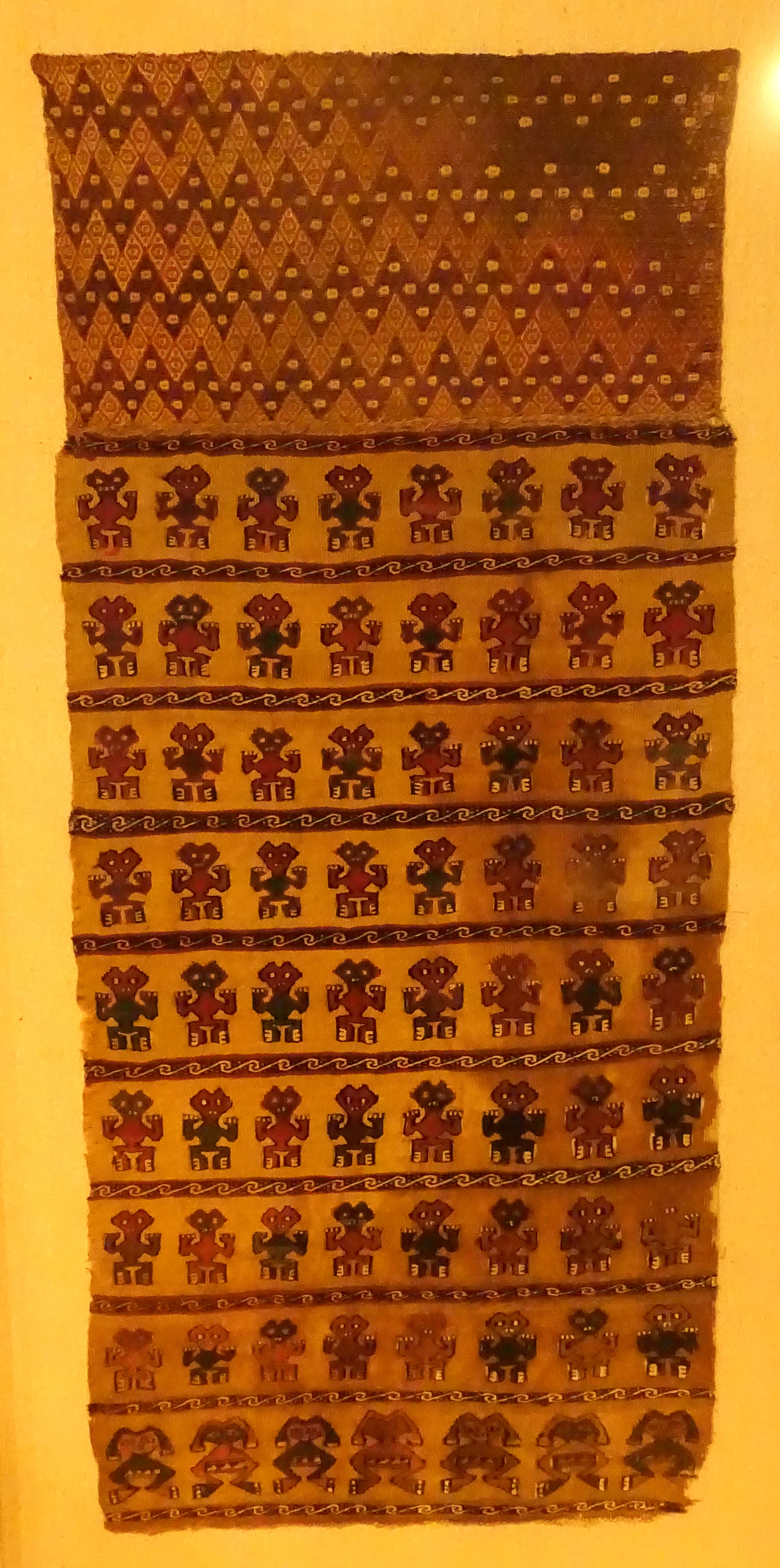
Ancon is also known for an event that has nothing to do with archaeology: the Treaty of Ancon, signed in 1883, which ended the War of the Pacific between Peru and Chile. The beach resort area sits at the northern edge of Lima's sprawl, west of the Pan-American Highway, a modern town layered over ancient ground. The Ancon Site Museum, opened in 1993, houses more than 2,500 pieces excavated from the archaeological area -- pottery, textiles, and mummies drawn from the long human story buried beneath the resort. The site extends north of the Bay of Ancon, where stone-age fishermen once dried their catch on the same shoreline where weekend visitors now spread their towels. It is a place where the distance between deep prehistory and the present feels remarkably short -- where a construction crew digging a rail bed can break through ten millennia of human habitation in a single afternoon.
From the Air
Ancon sits at 11.77S, 77.17W on the central coast of Peru, 42 km north of Lima. The Bay of Ancon is visible from altitude as a crescent-shaped inlet along the coast, with the archaeological site extending to its north and west of the Pan-American Highway. Jorge Chavez International Airport (SPJC) is approximately 30 km to the south-southeast. The site is near sea level. Best viewed at 3,000-5,000 feet AGL, with the Pasamayo cliffs and the desert coast providing clear orientation.