Andoya Space
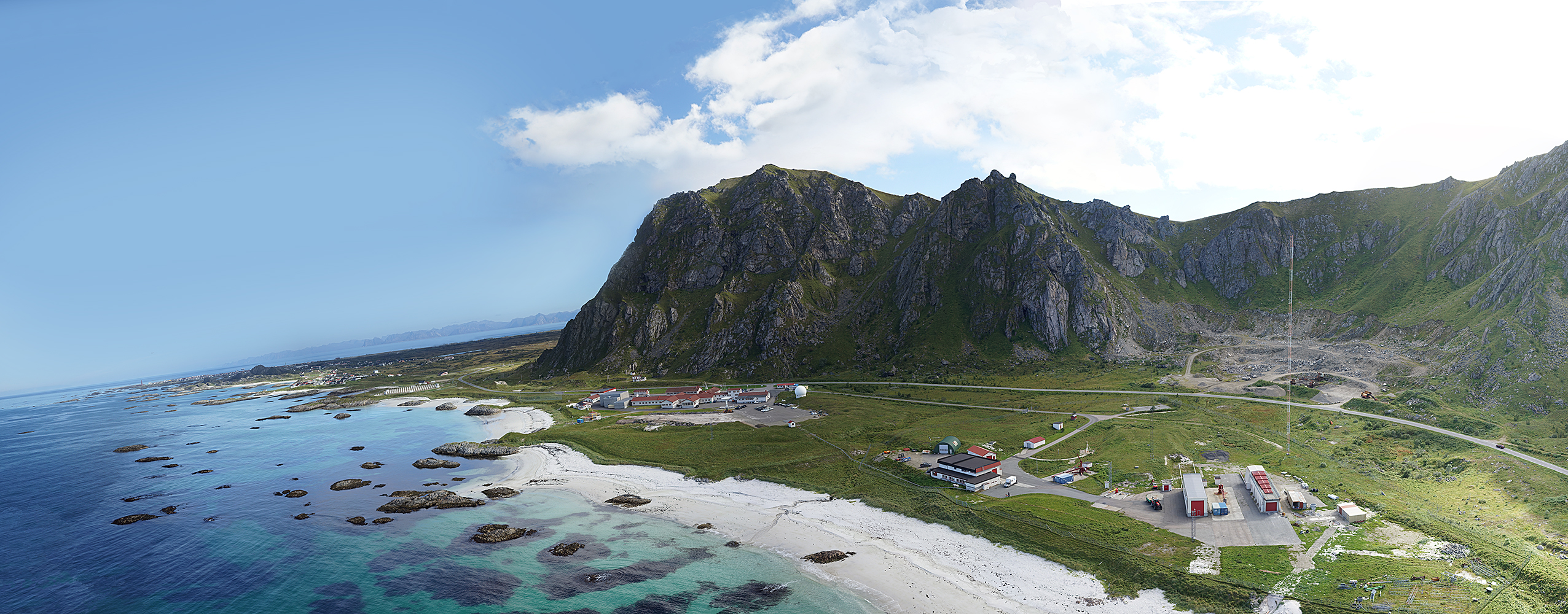
The first rocket was named Ferdinand, after the children's book bull who preferred smelling flowers to fighting. Norwegian scientists chose the name partly because the launch site sat on a patch of Andoya island called Oksebaasen -- The Ox Pasture -- and partly because, in the middle of the Cold War, they wanted the world to know this was a peaceful endeavor. On 18 August 1962, Ferdinand 1 rose from The Ox Pasture into the Arctic sky, a two-stage Nike-Cajun rocket carrying instruments to study the ionosphere. It reached 102 kilometers. Norway had entered the space age from a cow field above the 69th parallel.
Rockets from the Edge of the Map
Andoya is the northernmost island in the Vesteralen archipelago, a strip of land jutting into the Norwegian Sea at a latitude where the midnight sun burns through June and July and winter brings months of polar darkness. It is, on first consideration, an unlikely place for a spaceport. On closer examination, it is ideal. The high latitude makes it perfect for launching into polar and sun-synchronous orbits -- the trajectories favored by Earth-observation and communications satellites. The launch azimuth sends rockets over open ocean, away from populated areas. And the atmosphere above the Arctic is scientifically rich: the northern lights, the polar ionosphere, and the cusp where Earth's magnetic field lines converge all make this one of the most interesting patches of sky on the planet. Since that first launch in 1962, more than 1,200 sounding and sub-orbital rockets have risen from Andoya.
The Day Russia Almost Retaliated
In January 1995, a Black Brant sounding rocket launched from Andoya triggered the most dangerous false alarm of the post-Cold War era. Russian radar operators detected the rocket's trajectory and interpreted it as a possible nuclear missile fired from an American submarine. The alert escalated all the way to President Boris Yeltsin, who was presented with the nuclear briefcase and faced the decision of whether to authorize a retaliatory strike. The crisis resolved only when Russian analysts determined the rocket was not heading toward Russia. Norway had notified Russia about the launch in advance, but the information had been lost somewhere in the Russian bureaucracy and never reached the radar operators -- only maritime vessels had been informed. The Norwegian Rocket Incident remains the closest the world has come to accidental nuclear war since the Cuban Missile Crisis, and it happened because of a scientific research rocket launched from an island in the Vesteralen.
From Sounding Rockets to Orbital Ambitions
For its first half-century, Andoya focused on sounding rockets -- relatively small vehicles designed to carry instruments into the upper atmosphere and return data, not achieve orbit. The facility grew steadily, adding the ALOMAR lidar observatory in 1994 for middle-atmosphere research and supporting the establishment of the Svalbard Rocket Range at Ny-Alesund in 1997, which enabled launches directly into the polar cusp. NASA, ESA, JAXA, and Germany's DLR have all used the facility. But the real transformation began in 2018, when Andoya Spaceport was established with the explicit goal of building Europe's first continental orbital launch site for small satellites. Norway funded the project with 365.6 million kroner, betting that the growing market for nanosatellite launches would generate a commercial return. The gamble attracted serious partners.
Europe's Launch Pad
Germany's Isar Aerospace signed an agreement securing exclusive access to one launch pad on Andoya for up to twenty years. Crown Prince Haakon attended the spaceport's opening ceremony -- a signal of national importance that would have amused the scientists who named their first rocket after a pacifist cartoon bull. The facility now offers launch pads, payload integration buildings, and the technical infrastructure needed for orbital missions. The ambition is straightforward: give Europe sovereign access to space without depending on American, Russian, or Chinese launch providers. For a small island above the Arctic Circle, it is a remarkable arc -- from a single sounding rocket in 1962 to a full orbital spaceport serving the continent. The Ox Pasture has become one of the most strategically important pieces of real estate in the European space industry, and the rockets that rise from it now carry the weight of an entire continent's aspirations.
From the Air
Located at 69.29N, 16.02E on the northern end of Andoya island in the Vesteralen archipelago, Nordland county, Norway. The spaceport and launch facilities are visible from the air as cleared areas on the northern tip of the island. Andenes Airport (ENAN) is immediately adjacent to the space center. Approach from the south along the length of Andoya for full perspective of the island and facilities. The area is exposed to North Atlantic weather; winds can be strong and visibility variable. During summer months, 24-hour daylight provides excellent viewing conditions.