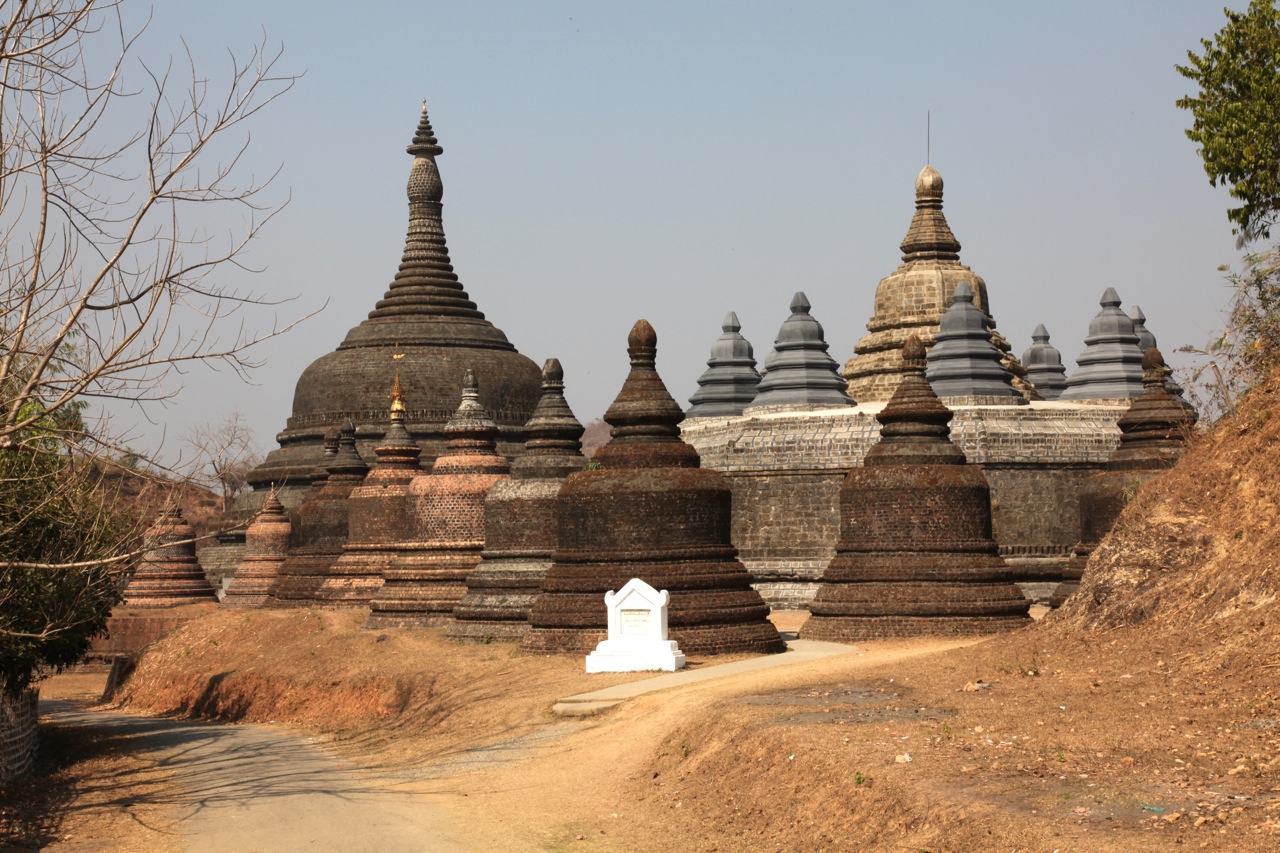
Andaw-thein Temple
Somewhere inside the dark stone corridors of Andaw Thein, sealed behind walls that admit almost no light, sits a tooth. It measures three and a quarter inches long, nearly as thick, and it once rested in a golden casket before a thief from a nearby village pried open the relic chamber and made off with the gold. The tooth was recovered. The casket was not. That the relic now sits in a silver replacement tells you something about Mrauk U: precious things endure here, even when the container changes around them.
Three Kings and a Tooth
Andaw Thein's name translates simply as "Tooth Shrine," but the building's history is anything but simple. King Thazata first raised an ordination hall on this site between 1515 and 1521, during the early flowering of the Mrauk U kingdom. Two decades later, King Min Bin restored it between 1534 and 1542. But the temple's defining moment came under King Min Razagyi, who traveled on pilgrimage to Ceylon and returned with what he claimed was a tooth relic of the Buddha himself. To house this treasure, Min Razagyi expanded the modest ordination hall into a full temple, either in 1596 or between 1606 and 1607. Three kings, three campaigns of construction, each layering devotion upon devotion until the building became something greater than any single monarch intended.
A Fortress for the Sacred
Step inside, and the darkness is immediate. Andaw Thein has almost no openings; no windows admit light or air beyond the main entrance. The effect is deliberate. Built entirely from stone blocks, the temple shares the fortress-like character of its neighbor, the Shite-thaung Temple, which sits just to the southwest. The central shrine is octagonal, wrapped by two concentric octagonal passageways that create a maze-like interior. The whole structure rests on a base measuring 125 feet north to south and 120 feet east to west. Eight bell-shaped stupas crown the corners, echoing the segmented dome that caps the main shrine. Sixteen smaller shrines ring the perimeter, each sheltering a Buddha image. A large prayer hall added to the eastern entrance provides the only generous space in an otherwise compressed, inward-looking building.
One Hundred and Seventy-Five Buddhas
The prayer hall alone holds six standing Buddha images in niches flanking the entrance to the main shrine, each displaying a different mudra. Two figures at the entrance combine the Abhaya and Varada gestures, right palms raised outward, left hands mirroring the posture below, representing the Buddha's descent from the heaven of the thirty-three gods. Deeper inside, most figures sit in Virasana with the right leg folded over the left, the right hand touching the earth in the Bhumisparsha Mudra, calling the ground itself as witness to enlightenment. Their faces are broad, heads slightly bent, eyes cast downward in contemplation. Ears stretch nearly to the shoulders. Bodies appear strong, with wide chests and heavy limbs, a sculptural style characteristic of the Mrauk U period. In total, 175 Buddha images fill the temple's corridors and niches.
Where Hindu Gods Guard a Buddhist Shrine
The most surprising residents of Andaw Thein are not Buddhist at all. Across eight elaborately carved thrones in the central shrine, reliefs of Ganesh, Shiva, Brahma, and Garuda appear alongside ogres, hamsa birds, sphinxes, and lions. Shiva sits cross-legged holding lotus buds. Brahma wears an ornate headdress, earrings, and a string of beads. Between two thrones, a Garuda spreads its wings wide in a stance of fierce protection. One relief appears to show Shiva flanked by two consorts, hands pressed together in a gesture of respect, placed directly between Buddha images. For a Buddhist temple, these Hindu presences are remarkable, yet they reflect the syncretic culture of Arakan, where Indian influence ran deep. Rakhine Byala, a mythical composite creature, shares throne space with kalasa pots and carved parrots, blending traditions that elsewhere remained separate. The temple does not apologize for its contradictions. It simply holds them all.
Stone Against Time
Mrauk U was once the capital of the Arakan Kingdom, and its temples were built to last. Andaw Thein has survived five centuries of monsoons, wars, earthquakes, and neglect. The same stone-block construction that makes the interior so dark also makes it nearly indestructible. In a region where the Myanmar civil war has brought airstrikes to nearby hospitals and villages, these ancient walls carry a weight beyond the architectural. They are reminders that people have been building things worth preserving in this corner of Rakhine State for a very long time, and that the impulse to protect something sacred, whether a tooth relic or a community, persists even when the golden casket is gone.
From the Air
Andaw Thein Temple sits at 20.718°N, 93.108°E in Mrauk U, western Rakhine State, Myanmar. The temple complex is visible from moderate altitude as a cluster of stone structures on hilly terrain near the larger Shite-thaung Temple. The nearest significant airfield is Sittwe Airport (VYSW), approximately 60 km to the northwest. The Kaladan River valley provides a useful visual reference when approaching from the coast. Expect limited visibility during monsoon season (May-October).