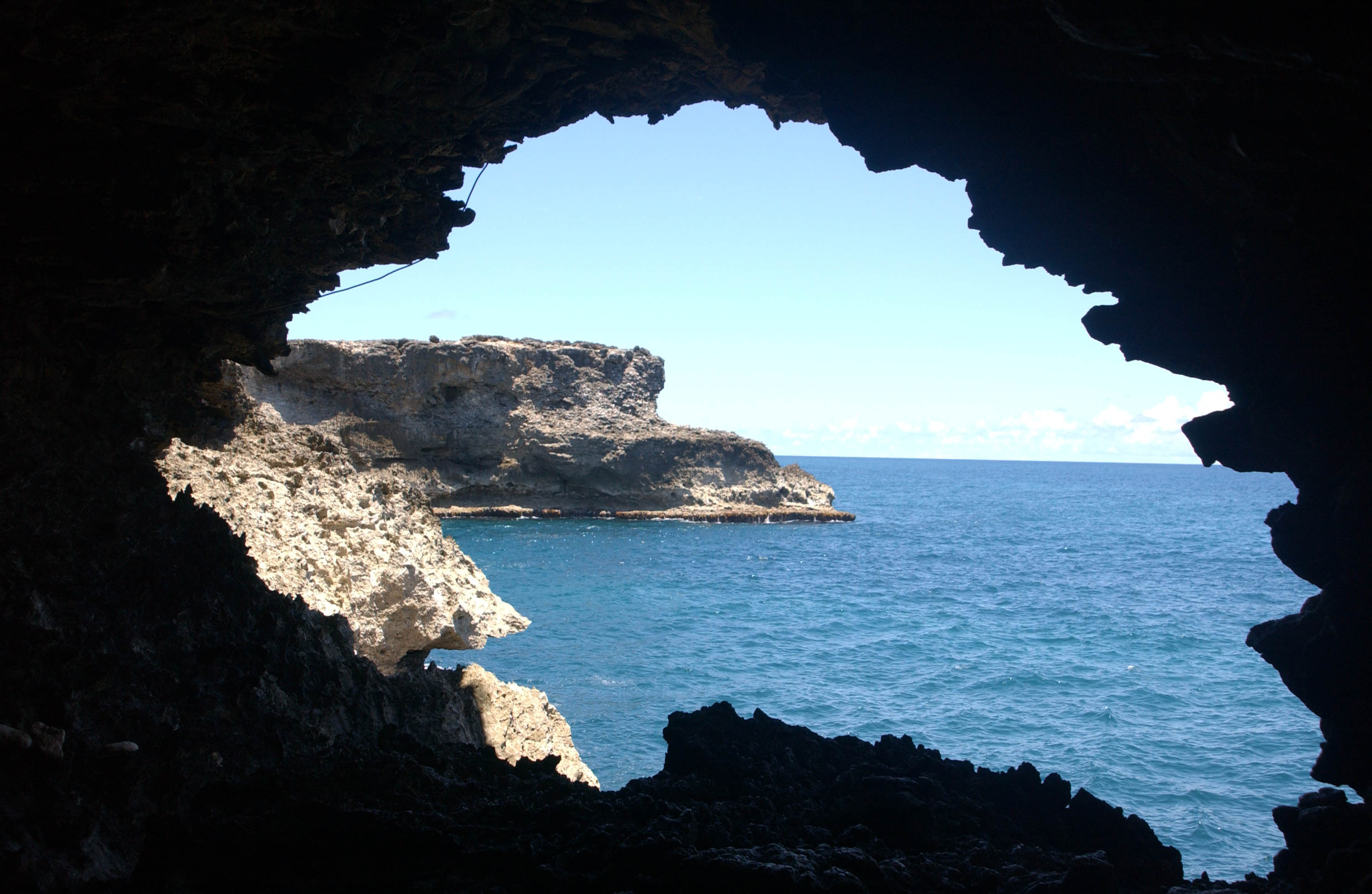
Animal Flower Cave: Barbados's Window to the Atlantic
The flowers are alive, and they bite. At the northernmost point of Barbados, beneath the limestone cliffs of St. Lucy parish, a sea cave hides creatures that look like blossoms rooted to the rock pools but are actually sea anemones -- Telmatactis cricoides, to be precise -- whose delicate tentacles retract into their stalks the moment anything touches them. Barbadians have always called them animal flowers, and the cave that shelters them has carried their name since English explorers stumbled through its seaward entrance in 1780. It is the only accessible sea cave on the island, and stepping inside feels like entering a cathedral that the ocean built and never finished.
Half a Million Years of Patience
The cave's floor tells a story that dwarfs human history. The German Geological Institute dated the coral rock underfoot at 400,000 to 500,000 years old -- formed when Barbados was still being pushed upward by the collision of the South American and Caribbean tectonic plates. A younger layer of coral, roughly 126,000 years old, sits above the main floor, marking a later period when the sea reclaimed this space before retreating again. Unlike its volcanic Caribbean neighbors, Barbados is a sedimentary island built from oceanic sediments and coral limestone. The cave's limestone belongs to the St. Lucy facies, dominated by Elkhorn coral, a robust reef-building species whose structural strength gives the cave's massive ceiling its integrity. The entire chamber now sits six feet above the high-water mark, because Barbados is still rising -- at roughly one inch per thousand years, tectonic uplift is lifting the island, and its cave, imperceptibly out of the sea.
Descending Through the Blowhole
There are two ways into Animal Flower Cave. The original entrance is from the sea -- the one those English explorers used in 1780, wading or swimming through the surf at the base of the cliffs. Since 1912, visitors have used a more civilized route: coral steps leading down through an opening in the roof called the blowhole. The name is not merely descriptive. During storms and high seas, the Atlantic forces water up through this opening with enough pressure to send spray shooting skyward. At certain times of year, the caverns fill entirely with seawater, and the blowhole becomes exactly that -- a geological exhalation, the island breathing. On calm days, the cave is a different place entirely. Sunlight enters through openings in the cliff face that frame the Atlantic like rough-hewn windows. The rock pools are still and transparent, their depth deceptive. Visitors can swim in natural pools while looking out at the open ocean through gaps in the rock.
The Flowers That Are Not Flowers
The sea anemones that gave the cave its name are modest creatures with an outsized legacy. They anchor themselves to rock in the tidal pools, extending translucent tentacles that sway with the water's movement and look, from a distance, like wildflowers growing underwater. Touch one and it vanishes -- the tentacles retract into the stalk within seconds, a defense mechanism that protects the animal from predators and curious visitors alike. The larger species can sting and paralyze passing fish, though the ones in the cave are harmless to humans. Their numbers have declined over the years; where visitors once saw carpets of them in the pools, today only scattered individuals remain. But they persist, as they have for centuries, in this half-lit space where the ocean meets the rock.
The Swimming Pool and the Light
Deeper inside, the cave opens into a chamber the guides call the swimming pool. The water here is transparent and perfectly still, concealing its true depth behind a surface that looks deceptively shallow. The floor beneath has been worn smooth by millennia of water and the slow abrasion of coral rock, creating an undulating surface that catches whatever light enters through the cave's openings and scatters it across the walls. Guides describe the effect as a magical quality, and for once the tourism language is not an exaggeration. The chamber sits apart from the rest of the cave, a self-contained room of water and stone where the only sound is the distant echo of surf. It is a place that rewards stillness -- the kind of stillness that a half-million-year-old cave has had plenty of time to perfect.
From the Air
Located at 13.33°N, 59.61°W at North Point, the northernmost tip of Barbados in St. Lucy parish. From the air, the cave is at the island's dramatic northern headland where limestone cliffs meet the Atlantic. The blowhole opening in the cliff top may be visible on low passes. Grantley Adams International Airport (TBPB) is approximately 15 miles to the south-southeast. Recommended viewing altitude: 1,500-2,500 feet. The northern coast is exposed to Atlantic swells and may show significant wave action against the cliffs.