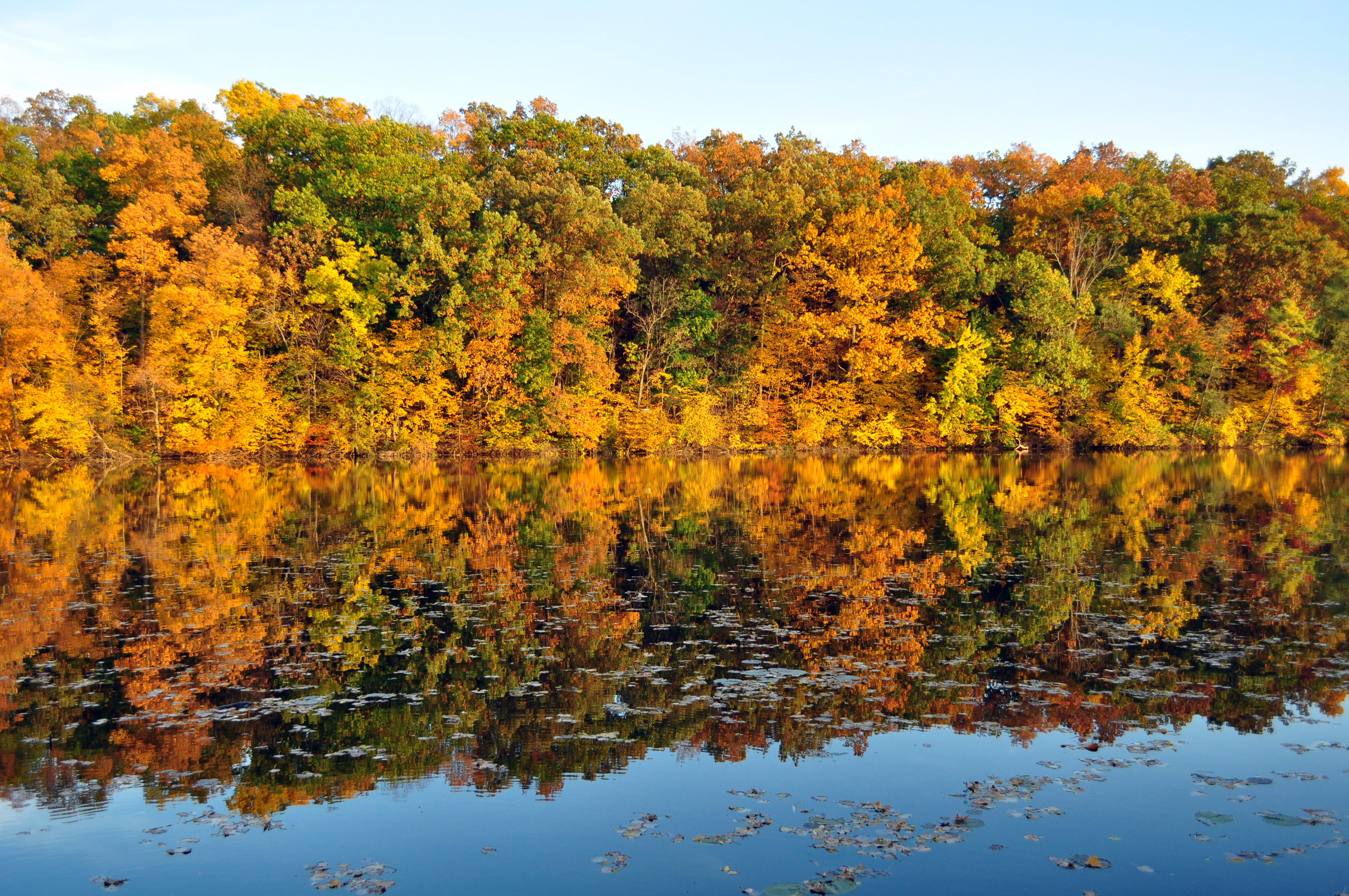
Ann Arbor: Tree Town and the Big House
They named the town for the wives of its founders - Ann Allen and Mary Ann Rumsey - and for the arbor of burr oak trees where the settlement began in 1824. A decade later, the University of Michigan arrived from Detroit, and Ann Arbor's identity merged permanently with the institution that would grow to 47,000 students. The campus and downtown intertwine so completely that distinguishing between them requires local knowledge. On autumn Saturdays, the population doubles when 107,000 fans pack Michigan Stadium - the Big House, largest football stadium in the Western Hemisphere. The rest of the year, Ann Arbor functions as a bookstore-and-coffee-shop utopia, a place where independent retailers survive and sidewalk cafes fill Main Street. They call it Tree Town, and from the air in summer, that's exactly what it looks like: a canopy of green with buildings barely visible beneath.
The Big House
Michigan Stadium opened in 1927 with a capacity of 72,000, designed by architect Bernard Green with expansion in mind - the foundations were built to support additional seating above the original bowl. The expansion came: 80,000 by 1956, 100,000 by 1975, 107,601 today. The Big House is the largest stadium in the Western Hemisphere and third-largest in the world. On football Saturdays, Ann Arbor's population effectively doubles. Traffic becomes impossible; hotel rates triple; tailgates fill every available parking lot. The Michigan Wolverines have played here since 1927, winning national championships and producing NFL stars. Visiting teams face a wall of maize and blue, 100,000 voices singing 'The Victors' after every touchdown.
Campus and Town
The University of Michigan's Central Campus occupies 3,200 acres interwoven with downtown Ann Arbor. The Diag - a diagonal path crossing the original campus - remains the symbolic center, where students cut through between classes and protesters have gathered since the Vietnam era. The Law Quadrangle, built in the 1920s in collegiate Gothic style, looks like it was transported from Oxford. The Michigan Theater on East Liberty Street, a 1928 movie palace, now shows independent films and hosts concerts beneath its ornate ceiling. The university and town share everything: restaurants, bookstores, parking headaches. Where campus ends and Ann Arbor begins is a question locals answer differently depending on whether they're students or residents.
Tree Town
In the early 20th century, Ann Arbor had leveled most of its original forest for development. Then the city planted trees - aggressively, systematically, until the canopy grew back thicker than before. From altitude, Ann Arbor appears as solid green, buildings hidden beneath leaves, the stadium and a few high-rises the only structures clearly visible. The Nichols Arboretum provides 123 acres of cultivated landscape along the Huron River, popular with joggers and dog-walkers. The city maintains 147 parks within its boundaries. The commitment to urban forestry earned Ann Arbor its nickname: Tree Town, the green city in the middle of Michigan's industrial belt.
Books and Coffee
Ann Arbor claims more bookstores per capita than any other American city - a claim difficult to verify but easy to believe after walking downtown. The flagship Borders bookstore opened here in 1971 (though the chain later collapsed, the original location is gone). Dawn Treader and Nicola's Books survive as independent sellers. Literati Bookstore opened in 2013 and thrives. The coffee culture matches the bookish atmosphere: Zingerman's Deli, a local institution, expanded into a food empire including a coffee roastery. The Ann Arbor Art Fair draws 500,000 visitors each July, filling downtown streets with artists' booths. The fragel - a deep-fried cinnamon-sugar bagel - was invented here, available at Bagel Fragel on Plymouth Road.
Wolverine Country
Detroit Metropolitan Airport (DTW) lies 25 miles east, a 40-minute drive when traffic cooperates. Amtrak's Wolverine service connects Ann Arbor to Detroit and Chicago. The town is walkable within the campus-downtown core, though parking frustrates everyone. From altitude, Ann Arbor appears as a green patch in southeastern Michigan's landscape - the oval of Michigan Stadium the clearest landmark, the Huron River curving around the northern edge, the interstate highways framing the urban canopy. What appears from the air as forest interrupted by football is a college town that became a city, where the university and community grew together beneath the trees they both planted.
From the Air
Located at 42.28°N, 83.75°W in southeastern Michigan, 40 miles west of Detroit. From altitude, Ann Arbor appears as an exceptionally green urban area - the city's aggressive tree-planting program creating a canopy that hides most structures. The distinctive oval of Michigan Stadium, the Big House, is the clearest landmark - largest football stadium in the Western Hemisphere. What appears from the air as forest with a stadium is Tree Town, the university city where 47,000 students and 120,000 residents share bookstores, coffee shops, and autumn Saturdays.