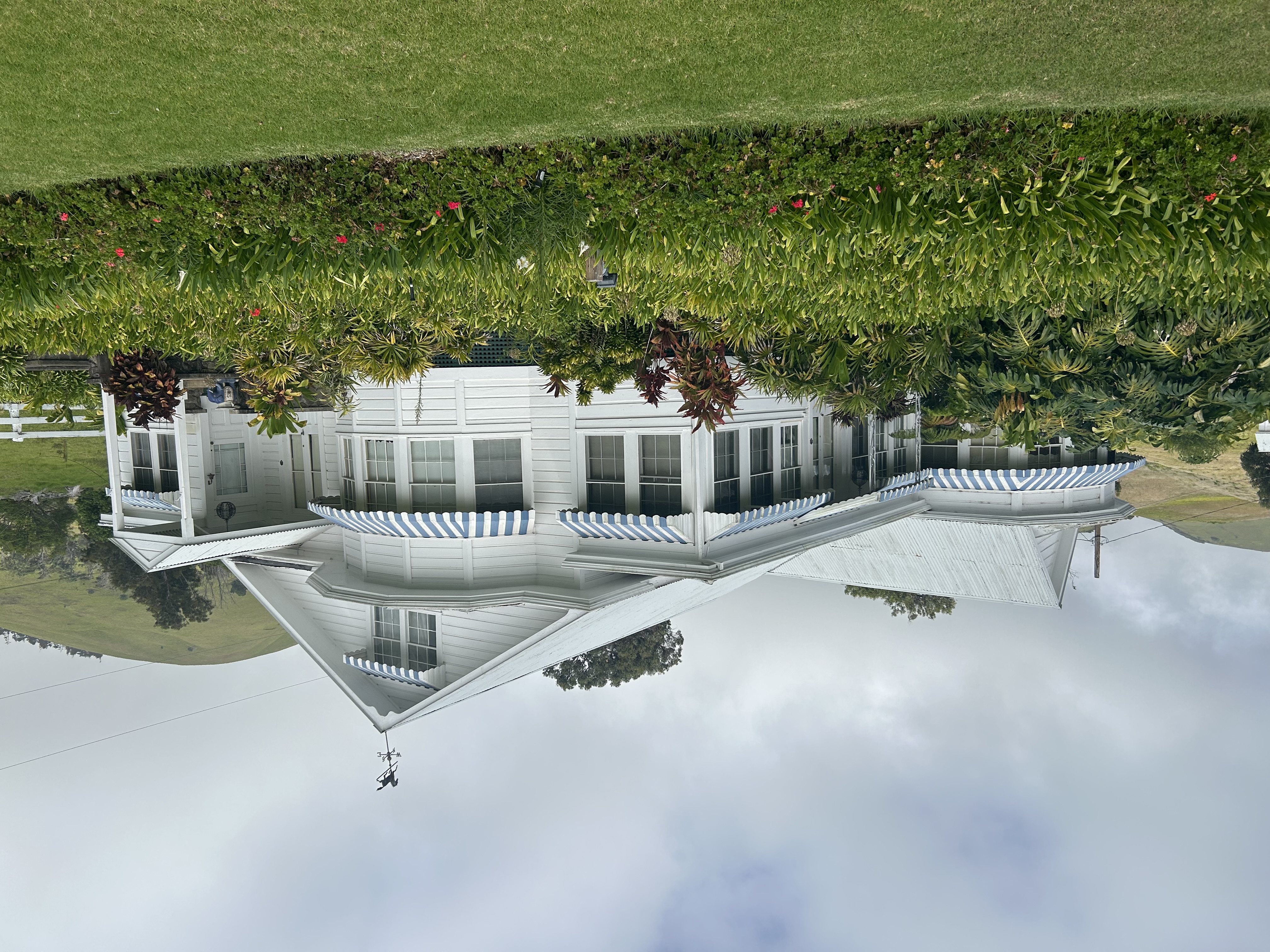
Anna Ranch Heritage Center
Anna Lindsey came home broke, divorced, and determined. It was 1939, and the family ranch in Waimea was drowning in debt. Her father had died, and there was no one else to take it on. So Anna, who had been living in Hilo, returned to the property her great-grandfather had purchased in 1858 and began doing most of the work herself -- mending fences, managing cattle, balancing books. She would run this ranch for the next fifty-six years, through a second marriage, through an era when women in the cattle industry were expected to cook for the cowboys rather than boss them. When Anna Lindsey Perry-Fiske died in 1995 at the age of ninety-five, she had outlasted every assumption about what a woman in ranching could accomplish.
Five Generations Deep
The land beneath Anna Ranch tells a longer story than any single lifetime. It began in the early nineteenth century when an Englishman named James Fay married a Native Hawaiian woman, Kaipukaikapuokamehameha Kahahana, around 1828. Their daughter Mary Kaala Fay had twelve children; her second husband, George Kynaston Lindsey, purchased the land in 1858. Through five generations the property passed along a single family line, accumulating the layers of culture and intermarriage that define so much of Hawaii's ranch country. By the time Anna inherited it, the ranch was a tangible record of the blending of English, Hawaiian, and American traditions that shaped the Big Island's interior highlands.
A Woman Who Ran the Show
What set Anna apart was not just longevity but authority. She did not inherit a thriving operation and coast on its momentum. She took over a ranch in financial trouble and rebuilt it through decades of hands-on management. In 1943 she married James Lyman Perry-Fiske, but the ranch remained hers to run. In 1968 the Hawaii Federation of Business and Professional Women named her Career Woman of the Year, a recognition that acknowledged what her neighbors in Waimea already knew: Anna was not a rancher's wife tending a side project. She was the rancher. By 1983 she had become the single largest individual contributor to the Hawaii chapter of the American Heart Association, a measure of the prosperity she had wrung from land that nearly bankrupt her family. In 2009, fourteen years after her death, she was inducted into the Paniolo Hall of Fame.
Preserved in Place
The ranch house, barn, slaughter house, and garage were built between 1910 and 1930, and after Anna's death, the property was carefully restored to its 1939 condition -- the year she returned to take charge. The house opened for tours in September 2007, and the following year the property was listed on the National Register of Historic Places. Walking through the rooms, visitors encounter not a grand estate but a working home: practical, well-worn, and full of the small details that reveal how ranch life actually functioned in mid-twentieth-century Hawaii. The furnishings and layout speak to a life that was comfortable but never idle. Located along the Hawaii Belt Road just outside Waimea town, Anna Ranch Heritage Center sits in the heart of paniolo country, surrounded by the green pastures and misty uplands that have defined cattle ranching on the Big Island for nearly two centuries.
Paniolo Country's Quiet Monument
Waimea is dominated by the shadow of Parker Ranch, the 130,000-acre operation just down the road. Anna Ranch is small by comparison, but its significance is different in kind. Where Parker Ranch tells the story of dynasty and scale, Anna Ranch tells the story of individual grit. It is a reminder that Hawaii's ranching heritage was not built solely by wealthy families and imported managers, but also by stubborn, capable people who simply refused to let the land go. The heritage center preserves that legacy without sentimentality, presenting Anna's life as it was -- hard, rewarding, and conducted entirely on her own terms. For anyone flying over the Waimea highlands and looking down at the green patchwork of ranches below, Anna's story adds a human dimension to what might otherwise appear as undifferentiated pastureland.
From the Air
Located at 20.03N, 155.69W along the Hawaii Belt Road (Route 19) in Waimea, on the Big Island's northern interior plateau. The ranch property is visible as a cluster of historic buildings amid green pastureland at approximately 2,600 feet elevation. Nearest airport: Waimea-Kohala Airport (PHMU) approximately 4 nm northwest. Kona International Airport (PHKO) is about 25 nm south-southwest. The Waimea area tends to be clearer in the mornings before trade-wind clouds develop.