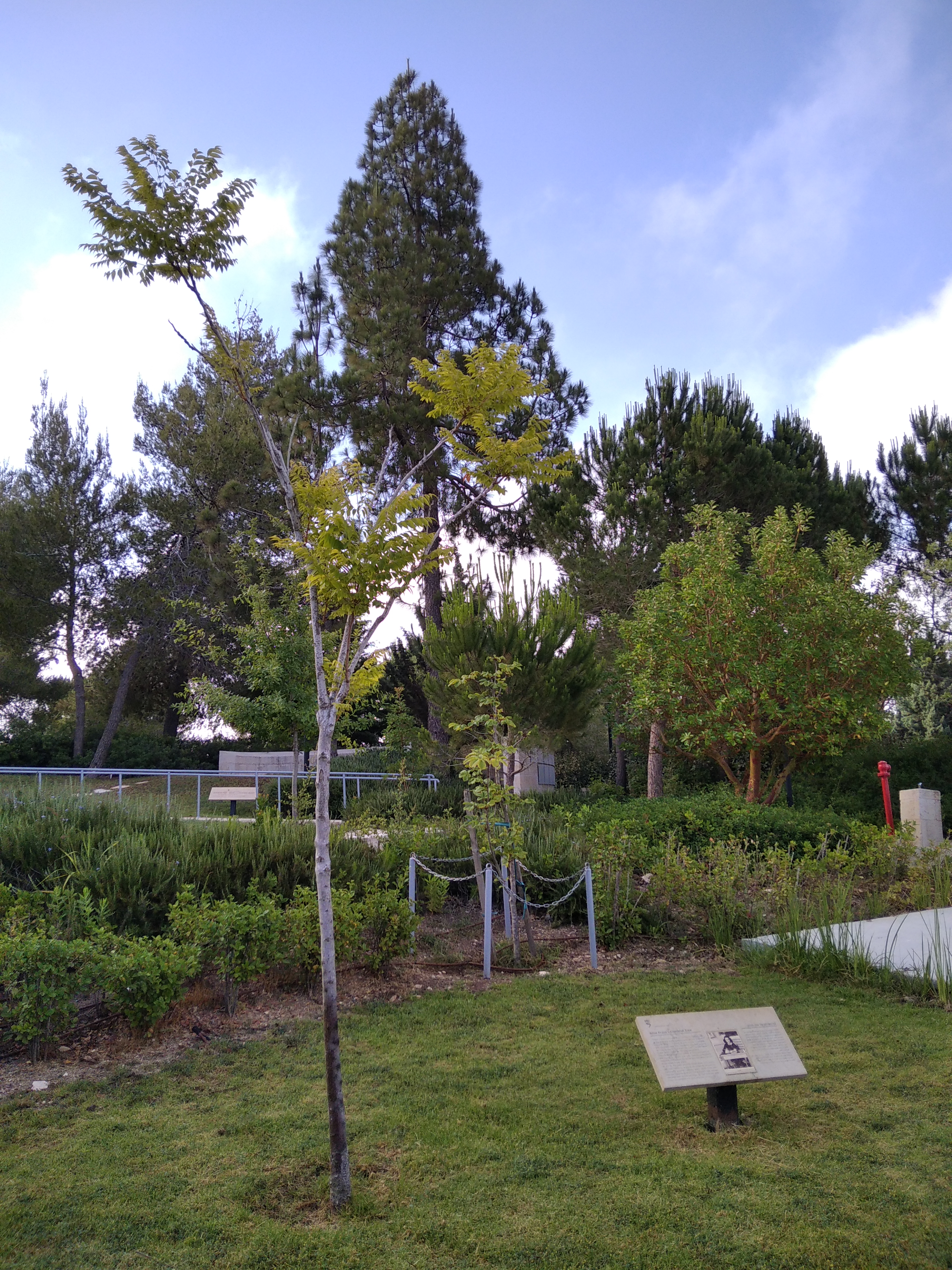
Anne Frank Tree
On February 23, 1944, Anne Frank wrote about the view from a window in the Secret Annex. She could see a chestnut tree, its bare branches waiting for spring. In the months that followed, she wrote about it twice more, watching as it leafed out and bloomed while she remained trapped inside. That tree, a horse chestnut estimated to be over 170 years old, became a symbol of the hope and connection to nature that sustained her through two years of hiding. When the tree fell in a storm in 2010, saplings grown from its seeds were already being distributed to Holocaust memorials across the world.
The View from Hiding
The tree is mentioned three times in Anne Frank's diary. She observed it through the attic window of the Secret Annex, one of her few glimpses of the outside world. Otto Frank, reading his daughter's diary for the first time after the war, was surprised by how much the tree had meant to her. In a 1968 speech, he described his astonishment at learning of its importance to Anne, this ordinary horse chestnut growing in a neighbor's garden that had become a lifeline to the natural world she could not reach. The Aesculus hippocastanum had been planted around 1840, decades before the Frank family arrived in Amsterdam, and it would outlive Anne by more than sixty years, standing as a living witness to her story long after she was gone.
Fighting to Save It
By the early 2000s, the tree was dying. A fungal infection and moth infestation had weakened it severely, and in November 2007, the Borough of Amsterdam Centrum declared it must be cut down. The next day, a judge issued a temporary injunction. What followed was a battle that reached the highest levels of Dutch politics. Tree experts disagreed on whether it could be saved. The Dutch Tree Foundation brought in specialists including the famous English ancient tree expert Neville Fay, who argued the tree was healthy enough to survive. An engineering firm specializing in trees determined it was storm-proof. A support structure was built in May 2008, designed to keep the tree standing for at least five more years. The Anne Frank Foundation and its neighbors had won a reprieve.
The Fall
On August 23, 2010, a violent storm swept through Amsterdam. The Anne Frank tree, despite its support structure, was blown over, breaking off about one meter above the ground. It fell across a garden wall, damaging only garden sheds. The fallen trunk weighed an estimated 27 metric tons. Photographs of the cross-section revealed the truth: the wood was decayed across nearly the entire diameter, with only a thin rim of healthy sapwood at the edges. The tree had been dying from within for years. The next day, observers noticed a small side shoot growing from the stump, a sign of life emerging from death. But the tree's true legacy was already growing elsewhere.
Seeds of Memory
Before the tree fell, saplings had been grown from its seeds and distributed to Holocaust remembrance sites around the world. Thirteen went to locations across the United States through a project led by The Anne Frank Center USA. The first was planted at The Children's Museum of Indianapolis in April 2013. Others took root at Liberty Park in New York City, honoring victims of the September 11 attacks, and at Little Rock Central High School in Arkansas, where the struggle for civil rights played out during desegregation. Saplings were planted in California, Idaho, Iowa, Massachusetts, Washington D.C., and Washington state. In February 2015, one was planted in Lister Park in Bradford, England. Another grows in front of the Holocaust Education Center in Fukuyama, Japan, planted in January 2011. Each sapling carries the genetic heritage of the tree Anne Frank watched through her window, a living connection spanning continents and generations.
From the Air
The site of the Anne Frank tree is located at 52.38N, 4.88E in central Amsterdam, in the garden adjacent to the Anne Frank House at Prinsengracht 263. The tree itself no longer stands, having fallen in 2010, but the location remains significant as part of the Anne Frank House complex. The narrow canal houses and garden courtyards of the Jordaan neighborhood are visible from lower altitudes (1,000-2,000 feet). Amsterdam Schiphol Airport (EHAM) is approximately 12 km to the southwest. The Westerkerk church tower serves as a prominent landmark for locating the area.