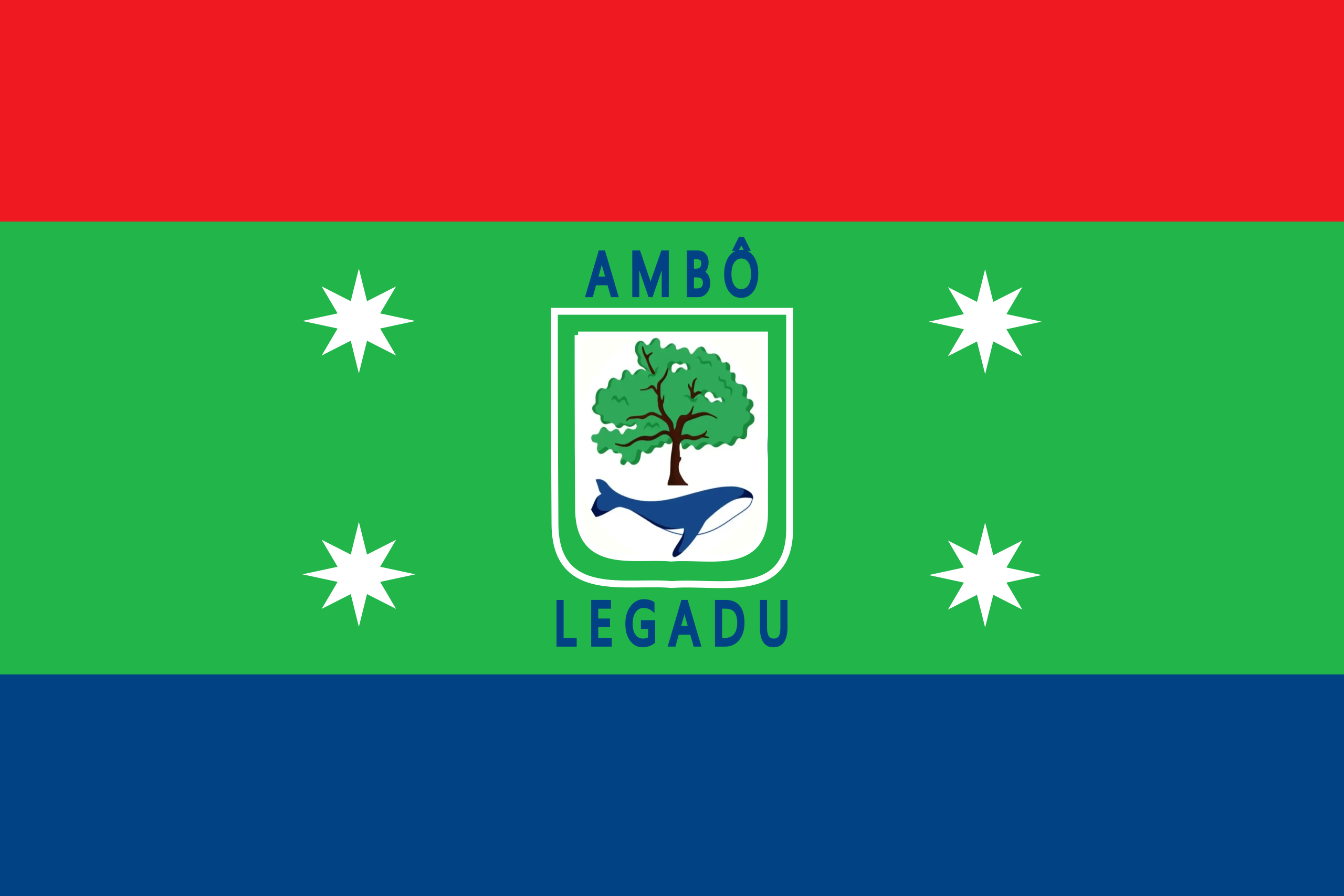
Annobon
In May 2025, the self-proclaimed government of the Republic of Annobon -- two exiles living in Spain -- petitioned Argentina to accept their island as an associated state or province. The request was bizarre, earnest, and rooted in a colonial genealogy so tangled it almost made sense: the island once fell under the Spanish Viceroyalty of the Rio de la Plata, which also governed what became Argentina. It was the latest chapter in a story that has been accumulating improbable turns since the Portuguese first found this uninhabited volcanic speck in the Gulf of Guinea on New Year's Day, 1473. Annobon is only 17 square kilometres. Its history is several sizes too large for it.
An Island Between Empires
Annobon sits 335 kilometres off the Gabonese coast, closer to Sao Tome and Principe than to the mainland of Equatorial Guinea, the nation that claims it. The Portuguese colonized the island first, populating it with enslaved people from Angola and establishing a society that blended Portuguese and Angolan cultures. Spain acquired Annobon through the 1778 Treaty of El Pardo, along with the island of Fernando Po, in exchange for territory in South America. The islanders resisted Spanish authority from the beginning. That early anti-Spanish sentiment, combined with geographic isolation -- Sao Tome is only 175 kilometres away, while mainland Equatorial Guinea is vastly farther -- preserved a distinctly Portuguese cultural identity. The island's residents are of mixed Portuguese and Angolan descent, and their primary language is not Spanish but Fa d'Ambu, a Portuguese creole with vigorous everyday use. Spanish is the language of government and schooling but is not widely spoken.
Seventeen Square Kilometres of Endemics
For an island so small, Annobon supports remarkable biological diversity. Twenty-nine bird species have been recorded, including three endemic songbirds: the Annobon white-eye, the Annobon paradise flycatcher, and the Sao Tome bronze-naped pigeon. The Annobon scops owl is another endemic. BirdLife International has designated the entire island an Important Bird Area. Five endemic reptile species -- a snake, three geckos, and two skink-like lizards -- inhabit the forests and volcanic slopes. The island has 208 species of vascular plant, 15 percent of them endemic, including baobabs, ceiba trees used for building traditional cayuco boats, and dense masses of ferns and moss. Before colonization, the island had no indigenous mammalian predators. Introduced rats, dogs, and cats have altered that balance, but the endemic species have survived -- a small-island resilience that biologists find notable given the human pressures the island has endured.
Toxic Legacy
Annobon's strategic importance to Equatorial Guinea has nothing to do with the island itself and everything to do with the ocean around it. Through ownership of Annobon, the government claims maritime territory stretching from 1 degrees North to nearly 5 degrees South and from 2 degrees East to 7 degrees East -- an area larger than all of Equatorial Guinea's other land and sea borders combined. Oil in the Gulf of Guinea accounts for more than 80 percent of the country's economy. But the island has also served as a dumping ground. In 1988, President Teodoro Obiang Nguema Mbasogo agreed with a British company to accept 10 million drums of toxic waste on Annobon. Der Spiegel reported in 2006 that the country was being paid to bury nuclear waste there. The island has only one school. Electricity and clean drinking water are scarce. Most residents can only leave by weekly ferry or by securing a berth on an infrequent ship. A 2015 solar microgrid installation improved power access, but basic infrastructure remains precarious.
Dissent from a Distance
In July 2022, two Annobon residents in exile in Spain founded a separatist movement called Ambo Legadu. Both had participated in protests on the island in 1993. One, Orlando Cartagena Lagar, declared himself prime minister. The Equatorial Guinean government responded with a wave of arbitrary arrests. According to The Guardian, dozens of islanders were detained in July 2024 as part of what many locals described as a campaign to suppress dissent. The separatists joined the Unrepresented Nations and Peoples Organization and, in their most creative diplomatic gambit, petitioned Argentina for association. The island's population of roughly 5,300 people lives in three communities -- Anganchi, Aual, and Mabana -- governed from the provincial capital of San Antonio de Pale. Roman Catholicism predominates, shaped by Portuguese cultural influence. It is a place where the language, the faith, and the frustrations all point in different directions from the country that claims sovereignty over it.
From the Air
Located at 1.42S, 5.63E in the Gulf of Guinea, approximately 335 km from the Gabonese coast. From altitude, Annobon appears as a small, isolated volcanic island surrounded by open ocean. The island's mountainous terrain and dense vegetation are visible against the deep blue of the Gulf. Annobon has a basic airport (FGAB) with a short runway suitable only for small aircraft. The nearest major airport is Malabo International (FGSL) on Bioko Island, approximately 600 km to the north. Sao Tome International Airport (FPST) is closer at roughly 175 km to the northeast.