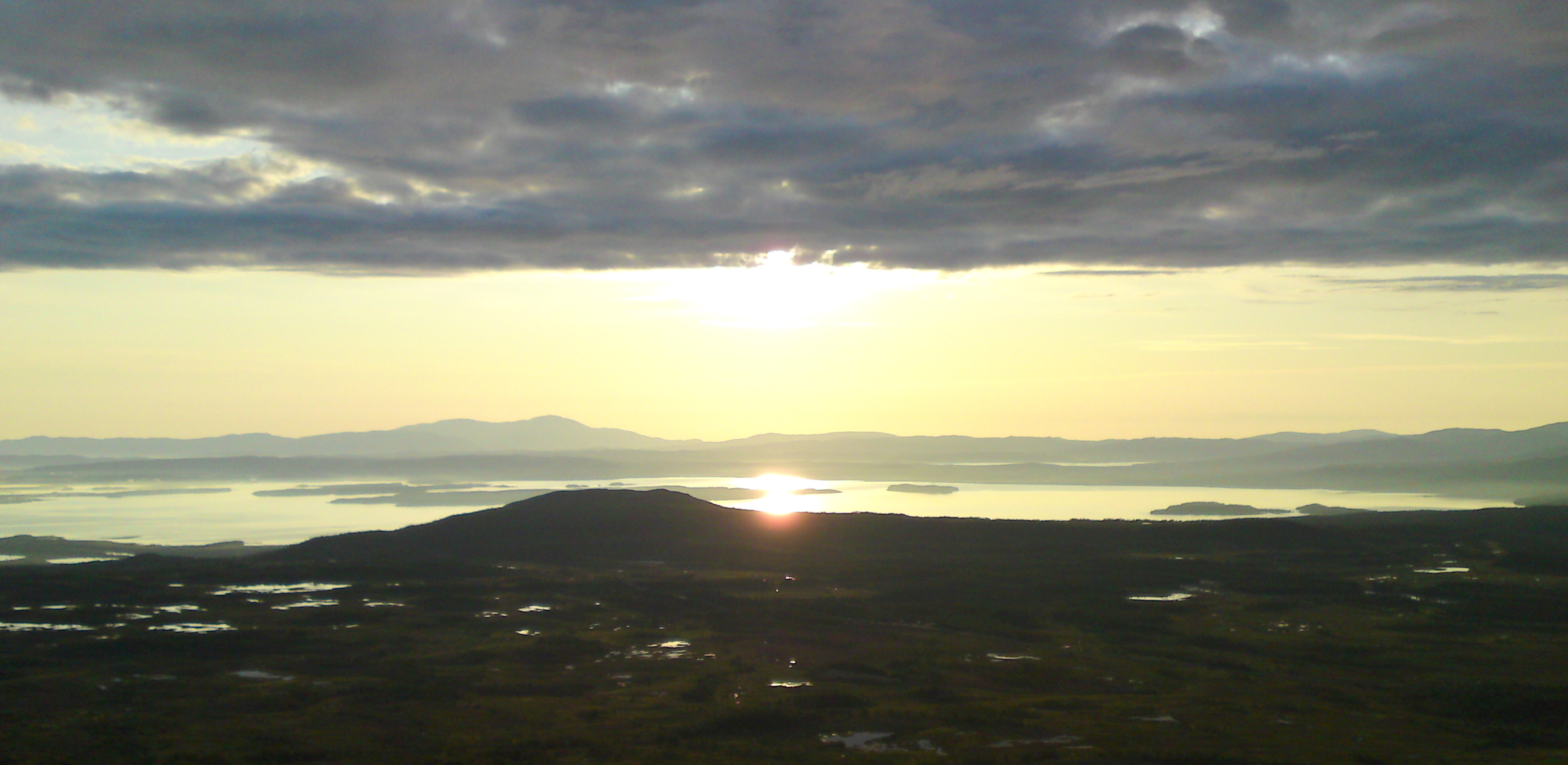
Ånnsjön
In July 1909, the newspaper Östersundsposten reported on a 'naval battle on Ånnsjön.' The combatants were Edward Kennedy and his sister Alice in one rowing boat, and two local farmers, Olof and Mattias Eriksson, in another. The dispute was over fishing rights, and it ended up in court. It was a small drama on a large lake, but it captured something essential about Ånnsjön: for as long as people have lived beside it, they have argued over who gets to take what from its waters.
Seven Thousand Years of Fishing
Ånnsjön sits at 525 meters above sea level in the mountains of Jämtland, a roughly circular lake about 10 kilometers across and strikingly shallow, averaging just one meter deep with a maximum depth of 40 meters in the south. The shallowness is the point. For Stone Age settlers who arrived between 6,000 and 7,000 years ago, soon after the glaciers retreated, the lake's sprawling marshes and gentle shores offered an abundance of fish, waterfowl, and game. About 60 fishing settlements have been identified on the shores and islands. Among the stone tools and weapons found near Bunnerviken is a dagger of red stone with a handle carved into a moose head, a piece of artistry that suggests these were not desperate scavengers but people with time for beauty. At Landsverk and Håltbergsudden, petroglyphs of moose, some 1.5 meters long, are considered among the oldest rock carvings in Sweden.
The Admiral and the Farmers
Records of fishing disputes at Ånnsjön reach back to the late seventeenth century, with formal concession boundaries dividing the lake among villages. Fishing rights cases reached the Swedish Supreme Court in both 1891 and 1912. Into this long-running argument sailed English Admiral Sir William Robert Kennedy, who arrived in 1897 drawn by the fishing and hunting. His family purchased property and fishing rights on the lake and stayed for sixty years. The 'naval battle' of 1909 was just one episode in the family's ongoing friction with local fishermen. Near the village of Handöl, a different kind of history is preserved: a stone monument erected in 1911 commemorates over 600 Swedish Caroleans buried there in January 1719, victims of the catastrophic military retreat across the mountains known as the Carolean Death March. A small timbered chapel built in 1806 for the Sami people of Undersåker and Åre, the oldest such chapel in Jämtland, stands nearby, its pulpit and altar with triptych brought from the Frösö church.
Wetlands Reclaimed
In the second half of the nineteenth century, local farmers dug drainage ditches through the bogs surrounding Ånnsjön, hoping to convert wetland into farmland or forest. The drained peat turned out to be too rich in organic matter for cultivation and was abandoned within years. But the wetlands did not recover on their own. The damage persisted for over a century until restoration work began in 2013, when the county started cutting birch trees and using them to block the old ditches, gradually raising water levels toward their historical state. Ånnsjön is surrounded by roughly 8,000 hectares of marshy ground, and the restoration effort aims to bring back the ecological function of these bogs: water storage, carbon sequestration, and habitat for the species that depend on them. The lake's shores range from long sandy beaches to pebble strands to areas where open water dissolves imperceptibly into peat bog.
A Sky Full of Wings
Ånnsjön is now a Natura 2000 protected area and has held Ramsar wetland status since 1974. BirdLife International classifies the Ånnsjön-Storlien area, covering roughly 90,000 hectares, as the third largest Important Bird Area in Sweden, globally significant for eleven species including great snipe and ptarmigan. The birdwatching infrastructure reflects the lake's reputation: towers, hides, boardwalks, and marked trails cross the marshes. Among the breeding species are western capercaillie, Arctic loon, common crane, broad-billed sandpiper, and the vulnerable long-tailed duck. Every four years, lemming migrations sweep across the lake, and predatory birds pick off the small rodents as they cross the ice. In winter, the ice forms quickly on the shallow water, and the exposed position keeps snow from accumulating, creating conditions that competitive speed and distance skaters favor for training. Char, trout, and brown trout fill the lake, continuing a tradition of fishing that stretches back seven millennia.
From the Air
Located at 63.27°N, 12.57°E in Åre Municipality, Jämtland County, Sweden, accessible via European route E14. The roughly circular lake, approximately 10 km in diameter, is clearly visible from altitude, surrounded by extensive marshlands. Villages of Ånn, Klocka, and Handöl dot the shores. Nearest airports: Åre Östersund Airport (ESNZ) approximately 80 km southeast, Trondheim Airport Værnes (ENVA) approximately 130 km west across the Norwegian border. Altitude recommendation: 4,000-7,000 feet for views of the lake, surrounding wetlands, and mountain backdrop.