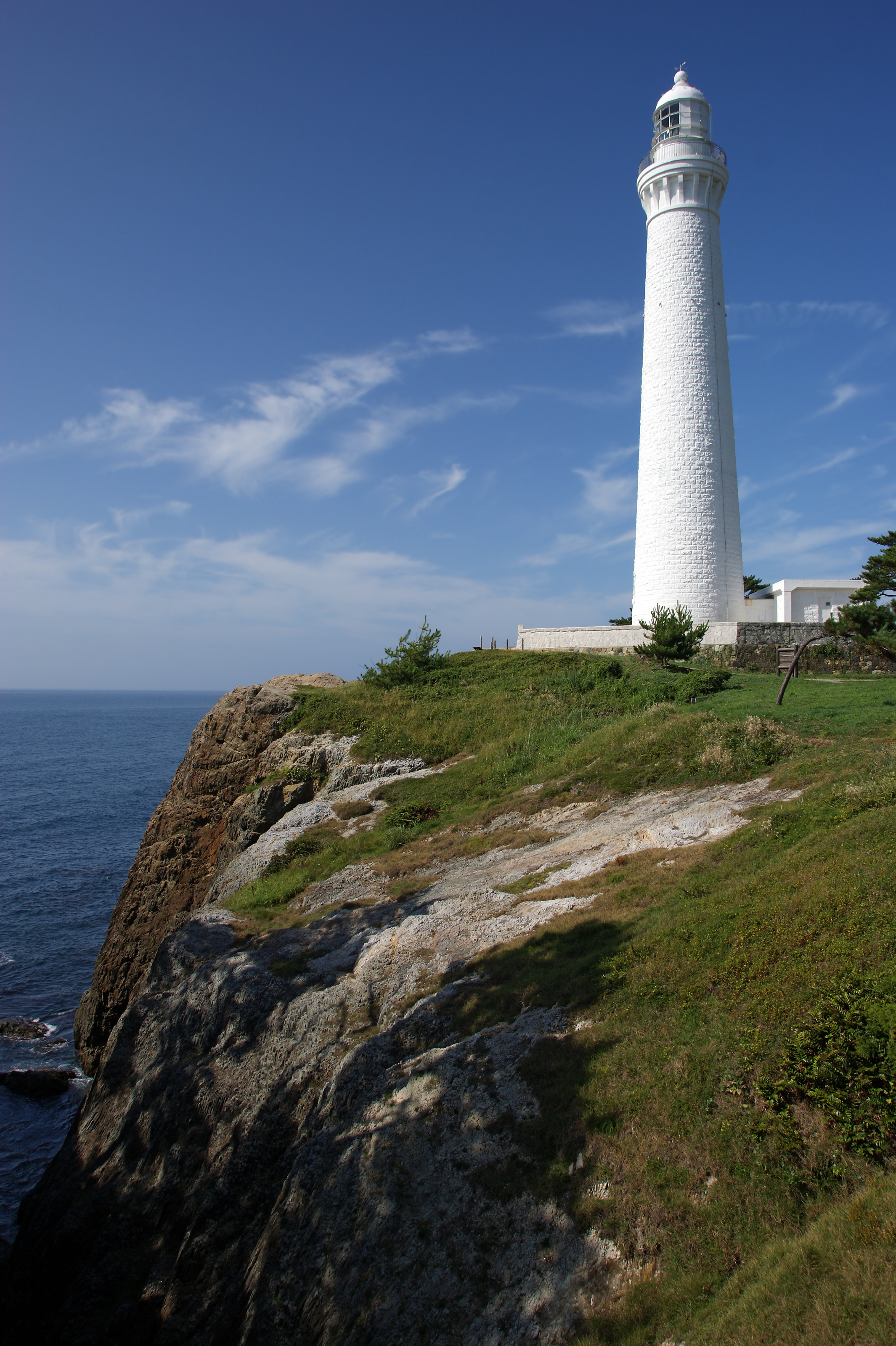
Anorisaki Lighthouse
There are two Anorisaki Lighthouses. The original, an elegant octagonal tower built of zelkova wood, stands in a museum courtyard in Tokyo, 300 miles from the sea it once guarded. The replacement, a square block of reinforced concrete, keeps its beam sweeping over the Pacific from the tip of the Shima Peninsula in Mie Prefecture. Between them stretches a story of a Scottish engineer who built 25 lighthouses across Japan, a coastline that kept eating its way toward the tower, and a nation that chose to preserve what it could and replace what it had to.
The Scotsman Who Lit Japan's Coast
Richard Henry Brunton arrived in Japan in 1868, part of a wave of foreign technical experts -- known as o-yatoi gaikokujin, or "hired foreigners" -- recruited to modernize the country during the Meiji Restoration. His assignment was enormous: design and build a system of lighthouses to make Japan's treacherous coastline navigable for international shipping. Over his career, Brunton constructed 25 lighthouses stretching from the northern reaches of Hokkaido to the southern shores of Kyushu, each with a unique design. Anorisaki was the 20th in this remarkable series. Work began in late 1871, and the light was first lit on April 1, 1873. Though it was not the first lighthouse Brunton built, it held a distinction: it was the first in Japan to use a rotating Fresnel lens, the precision-ground glass system that could throw a focused beam miles out to sea. The structure itself was an octagonal tower of zelkova serrata wood, a dense, durable hardwood native to Japan, standing 10.6 meters tall.
A Lighthouse in Retreat
The Pacific Ocean is patient and relentless. By 1911, coastal erosion had eaten enough of the headland that the lighthouse had to be moved five miles further inland -- a drastic relocation that speaks to the power of wave and weather on this exposed stretch of coast. For decades the relocated wooden tower continued its work, but by the mid-20th century it had served for 75 years and the demands of modern navigation required something sturdier. In August 1948, a new lighthouse was completed: a square ferro-concrete tower standing 12.7 meters tall, built to withstand the typhoons and salt spray that had gradually worn down its predecessor. Two years later, in 1950, the lens was upgraded to a 4th order Fresnel. The original wooden lighthouse, rather than being demolished, was carefully disassembled and transported to the Museum of Maritime Science in Tokyo, where it stands today as the oldest surviving wooden lighthouse from Brunton's remarkable building campaign.
Unmanned and Open
The transition from human to machine happened in October 1988, when Anorisaki Lighthouse was fully automated and its last keepers departed. For 16 years the concrete tower stood as a working navigational aid but closed to visitors. That changed on April 29, 2004, when the lighthouse opened to the public. A small museum attached to the base now tells the story of the site, including displays about the 1957 Japanese film Times of Joy and Sorrow, which was filmed at the lighthouse. The movie, a melodrama about a lighthouse keeper's wife, captured something of the isolation and beauty of these coastal stations that automation would soon render obsolete. Today visitors can climb the tower for panoramic views of the Pacific and the deeply indented rias coastline of the Shima Peninsula, the same landscape of craggy headlands and sheltered bays that has defined this region for centuries.
Twenty-Five Lights Across an Empire
Brunton's legacy extends far beyond Anorisaki. His 25 lighthouses, built over roughly a decade, formed the backbone of Japan's maritime safety infrastructure during a period of explosive modernization. Each lighthouse was a different design, adapted to its specific site and conditions -- a remarkable feat of engineering improvisation in an era before standardized construction. Anorisaki's wooden construction made it unique even among Brunton's diverse portfolio. While most of his later designs used stone or brick, the zelkova timber at Anorisaki gave the tower a warmth and craftsmanship that concrete could never replicate. That the original structure survived long enough to be preserved in a museum is testament both to the quality of Brunton's work and to Japan's respect for the foreign experts who helped build a modern nation from the foundations of a feudal one.
From the Air
Anorisaki Lighthouse sits at the tip of the Shima Peninsula at approximately 34.365N, 136.909E, where the Pacific Ocean meets the entrance to Ise Bay. From the air, the lighthouse is visible on the exposed headland jutting into open ocean, with the deeply indented rias coastline of Ise-Shima National Park stretching to the west. The nearest major airport is Chubu Centrair International Airport (RJGG), approximately 75 nautical miles to the north-northeast, built on an artificial island in Ise Bay. At lower altitudes, the contrast between the rugged Pacific-facing cliffs and the calm, island-dotted bays of the peninsula's western shore is dramatic. The white concrete tower is most visible against the dark green headland vegetation.