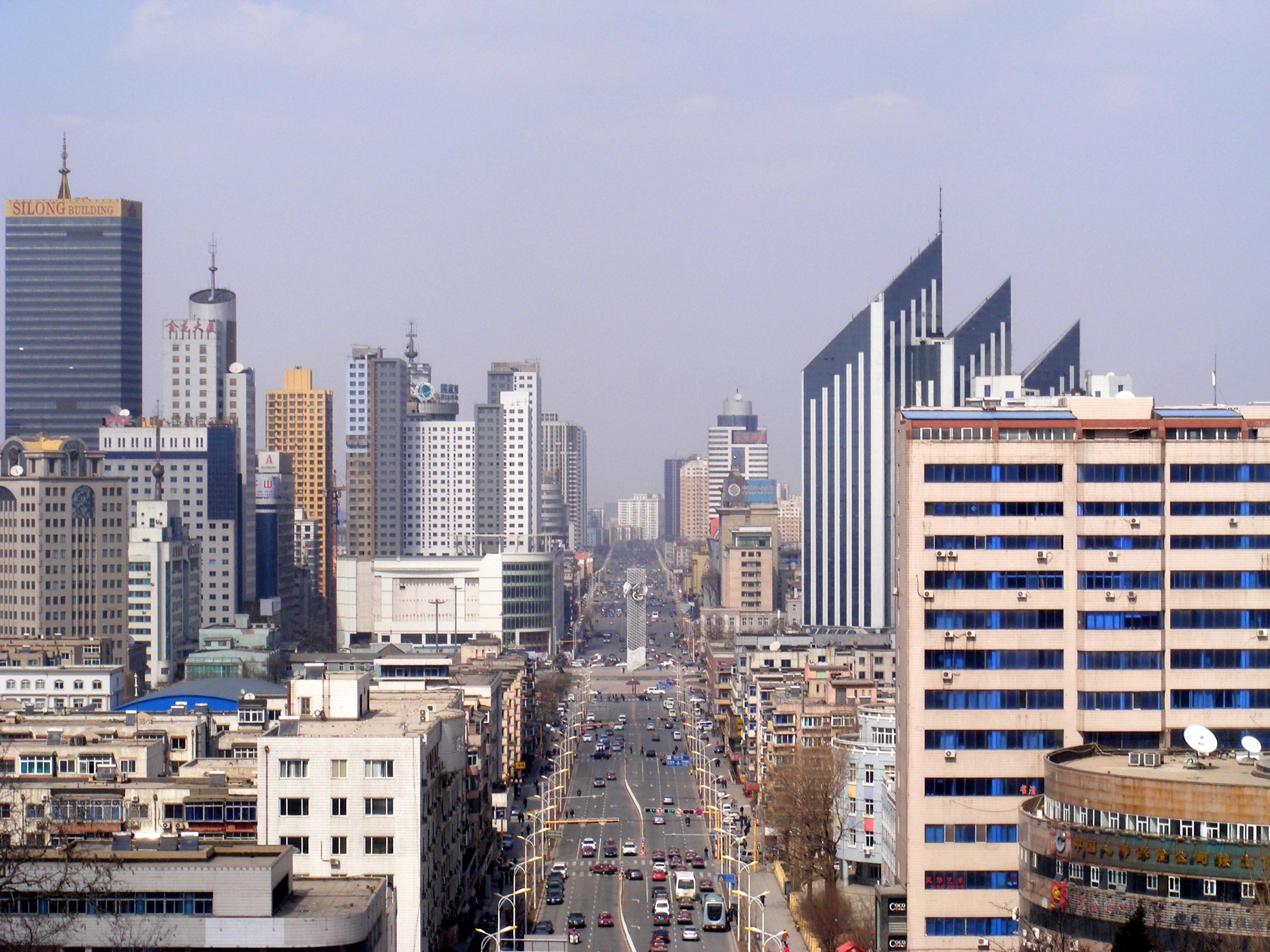
Anshan
The largest single piece of jade ever found came from the hills near Anshan. Carved into the form of a Buddha -- 6.88 meters wide, 7.95 meters high, 260.76 tons -- it sits inside the Jade Buddha Palace, a temple complex that has become the unlikely symbol of a city better known for smoke, steel, and the industrial machinery of twentieth-century China. Anshan is a place where contradictions coexist: ancient jade and modern smelters, sacred mountains and strip mines, a Manchu homeland reshaped by waves of Han migration.
Built on Iron
Anshan was a small, unremarkable city until iron changed everything. In 1918, the Anshan Zhenzing Iron Ore Company was established as a Sino-Japanese venture. When Japan occupied Manchuria in 1931, the operation became a Japanese monopoly under the puppet state of Manchukuo. The Showa Steel Works expanded relentlessly: by 1931-32, total processed iron production in Manchuria reached 1,000,000 tonnes, with nearly half produced in Anshan. By 1942, the Showa works had a production capacity of 3,600,000 tonnes, making Anshan one of the major iron and steel centers in the world. The city's strategic importance made it a target for Allied bombing during World War II. After 1949, the new People's Republic inherited and expanded the steel works under the name Angang, and Anshan became synonymous with Chinese heavy industry.
Minerals Beyond Steel
Iron is not Anshan's only mineral wealth. The southern and southeastern areas hold magnesite reserves equivalent to a quarter of all worldwide reserves. The city also possesses the world's largest reserve of talcum, accounting for fully one-third of the global supply. The Xiuyan area is famous for jade production -- though what is called jade in Chinese is technically serpentine in English geological terminology. This mineral abundance turned Anshan into a city where the ground itself is the economy, for better and worse. The industrial prosperity came with pollution, environmental degradation, and the social complications of a population that grew as fast as the steel mills could expand.
Thousand Lotus Mountains
Eighteen kilometers southeast of the city, Qianshan National Park offers a dramatic counterpoint to the industrial landscape. The name means Thousand Mountains -- an abbreviation of "Thousand Lotus Flower Mountains," because the peaks supposedly resemble lotus petals dropped to earth by a goddess. Spread across 44 square kilometers, the park contains both Buddhist and Taoist temples, monasteries, and nunneries sharing the same terrain -- a rare convergence of the two religions. One mountain in the park is said to resemble Maitreya Buddha, and is claimed to be the largest naturally occurring image of Maitreya in the world. Cars are prohibited within the park, which forces visitors into the kind of quiet, foot-powered exploration that the steel city outside rarely permits.
A City of 48 Ethnicities
Anshan's population tells a story of layered migration. Of the 3.65 million people in the prefecture, over 519,000 are ethnic Manchu, concentrated around the Xiuyan autonomous area -- a reminder that this was Manchu homeland before the Qing dynasty's collapse opened the northeast to mass Han migration. Today, 48 ethnic groups live in the city, with Han Chinese comprising the vast majority at over 3 million. The Hui and Korean populations are notable minorities. The city has also produced an outsized number of athletes and entertainers, including Ma Long, widely considered the greatest table tennis player in history, and Xu Minghao of the K-pop group Seventeen. Anshan is still, fundamentally, a steel town -- but it is a steel town that has produced Olympic champions, pop stars, and a jade Buddha the size of a house.
From the Air
Located at 41.11N, 122.99E in central Liaoning. Anshan Teng'ao Airport (ZYAS) handles domestic flights; Shenyang Taoxian (ZYTX) is 90 km north. From altitude, the Angang steel works dominate the northwestern portion of the city. Qianshan National Park's peaks are visible to the southeast. The Shenyang-Dalian Expressway passes through the city.