Antalya
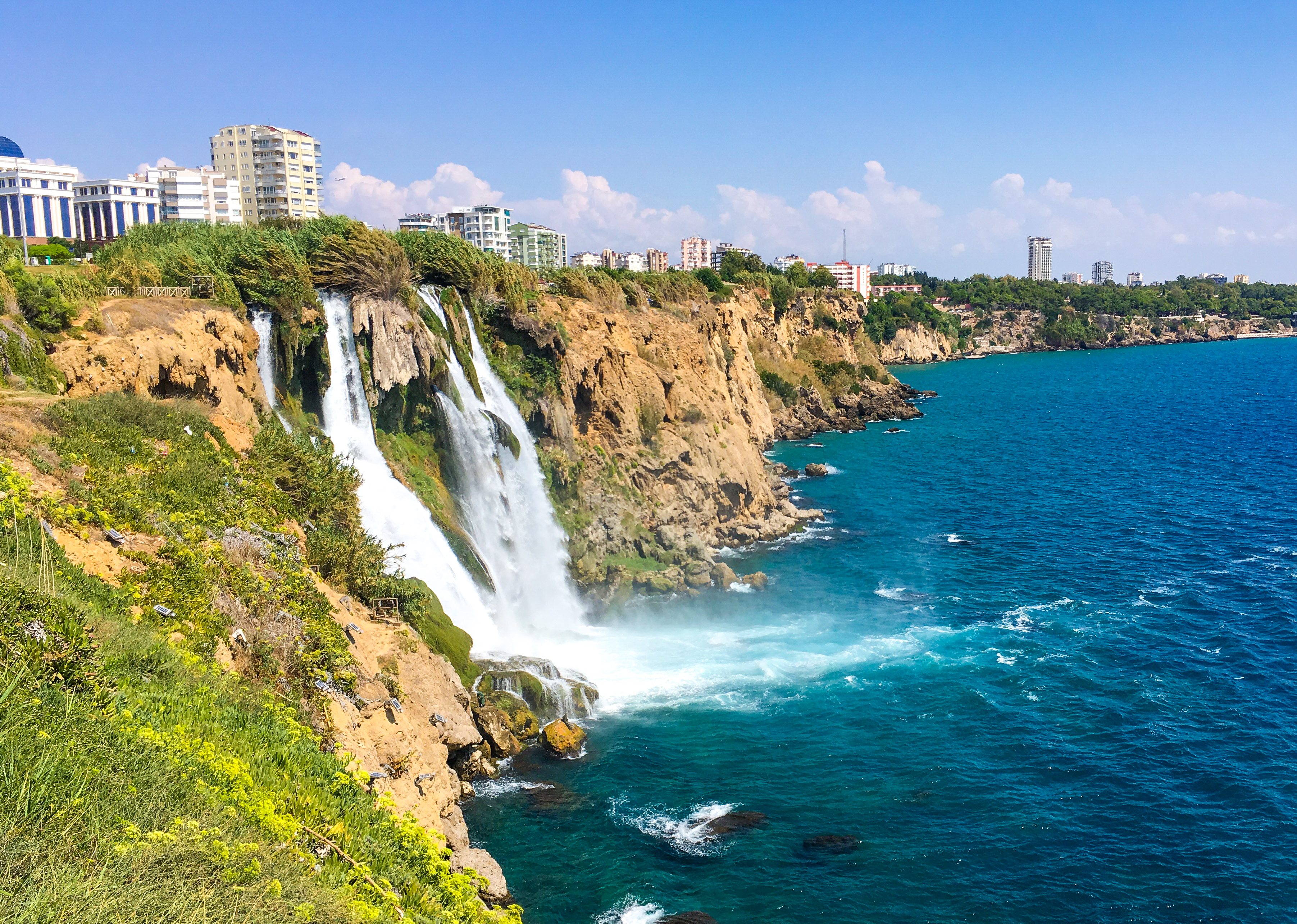
Antalya is Turkey's tourism capital, a Mediterranean city of 2.6 million that has grown from fishing town to gateway for millions of visitors drawn by beaches and ruins. Romans knew this place. Hadrian's Gate still marks the entrance to the old town, and the turquoise coast earns its name right here. Climate, history, and investment converged to build modern Antalya. Along the shoreline, resorts stretch for miles. In the old quarter, tourism has preserved what might otherwise have crumbled. All around the city, ancient ruins stand as reminders of how long people have been drawn to this coast. Antalya delivers the Turkey that beach tourism seeks.
The Old Town
Kaleici is Antalya's old town, a walled quarter where Ottoman houses line narrow streets descending to a harbor now filled with yachts. Romans built Hadrian's Gate. Ottomans added mosques. Modern restorers turned crumbling mansions into boutique hotels. Layer by layer, Kaleici preserves what preceded tourism.
Visitors seeking more than beach come here. Pedestrian streets hold restaurants, bars, and shops in a dense tangle of charm and commerce. Crowded and colorful, the old town gives Antalya a depth that separates it from any ordinary resort.
The Beaches
Most visitors come for the beaches lining the coast from Antalya in both directions. Sand and pebble strips meet Mediterranean water so vivid it genuinely deserves the word turquoise. Konyaalti beach sits right in the city. Lara beach belongs to the resorts. Farther out, hidden coves reward those willing to explore. Together, they form Turkey's great contribution to Mediterranean beach tourism.
These beaches serve the engine that built modern Antalya: all-inclusive resorts, package tours, millions arriving each year from Russia, Germany, Britain, and beyond. Sun and sand are the product Turkey sells here, and the sales have been spectacularly successful.
The Ruins
Ancient ruins surround Antalya and provide the excursions beach tourists take between days on the sand. At Aspendos, Rome's best-preserved theater still hosts performances. Perge's columns remain standing after two millennia. High in the mountains, Termessos occupies a position so formidable that Alexander the Great chose not to attack it. These sites demonstrate the civilizations that flourished here long before anyone sold a package holiday.
Ruins set Turkey's coast apart from Spain's or Greece's, lending a depth of history few rivals can match. They justify calling this region the Turkish Riviera rather than merely a beach destination.
The Tourism Economy
Tourism dominates Antalya's economy more completely than in any other Turkish city. Fifteen million visitors arrive annually, making Antalya the country's most visited city after Istanbul. Hotels line the coast. A vast service industry supports the flow of guests. Employment centers on hospitality in a way that shapes everything about city life.
This dependence on tourism has created modern Antalya. Visitor spending fuels prosperity, funds development, and defines the city's character. But dependence cuts both ways. When seasons run empty or geopolitics deter travelers, vulnerability surfaces quickly.
The Climate
Sun is what Antalya sells, and it delivers. Three hundred sunny days a year. Mediterranean warmth stretching the swimming season from April through November. Winters that stay mild enough to keep the city appealing year-round. Long before resorts existed, this climate made the coast desirable. Now it makes the coast profitable.
No competitor can replicate Antalya's geography. The Taurus Mountains shield the coastal plain while the Mediterranean moderates temperatures. This permanent natural asset is why Antalya grew, and why it will keep growing.
From the Air
Antalya (36.90N, 30.70E) lies on Turkey's Mediterranean coast at the foot of the Taurus Mountains. Antalya Airport (LTAI/AYT) sits 13km east of the city with two parallel runways: 18L/36R and 18R/36L, both 3,400m long. It ranks among Turkey's busiest airports. The city spreads along the coast, and the old town of Kaleici occupies a small peninsula. Behind the coastal plain, the Taurus Mountains rise dramatically. Below, the Mediterranean glows a distinctive turquoise. Expect Mediterranean weather: hot, dry summers and mild, wet winters. Sunshine exceeds 300 days per year.