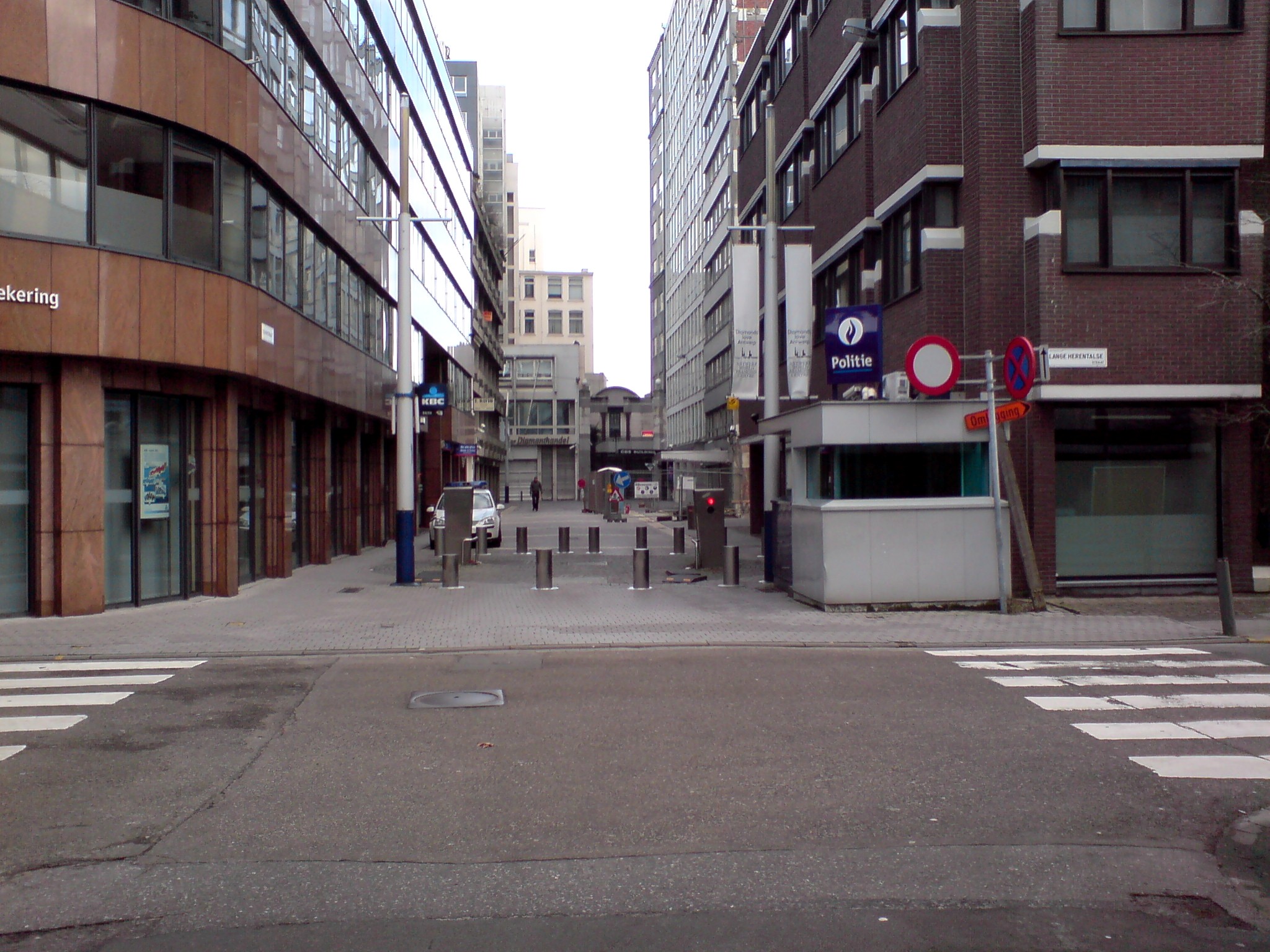
The Antwerp Diamond Heist
Leonardo Notarbartolo sprayed hairspray on the heat sensor during a routine visit to his safe deposit box. It was such a small thing, a tiny act of sabotage that would help make possible the largest diamond heist in history. For over two years, this Italian jewel thief had maintained an office in the Antwerp Diamond Center building at 9/11 Schupstraat, patiently studying the vault two floors below. On the weekend of February 15-16, 2003, he and his team from the infamous 'School of Turin' would defeat every layer of security protecting the world's diamond capital and vanish with an estimated 100 million dollars in gems. Most have never been recovered.
The Fortress Beneath the Streets
The vault should have been impenetrable. Two floors below street level, it was protected by a lock with 100 million possible combinations, infrared heat detectors, a seismic sensor, Doppler radar, and a magnetic field. The building maintained its own private security force and sat in the heavily monitored Antwerp diamond district, where an estimated 84 percent of the world's rough diamonds pass through local exchanges. The 189 safe deposit boxes, each secured by both a unique key lock and a three-letter combination, held the concentrated wealth of merchants who had traded here for generations. Notarbartolo's plan required defeating every single security measure, a task that would take more than two years of preparation.
La Scuola di Torino
They called themselves the School of Turin, a loose affiliation of Italian professional thieves with specialized skills. Notarbartolo was the planner, but the team included at least four others with crucial expertise. One was known as 'the King of Keys,' an older man described as one of the best key forgers in the world, his true identity never confirmed. Another was an electronics expert linked to a series of previous robberies. The hairspray trick disabled the thermal-motion sensor; tape over the ceiling light sensor let them work with the lights on. Once inside, they used a custom-made, hand-cranked device to break open 109 of the 189 safe deposit boxes. The work was methodical, professional, and devastatingly effective.
Undone by Garbage
The heist itself was flawless. The aftermath was not. After returning to Notarbartolo's Antwerp apartment, he and an accomplice dumped trash from the operation near the E19 motorway between Antwerp and Brussels. Inside the discarded bags, investigators found evidence that led directly to the thieves. Notarbartolo was found guilty of orchestrating the heist and sentenced to ten years in prison by the Court of Appeal of Antwerp in 2005. His accomplices, Tavano, D'Onorio, and Finotto, each received five years. In 2011, a European Arrest Warrant was issued after Notarbartolo violated parole by failing to compensate his victims. He was arrested again in 2013 at Paris Charles de Gaulle Airport during a layover and served the remainder of his sentence until 2017.
The Missing Millions
Despite the convictions, most of the stolen diamonds have never been found. In a Wired magazine interview, Notarbartolo claimed a diamond merchant had hired the team and that the robbery was part of an insurance fraud scheme. He insisted they stole only 18 million euros worth of loot, not the 100 million reported. Experts doubt his account, noting that the vault itself was uninsured since no company would issue a policy given its security flaws. The true value, like the diamonds themselves, remains hidden. The heist has since inspired books, documentaries, and films, including Pierce Brosnan's narration of 'History's Greatest Heists' and the 2025 film 'Den of Thieves 2: Pantera.' The Antwerp Diamond Center has upgraded its security. The School of Turin has scattered. And somewhere, perhaps, a fortune in uncut diamonds still waits.
From the Air
Located at 51.22N, 4.42E in Antwerp's diamond district, near the Central Station. The compact neighborhood is visible as a dense grid of streets just east of the station. Antwerp Airport (EBAW) is 5km southeast; Brussels Airport (EBBR) is 40km south. The historic port stretches along the Scheldt River north of the city center.