Apollo 1: The Fire That Saved the Moon Program
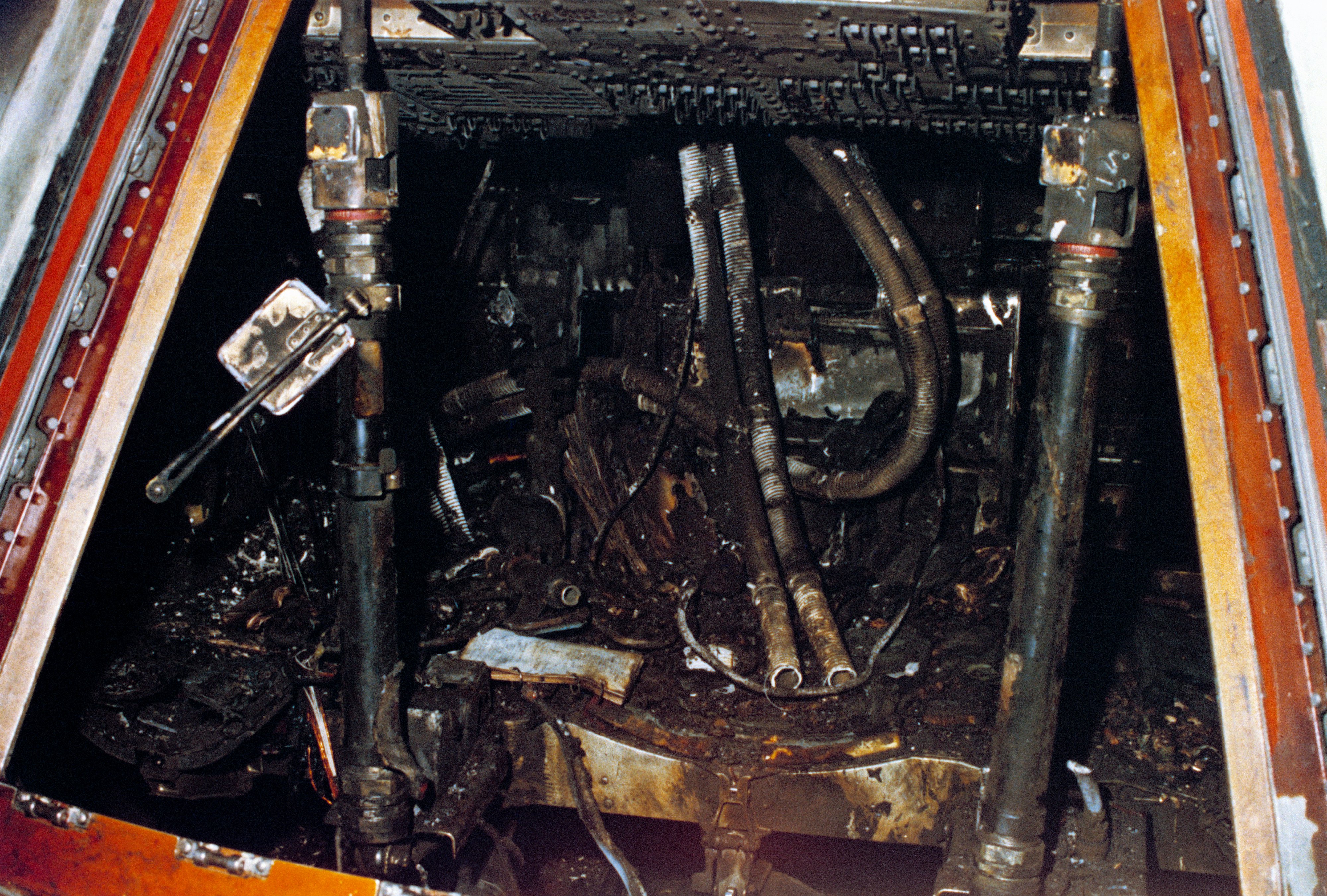
At 6:31 p.m. on January 27, 1967, a voice crackled over the intercom from inside the Apollo command module sitting atop its Saturn IB rocket at Cape Kennedy's Launch Complex 34. "Fire!" Then, seconds later: "We've got a fire in the cockpit!" Within 17 seconds, the cabin was an inferno. The three astronauts strapped inside -- Command Pilot Gus Grissom, Senior Pilot Ed White, and Pilot Roger Chaffee -- never had a chance. The cabin had been pressurized with pure oxygen at above-normal atmospheric pressure for a routine "plugs-out" test, turning ordinary materials into fuel. The hatch, designed as a plug door sealed by internal pressure, could not be opened in time. All three men died of cardiac arrest caused by carbon monoxide inhalation. NASA had been racing toward the Moon. That evening, the race stopped.
The Crew Who Drew the Short Straw
Gus Grissom was a combat veteran of the Korean War, the second American in space, and the commander of the first crewed Gemini mission. Ed White had performed the first American spacewalk during Gemini 4, floating for 23 minutes outside his capsule in June 1965. Roger Chaffee, the youngest of the three at 31, was a naval aviator and engineer making his first spaceflight assignment. Together they were designated as the crew of Apollo-Saturn 204, later renamed Apollo 1. Their mission -- originally planned for February 1967 -- would have been the first crewed flight of the Apollo command module, a shakedown cruise in low Earth orbit. Instead, they became the first American astronauts to die in a spacecraft.
A Cabin Full of Kindling
NASA had used pure oxygen atmospheres successfully throughout Project Mercury and Project Gemini without a fire. The practice saved weight by eliminating the nitrogen tanks and mixing systems a two-gas atmosphere required. But the plugs-out test called for pressurizing the cabin to 16.7 pounds per square inch -- more than five times the partial pressure of oxygen in normal air. At that concentration, materials not normally considered flammable become volatile. Nylon, Velcro, and the netting used to manage loose items in weightlessness all turned into fuel. An electrical arc -- likely from damaged wiring beneath Grissom's seat near a coolant line junction -- provided the spark. The fire swept through the cabin in seconds, fed by the high-pressure oxygen atmosphere. The investigation later discovered that electrolysis of ethylene glycol coolant solution with silver-plated wire created a chemical hazard capable of violent exothermic reaction.
A Hatch That Opened the Wrong Way
The Block I command module hatch was a plug door, sealed shut by the higher pressure inside the cabin. Under normal conditions, the crew would first vent cabin pressure through a valve, then remove the inner hatch cover. In the seconds after the fire ignited, the rapidly expanding gases inside the cabin increased pressure to the point where the hatch became immovable. Even in the best circumstances, opening the two-piece hatch took about 90 seconds. The astronauts had already recommended switching to an outward-opening design, and a redesigned hatch was already planned for the Block II command module. North American Aviation, the spacecraft's builder, had suggested using an oxygen-nitrogen atmosphere, but NASA had overruled the proposal, judging pure oxygen safer, simpler, and lighter. Deputy Administrator Robert Seamans later wrote that NASA's worst engineering mistake was not running a fire test on the command module before the plugs-out test.
Warnings That Went Unheeded
The Apollo 1 fire was not the first oxygen-atmosphere incident. In 1962, a fire destroyed a pure oxygen test chamber at Brooks Air Force Base in San Antonio, Texas; the two men inside barely escaped. That same year, another fire broke out in a Navy test chamber, leaving crew members with burns. In 1965, two Navy divers died in a decompression chamber fire at the Experimental Diving Unit in Washington, D.C., after oxygen was added to the mix. The Apollo Environmental Control System itself had experienced several fire-related accidents between 1964 and 1966. Even the Soviet program had its oxygen fire -- cosmonaut Valentin Bondarenko died in a high-oxygen isolation chamber in March 1961, though Soviet secrecy kept the incident hidden until 1986. The warning signs existed, scattered across agencies and nations. No one assembled the full picture until it was too late.
A Legacy Written in Redesign
NASA grounded the Apollo program for 20 months. The investigation led to sweeping changes: a new unified hatch that opened outward in five seconds, a mixed oxygen-nitrogen atmosphere at launch, fire-resistant materials throughout the cabin, improved wiring protection, and flammability testing for every material that entered the spacecraft. The changes added weight and complexity but eliminated the conditions that had killed the crew. The redesigned Block II command module flew on Apollo 7 in October 1968, and less than a year after that, Apollo 11 landed on the Moon. Launch Complex 34, where the fire occurred, was decommissioned in 1969. A plaque at the base of the rusting launch pedestal reads: "Ad Astra Per Aspera" -- a rough road leads to the stars. Grissom, White, and Chaffee never flew to the Moon, but the spacecraft that took their colleagues there was built on the lessons their deaths demanded.
From the Air
Apollo 1's Launch Complex 34 is located at 28.522°N, 80.561°W on Cape Canaveral Space Force Station, Florida. The pad was decommissioned after the fire and is now a memorial site with the original launch pedestal still standing. From the air, LC-34 is visible along the Cape's coastline south of the Vehicle Assembly Building. The rusting launch pedestal and concrete pad are identifiable landmarks. Nearby airports include KTIX (Space Coast Regional, Titusville), KMLB (Melbourne Orlando International), and KCOF (Patrick Space Force Base). Best viewed at 2,000-4,000 feet AGL. The adjacent launch complexes along Missile Row provide visual context for the scale of Cold War-era launch operations.