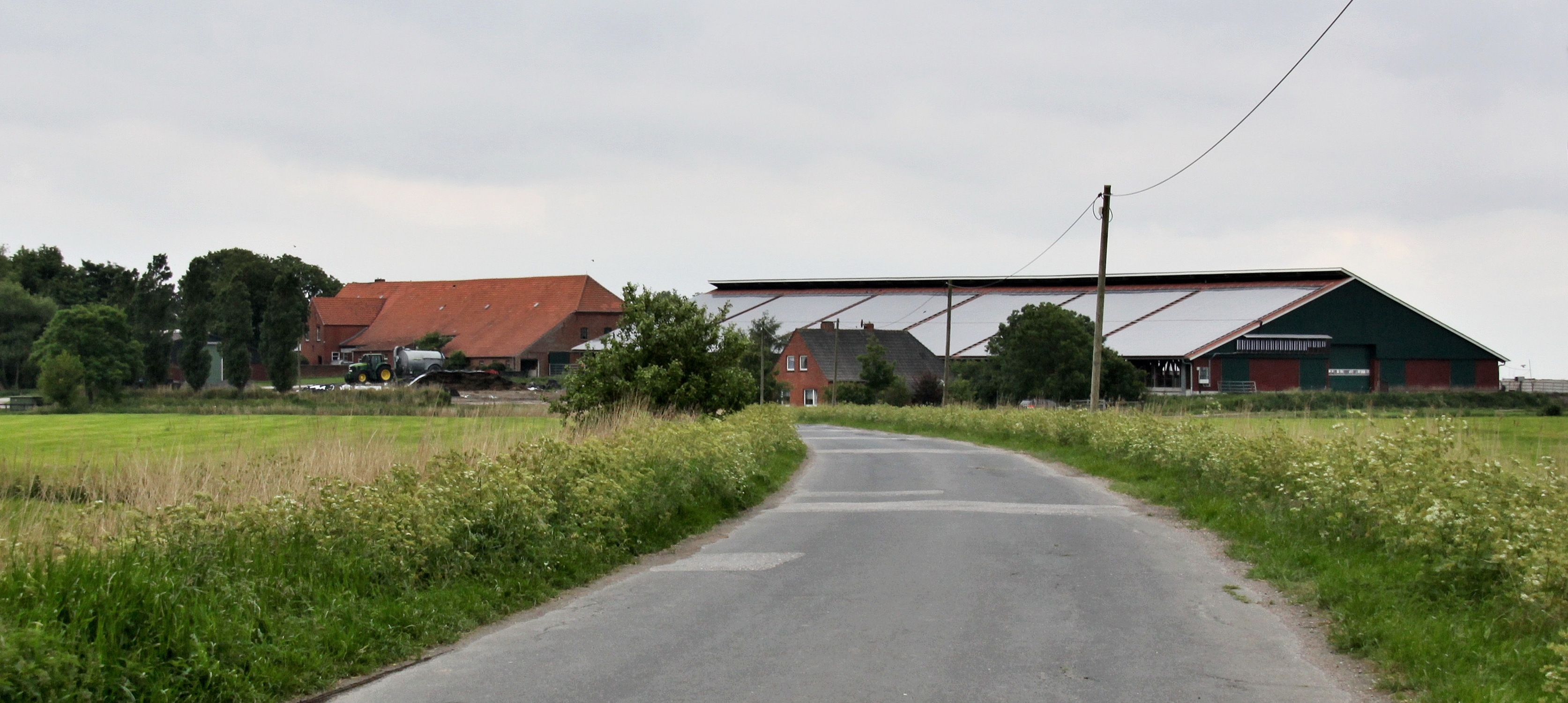
Appingen Abbey
In 1437, Enno Cirksena handed the parish church of his ancestral village over to the Carmelite Order and watched the monks move in. The village was called Appingen. It sat near the North Sea coast of what is now East Frisia, on land that had once touched salt water. By then the sea was already retreating. Embankments had cut Appingen off from the harbours that gave it purpose. The Cirksenas themselves had quietly moved to nearby Greetsiel and turned that town into the seat from which they would rule East Frisia for two centuries. They left behind a monastery in a village that was already disappearing.
The Last Carmelites
Appingen Abbey was the only Carmelite house in East Frisia, and it was the last monastery of any kind to be founded in the region before the Reformation arrived to dissolve all of them. The Carmelites had begun on Mount Carmel in the Holy Land in the twelfth century and spread across western Europe as mendicant friars - preaching, teaching, living simply. Appingen began with just three or four priests. The Cirksenas built them a stone house and a mill alongside the existing parish church. As the abbey's reputation grew, so did its population. At its peak it housed at least twenty monks - a substantial community for a remote corner of the Holy Roman Empire.
Founder's Family
Enno Cirksena would not live to see his foundation flourish. He was a chieftain in a region of chieftains. His son Ulrich would become the first imperial Count of East Frisia in 1464 - the moment a clan of Frisian warlords entered the European nobility. The Cirksenas treated Appingen Abbey as a family church even after they had moved their seat to Greetsiel. They retained rights to use its mill. They kept up the patronage. The relationship illustrates how late-medieval monasticism actually worked: monks prayed, and noble families paid for the prayers, and the prayers were understood to be for the souls of the patrons who paid for them.
Burned and Re-Founded
In 1530, the rogue commander Balthasar von Esen burned the abbey during one of his feuds with the counts of East Frisia. He had a habit of burning abbeys. Nearby Dykhusen, a Dominican house, was destroyed entirely. Appingen survived, just barely. The monks were gone, but in 1531 the displaced Dominican nuns of Dykhusen moved in and adopted it as their own. The Carmelite era had ended in flames. The Dominican era lasted only a decade. By 1545 the abbey was secularised and leased back to the counts of East Frisia. The Reformation was rolling through Lower Saxony, dissolving religious houses in its wake, and Appingen was one more line in the ledger.
A Field, a Farmhouse
Today the village of Appingen does not appear on most maps. The sea-cut-off harbour, the parish church, the stone house for the monks, the mill, the cloister and the bell - all gone. What remains is a single farm belonging to the modern parish of Visquard. Walk across the fields with old maps in hand and you can plot where the abbey once stood. You will not find ruins. You will find drained pastureland under huge Lower Saxon skies, with the spire of Greetsiel's church visible in the distance and the North Sea dykes a few kilometres further on. It is the kind of disappearance medieval landscapes specialised in - quiet, complete, and almost without trace.
From the Air
Appingen Abbey's surviving farm site lies at 53.48°N, 7.09°E, in the Krummhoern peninsula of East Frisia, Lower Saxony, Germany - about 12 km north of Emden and 5 km southwest of Greetsiel. Nearest airports: Emden (EDWE), Norden-Norddeich (EDWY), Wilhelmshaven (EDWI). Best viewed from 3,000-5,000 ft on a clear day, when the polder landscape of drained marsh, geometric drainage canals, and isolated farms reveals itself. The red-brick fishing village of Greetsiel - the Cirksenas' eventual seat - is the most prominent visual landmark, with its twin windmills.